

A powerful new report from Toronto-based AgentsC Inc. lays bare the experiences of Black fundraisers navigating systemic anti-Black racism inside Canada's and America's predominantly white institutions. Titled Fundraising While Black: Harm, Happiness, Healing, the study draws on the voices of over 100 Black fundraising professionals to document burnout, discrimination and exclusion, while pointing toward a growing movement of Black-led collective power as the path forward.
There is a question that gets to the heart of how institutions treat Black professionals, and it is deceptively simple: When the work is excellent, the passion undeniable, and the commitment beyond question, what more does a Black person have to do to be seen, protected, and valued? For more than 100 Black fundraisers working across Canada and the United States, that question is not rhetorical. It describes Tuesday morning.
It describes the meeting where their idea was ignored until a white colleague repeated it. It describes the HR process that went nowhere, the promotion that somehow never materialized, the donor who questioned their credentials, and the organization that called itself equitable while doing nothing substantive to merit that label.
Released in November 2025, Fundraising While Black: Harm, Happiness, Healing is the latest research report from AgentsC Inc., a Toronto-based equity philanthropy and social impact consultancy founded and led by Olumide Akerewusi, developed in collaboration with Camila Pereira, PhD. It is a raw, rigorously documented account of what it means to fundraise while Black inside Predominantly White Institutions (PWIs): the charities, foundations and non-profits where the majority of leadership, culture and norms remain overwhelmingly white.
Drawing on survey responses from 107 Black fundraisers and over 4.5 hours of recorded testimony gathered across four small group discussions with 18 participants, the report blends statistical data with first-person narrative in a way that is both academically credible and deeply human. It follows a tradition of AgentsC research on this subject stretching back twenty years, and it arrives at a moment when DEI initiatives face direct political attack on both sides of the border.
The title carries the full weight of its findings. Harm, happiness and healing are not three tidy sequential chapters. They coexist in the lives of Black fundraisers, often within the same working day, and the report refuses to let any one of them swallow the others.
Harm that is structural, not incidental
The statistics in this report demand attention. Nearly 80% of Black fundraisers surveyed report experiencing burnout, tied not just to workload but to the relentless strain of navigating racism, heightened scrutiny and inequitable treatment in workplaces that rarely acknowledge what they are asking Black professionals to absorb. Close to 64% have experienced racism directly from a donor. Almost 59% report experiencing acts of harm, hurt or hate in their workplace. One in five has been dismissed, demoted or formally cautioned in their role.

These are not outliers. They represent the dominant professional reality for Black fundraisers in North America.
The personal testimonies woven through the report give those numbers texture and weight. Mark, a Black fundraiser based in Harlem, describes being the only Black man in the room and being labelled "angry" and "combative" for speaking with the same directness as his non-Black colleagues. Yolanda recounts delivering a commanding, standing-ovation presentation to nearly 90 foundation leaders in Chicago, only to have her white male supervisor immediately undercut her in front of the entire room with a comment about her hair. Tisha describes the slow accumulation of what she calls "paper cuts": ideas dismissed in meetings until a white colleague repeated them and received praise; contributions minimized; and an HR department that responded to her bullying complaint by suggesting she "have deeper conversations" with the person responsible.
The report is precise about what these stories represent. Racism here is not a series of isolated bad actors; it is embedded in institutional policy, culture and decision-making, reproducing harm reliably and across decades. As one participant put it: "It shows up differently. Racism can show up differently from organization to organization."
The window that opened, then closed
The report traces a short but significant period beginning in 2020. George Floyd's murder and the global surge of the Black Lives Matter movement pushed non-profit boards and organizations to diversify rapidly. Black fundraisers were suddenly in high demand. Recruitment accelerated. New faces appeared in boardrooms and executive suites.
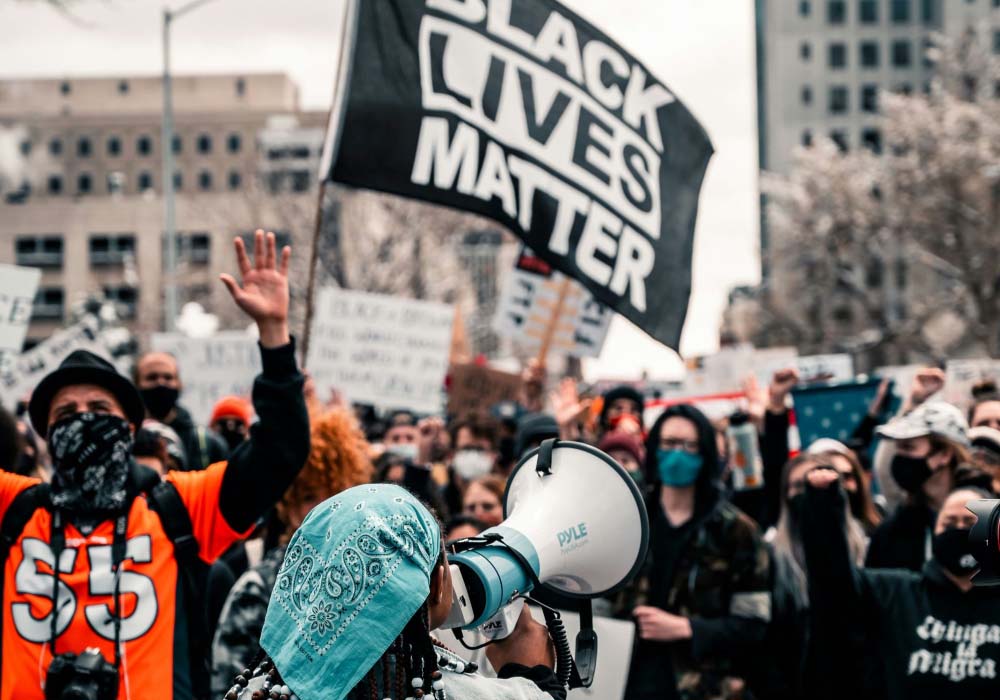
By 2023, many of those same professionals had been dismissed or had resigned. Old norms returned with quiet efficiency. The "Black rush," as the report describes it, proved performative, driven by optics rather than institutional commitment. What followed was a pattern of departure among Black fundraisers, many of them women, who chose their well-being over continuing to absorb racism inside organizations that had recruited them as symbols.
Then came a sharper political headwind. The inauguration of Donald Trump in early 2025 led to rapid executive action, including the dismantling of federal DEI programs in the United States. Affirmative action was revoked. In Canada, during a federal election year, the opposition's vocal hostility to "woke ideology" signalled a political climate increasingly willing to frame equity work as the problem rather than the solution. For Black fundraisers, what had been fragile became openly contested. The report names what is happening plainly: authorized regression.
What happiness looks like from here
Within these conditions, the report documents something equally essential: the genuine sources of fulfilment that keep Black fundraisers committed to their work. Ninety-two percent report enjoying what they do. That this coexists with widespread burnout is not a contradiction the report glosses over. Black fundraisers love their vocation. They are exhausted by the conditions in which they are forced to practise it.
Positive workplace experiences cluster around human connection. Supportive managers, strong team relationships, recognition from colleagues and donors, and the tangible satisfaction of securing resources for communities that need them. Catherine, one of the report's group discussion participants, reflects on how her motivation has shifted across her career, from raising just enough money as a child so her friends could attend summer camp to a current focus on systemic innovation and building organizational sustainability. Dele, who entered fundraising while serving as a school principal in Jerusalem, describes coming to understand the work as a form of stewardship, connecting donor generosity to causes capable of changing lives.
These are not feel-good footnotes. They are central to the report's argument. Black fundraisers are not passive recipients of harm. They are skilled, ambitious, purpose-driven professionals whose excellence is often overlooked or unrewarded. The harm they experience is structural, not personal, and it is inflicted on people who have every reason to be thriving.
Black Fundraising Associations: Sanctuary and strategy
Among the report's most significant findings is the emergence and growing importance of Black Fundraising Associations (BFAs), organizations built largely since 2022 to meet the specific professional needs of Black fundraisers in ways that mainstream institutions have consistently failed to do. Five BFAs participated in the research, and their combined reach across North America is substantial.

The report profiles each one in depth. Together they represent thousands of Black fundraising professionals, offering networking, mentorship, professional development, scholarships and what participants consistently describe as the most valuable thing of all: spaces where they do not have to explain themselves.
- African American Development Officers Network (AADO): A national membership organization based in Atlanta, representing over 5,000 members. Eighty-five percent are fundraising professionals of colour. AADO recently secured a grant from the Kellogg Foundation in recognition of its impact.
- Black Canadian Fundraisers' Collective (BCFC): Founded in 2018 and rooted in the Ubuntu philosophy of "I am because you are," BCFC supports Black fundraisers across Canada through professional development, a giving circle, the Black Charities Academy, and community programming.
- Fabulous Female Fundraisers (F3): Founded in Atlanta to connect, support and empower women of colour in non-profit fundraising, F3 grew from a small bimonthly support circle into a broader professional network.
- Men of Color in Development (MOCID): A special interest group within AADO, providing peer networking, mentorship and authentic community for men of colour navigating the fundraising profession.
- Rising Professionals of Color in Fundraising (RPOCF): An AADO subgroup founded in 2022 and focused on emerging professionals of colour, covering the full spectrum of fundraising practice from annual campaigns to planned giving.
Almost eight in ten Black fundraisers in the study express a desire to be mentored by another Black fundraiser. The BFAs are building toward that. One participant's words capture what these spaces offer that workplaces do not: "We don't have to explain." The relief in that phrase is its own indictment of the sector.
The failure of DEI and what actually works
After twenty years of Diversity, Equity and Inclusion policies, trainings and institutional statements, the research is unambiguous: systemic change has not materialized in any substantive way for Black fundraisers. The report does not dismiss DEI as a framework. It dismisses performative DEI as a practice: commitments made for optics, trainings delivered without structural follow-through, and equity pledges that dissolve when the political climate shifts.

Sixty-four percent of Black fundraisers in the study feel emotionally exhausted by DEI initiatives. Forty-three percent worry that speaking out against anti-Black racism will damage their careers. Thirty-six percent have seen DEI programs decline in their organizations over the past 18 months. These figures describe a sector that has built a vocabulary of equity without the institutional will to act on it.
The report puts forward three concrete recommendations grounded in evidence rather than aspiration.
- Recommendation One calls for deeper collaboration among BFAs, including the creation of a shared Skills and Mentorship Academy, anti-racist response frameworks for Black fundraisers facing discrimination, and expanded peer support and networking infrastructure.
- Recommendation Two calls on PWI boards, executives, HR teams and traditional fundraising associations to take shared accountability for addressing anti-Black racism, including hiring culturally competent HR professionals, building genuine partnerships with BFAs, and creating structural pathways for Black career advancement and leadership.
- Recommendation Three calls on philanthropic funders to implement conditional funding tied to measurable anti-racism outcomes, and to exercise real due diligence before directing resources to institutions that have not demonstrated substantive progress on equity.
These are not suggestions. They are a blueprint for a sector that has had twenty years to get this right and has largely chosen not to.
The broader picture
The report is candid that its findings extend far beyond the fundraising profession. The patterns it documents, among them exclusion from leadership, the appropriation of expertise, tokenism framed as inclusion, and burnout as a predictable systemic outcome, appear in government, healthcare, academia, law, and corporate Canada. Any institution that engages Black people as employees, volunteers, consultants, investors or donors is implicated.
For Toronto's Black community, a city where Black Canadians have built institutions, created culture, led movements and generated significant philanthropic investment, this report is a direct challenge. Are the organizations that claim to serve and partner with Black people actually building conditions where Black professionals can advance and lead? Or are they drawing on Black talent and credibility while keeping white-centred power structures intact?
The work Black communities are already doing
The report's closing argument is grounded in optimism. Not naive optimism; the authors are too rigorous for that. Rather, it is confidence rooted in evidence. Black communities are already designing and building the solutions that institutions have refused to provide. The BFAs are proof of this. The hundreds of voices gathered in this research are proof that harm has not extinguished happiness, and that neither has stopped the work of healing.
AgentsC articulates a clear horizon: by 2045, Black fundraisers should be reporting on a transformed sector, one where belonging is structural rather than conditional, excellence is recognized rather than extracted, and the systemic anti-Black racism documented in 2005 and still present in 2025 belongs to a different era. That transformation requires PWIs and traditional fundraising associations to stop performing equity and start dismantling the structures that produce inequity. It requires funders to hold their grantees to genuine account. And it requires all of us, across sectors and communities, to take research like this seriously enough to be changed by it.
Fundraising While Black: Harm, Happiness, Healing is available here.
AgentsC Inc. is a Toronto-based equity philanthropy and social impact consulting firm specializing in fundraising strategy, community research and change management for social impact organizations across Canada, the United States, the United Kingdom and Australia.