
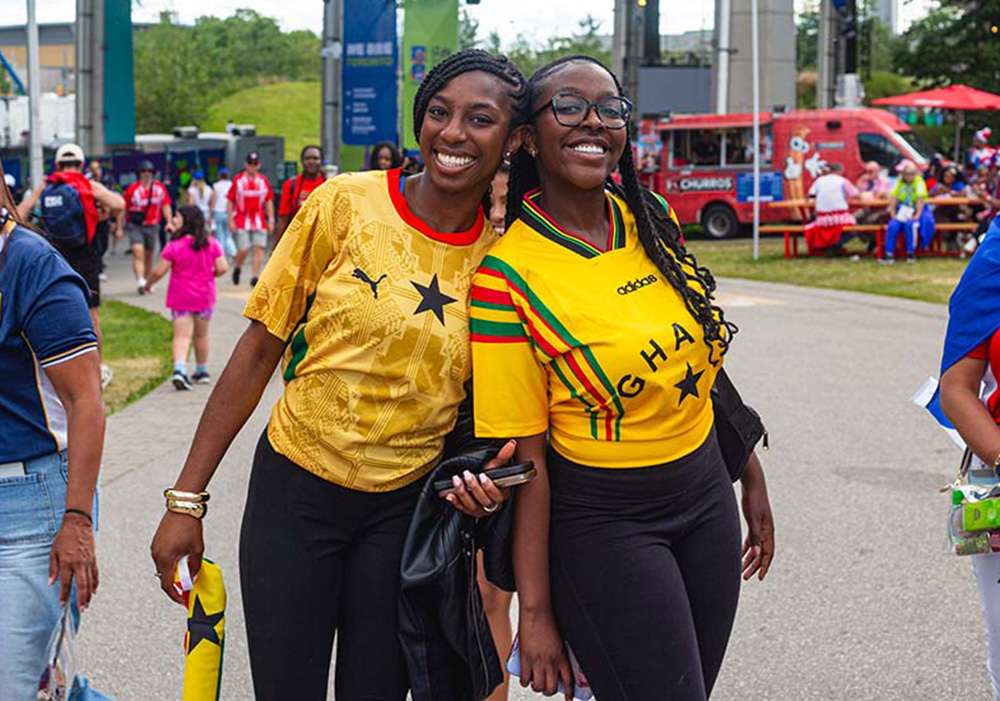
Nine of the ten African nations at the 2026 FIFA World Cup reached the round of 32, the deepest run the continent has produced in World Cup history. The feat lands months after former Italy coach Gennaro Gattuso called Africa's expanded World Cup spots unfair to Europe. Italy then missed the tournament yet again, and Gattuso lost his job before Africa's knockout run even began.
Algeria, Cape Verde, DR Congo, Egypt, Ghana, Ivory Coast, Morocco, Senegal and South Africa all punched their tickets to the round of 32 at the 2026 FIFA World Cup. Only Tunisia missed out. Nine of the 10 African nations that qualified for the newly expanded 48-team tournament advanced to the knockout stage, a feat the continent has never come close to matching across its entire World Cup history.
Before this summer, only six African countries had ever reached a World Cup knockout round, and the previous high-water mark for nations advancing in a single edition was two. Nine in one tournament rewrites the record book outright.
The timing carries its own sting. Seven months before the group stage wrapped, Italy's then-head coach, Gennaro Gattuso, complained publicly that Africa's expanded allocation of World Cup spots had become unfair to Europe. Italy went on to miss the tournament for a third consecutive time, and Gattuso lost his job months before a single African team kicked a ball at this World Cup. The numbers Africa is putting up now make his complaint look like one of the worst-timed gripes in recent football history.
A breakthrough decades in the making
Africa's relationship with the World Cup knockout stage has historically been a short one. Cameroon broke through first in 1990, becoming the continent's first quarterfinalist with a run that stunned Argentina in the opening match. Nigeria matched that depth in 1994 and again in 1998, both times falling in the round of 16. For most of the next two decades, one African team advancing past the group stage counted as a good tournament.
The previous record for African nations reaching the knockouts in a single edition stood at two, set in 2014 when Algeria and Nigeria both advanced in Brazil, and matched again in 2022 when Morocco and Senegal made it through, with Morocco going on to become the first African side ever to reach a World Cup semifinal.
That history makes 2026 look less like an improvement and more like a leap. A record ten African nations qualified for the expanded 48-team field, the most the continent has ever sent to a World Cup. Nine of them made it out of their groups. The table below tracks each tournament by three things: how many African nations qualified for the World Cup that year, how many of those nations advanced from the group stage into the knockouts, and which teams actually did so.
| Year | African nations at the World Cup | Number that reached the knockouts | Which teams reached the knockouts |
|---|---|---|---|
| 1990 | 2 | 1 | Cameroon |
| 1994 | 3 | 1 | Nigeria |
| 1998 | 5 | 1 | Nigeria |
| 2014 | 5 | 2 | Algeria, Nigeria |
| 2022 | 5 | 2 | Morocco, Senegal |
| 2026 | 10 | 9 | Every team except Tunisia |
First times, fairytales and one nerve-shredding draw
Behind the headline number sits a set of individual stories that explain why this run feels different from anything African football has produced before. Several countries reached the knockout stage for the first time in their history, others arrived through dramatic last-day results, and the continent's most experienced sides showed they still have plenty left in the tank.
- South Africa reached the World Cup knockout stage for the first time ever, recovering from an opening defeat to co-host Mexico before beating South Korea 1-0 to set up a round of 32 meeting with Canada.
- DR Congo also broke through for the first time, beating Uzbekistan 3-1 in their final group match to book a tie against England.
- Egypt advanced past the group stage for the first time in their World Cup history, after group-stage exits in 1934, 1990 and 2018.
- Cape Verde, the third smallest nation ever to play at a World Cup, drew with Spain, Uruguay and Saudi Arabia to reach the knockouts unbeaten, becoming the first team since Chile in 1998 to advance without winning a group match. Their reward is a meeting with defending champions Argentina.
- Algeria clinched their spot through a wild 3-3 draw against Austria, with Riyad Mahrez netting what looked like a stoppage-time winner before Austria equalized in the final kick of the match.
- Senegal became the first nation in World Cup history to reach the knockouts after losing their opening two group games, rallying with a 5-0 win over Iraq to set up a round of 32 clash with Belgium.
- Morocco, the continent's standard-bearer since their historic run to the 2022 semifinal, drew Brazil and beat Haiti to advance again, with a round of 32 date against the Netherlands.
- Ghana secured its place before its final group match was even played, results elsewhere sealing a meeting with Colombia.
- Ivory Coast booked their first-ever World Cup knockout appearance behind a Nicolas Pepe double in a 2-0 win over Curacao.
Tunisia remains the lone African disappointment, eliminated after defeats to Sweden, Japan and the Netherlands. Even that result fits the broader pattern. A continent that used to send one team through the group stage in a good year just sent nine, and the team left out was still competitive in every game it played.
The comment that hasn't aged well
Last November, with Italy clinging to a fading shot at automatic World Cup qualification, Gennaro Gattuso used a press conference to air a grievance about how the qualifying system had changed since his playing days. "In my day, the best runners-up went straight to the World Cup," he said. "In 1990 and 1994, there were two African teams; now there are nine. It's not a controversy, but it creates difficulties." He went on to compare Africa's allocation favourably against South America's, framing Europe as the confederation getting squeezed hardest by FIFA's reforms.
The remarks landed badly, and not because Gattuso's underlying frustration with Italy's qualifying path was unreasonable on its own terms. The problem was the target. Commentators across Africa and well beyond it called the framing dismissive and outdated, pointing to Morocco's 2022 semifinal run, Senegal's back-to-back knockout appearances and a continent's worth of evidence that the expanded slots reflected merit rather than charity. Gattuso's numbers were also off. CAF's three spots in 1994 (not two) were awarded specifically because of how well Cameroon and Egypt had performed four years earlier, which rather undercuts the idea that African success and African slots are unrelated.
What happened next made the comment look even worse. Italy needed a strong finish to its qualifying group and instead lost 4-1 to Norway, dropping into a playoff. The Azzurri beat Northern Ireland to reach the playoff final, then fell to Bosnia and Herzegovina on penalties in Zenica at the end of March, missing the World Cup for a third consecutive time. No nation that has previously won the tournament has ever missed three in a row. Within days, Italian football federation president Gabriele Gravina and delegation head Gianluigi Buffon both resigned, and Gattuso departed his role by mutual consent on April 3. He never got to coach a single match at the tournament whose African slots he had questioned five months earlier.
Africa let the scoreboard answer
None of this needed a rebuttal. Nine of ten African teams advancing to the round of 32 says everything that needed saying about the quality FIFA's expanded format finally has room to recognize, and it says it in a language louder than any press conference quote. Cameroon's lone quarterfinal run in 1990 once felt like a miracle. South Africa and DR Congo reaching their first-ever knockout stage in the same tournament, Cape Verde doing it as a debutant with three draws, Egypt finally breaking a near-century-long ceiling, all of that now sits inside a single World Cup, alongside Morocco and Senegal proving their 2022 form was no fluke.
Gattuso is entitled to his opinion about qualifying math, even when that math turns out to be wrong. What he is not entitled to is a tournament that obliges him to go quiet. Italy will watch this World Cup from home for the third edition running, while the continent whose slots he questioned fields more knockout teams than every confederation except UEFA.
The extra spots, it turns out, were exactly as deserved as the results now show.