
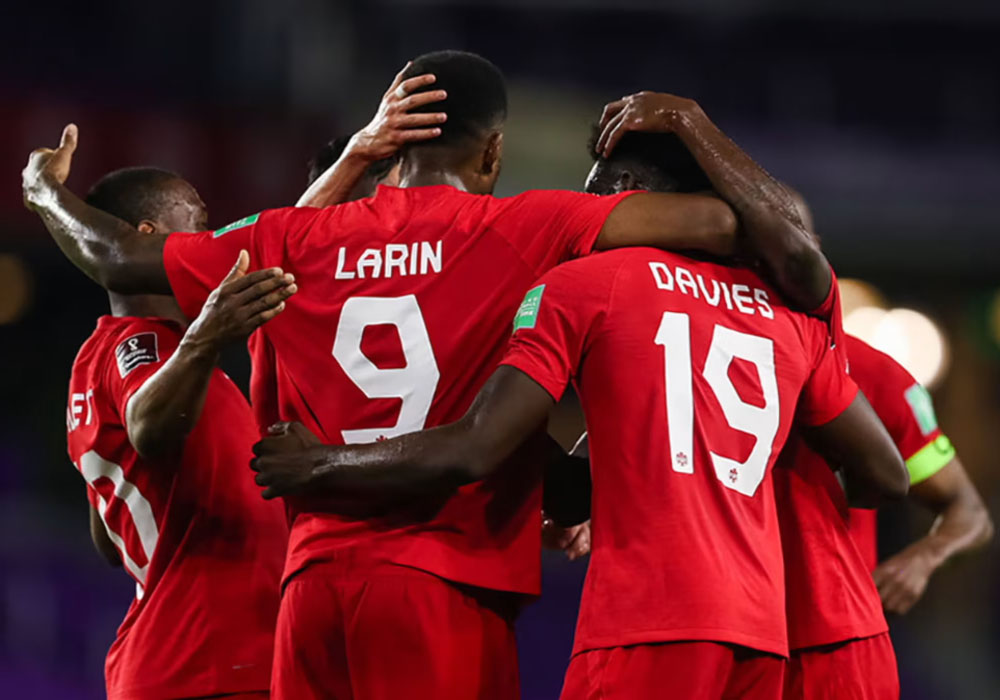
Team Canada's fairy-tale World Cup run ended Saturday afternoon in Houston, where Morocco eliminated the co-hosts 3-0 in the Round of 16. Despite the loss, Jesse Marsch's squad delivered a tournament for the ages, breaking records long thought impossible for this country. From coast to coast, Canadians found new reasons to believe, and a golden generation gave the nation memories that will outlast this summer.
Team Canada's magical run at the FIFA World Cup came to an end on Saturday afternoon in Houston, where Morocco beat the co-hosts 3-0 in the Round of 16, ending their tournament. Canada's historic run at the men's FIFA World Cup 2026 came to an end after a 3-0 loss to Morocco in Houston, with Les Rouges enjoying a superb first half before being unable to find the back of the net in the second.
It closes the book on a tournament that changed the story of Canadian soccer, one that carried the program from decades of near misses to the doorstep of a first-ever quarterfinal. For the first time in its history, Canada reached the World Cup knockout rounds, advancing to the Round of 16 for the first time ever after beating South Africa.
For millions of fans who packed Fan Festivals, filled downtown squares and gathered around televisions from coast to coast, this summer delivered belief, something the men's national team had rarely given its supporters before. The scoreline in Houston will fade. What Team Canada built over four unforgettable weeks will not.
A heartbreaking finish in Houston
Canada took the game to Morocco in the first half, forcing four corners inside the opening stretch and pushing the Atlas Lions back on their heels through a physical, hard-fought opening 45 minutes that ended scoreless. Tani Oluwaseyi nearly broke the deadlock with a sharp turn and low strike, but Yassine Bounou made a crucial reflex save with his outstretched leg to keep the score level. Morocco came out sharper after the break. Azzedine Ounahi opened the scoring five minutes into the second half, finishing a well-worked free kick from Achraf Hakimi with a right-footed strike into the bottom corner.
Canada pushed for an equalizer and had a strong penalty appeal waved off when the referee ruled that a foul on Stephen Eustáquio had started outside the box, and Tajon Buchanan had a similar case turned away for offside after being pushed down in the Moroccan box. Ounahi struck again in the 82nd minute, finishing off a counterattack after Brahim Diaz found him in space, and Soufiane Rahimi added a third in second-half stoppage time, sliding the ball past Maxime Crépeau after Canada was caught on a 3-on-1 break.
The result sends Morocco through to the quarterfinals for the second straight World Cup, where the Atlas Lions will face the winner of France and Paraguay in Boston on July 9.
A tournament that rewrote the record book
Long before Saturday's disappointment, this Canadian team had already secured its place in history. The group stage alone produced moments nobody expected from a program that had gone decades without winning a men's World Cup match. Jonathan David scored a hat trick in a 6-0 rout of Qatar, Cyle Larin's equalizer salvaged a point against Bosnia and Herzegovina, and a 2-1 loss to Switzerland in the group finale cost Canada top spot in Group B, along with the chance to play its knockout opener on home soil.
Then came the moment that changed everything. Stephen Eustáquio struck a stoppage-time winner against South Africa, sending Jesse Marsch's side into the Round of 16 for the first time in the program's history.
That single goal in Los Angeles carried weight far beyond the scoreline. Consider what this Canadian side achieved in a matter of weeks:
- Canada reached the World Cup knockout stage for the first time in its history
- The win over South Africa marked Canada's first-ever knockout stage win at a men's World Cup, and made it the first Concacaf nation to win a host-nation knockout match since Mexico in 1986
- Jonathan David's hat trick against Qatar added to a tally that already made him Canada's all-time leading goal scorer
- The Round of 16 appearance stands as the furthest a Canadian men's team has ever advanced at a World Cup
Records like these do not happen by accident, and they will not soon be forgotten by anyone who watched this team grow into the moment.
A roster stitched together by the diaspora
Part of what made this run resonate so deeply had as much to do with the roster as the results. This was a Canadian team built, in no small part, by families who arrived from Africa and the Caribbean in search of a better life. Captain Alphonso Davies was born in a refugee camp in Ghana to Liberian parents who had fled civil war, and the family later settled in Edmonton before he went on to become one of the best left-backs in the world.
Jonathan David was born in Brooklyn to Haitian parents, moved with his family to Haiti as an infant, and immigrated to Ottawa's Franco-Ontarian community at age six. Forward Tani Oluwaseyi was born in Abuja, Nigeria, and moved to Canada at age 10, eventually working his way from Major League Soccer to Spain's La Liga. Midfielder Ismaël Koné was born in Abidjan, Ivory Coast, and moved to Montreal with his mother at age seven, becoming a fixture of Canada's midfield before a broken leg ended his tournament early. And defender Richie Laryea, one of the few Toronto natives on the squad, was born to Ghanaian parents in Toronto and speaks their native language, Ga, alongside English.
These names are not footnotes to Canada's story this summer. They are the story itself, woven through a roster shaped by migration, resilience and identity.
A country united behind the team
The passion this Canadian team inspired went well beyond the pitch. Thousands packed Vancouver's FIFA Fan Fest for the South Africa match, erupting in cheers when Eustáquio scored the winning goal. For Saturday's meeting with Morocco, crowds packed Canada Soccer House in North Vancouver and a watch party in Brampton, with a hush falling over both crowds as Ounahi's goals piled up, drawn together by a team that, only a few years ago, few Canadians outside die-hard soccer circles could have named. Head coach Jesse Marsch told his players they were Canadian heroes after the South Africa win, and few would argue with that assessment after everything this group went on to accomplish.
This is only the opening chapter
These players have every reason to leave Houston with their heads held high. They arrived at this World Cup as a team still searching for its identity on the global stage, and they leave it as a program that broke records, filled stadiums and gave an entire country a reason to fall in love with the sport again. From Jesse Marsch's tactical rebuild to Eustáquio's stoppage-time heroics to David's continued rise as Canada's all-time scoring leader, this tournament will be remembered as the moment Canadian soccer stopped apologizing for itself and started believing it belonged.
None of that belief disappears because of a 3-0 loss to a talented Morocco side. If anything, it raises the bar for what comes next, with a talented and still-young core, growing investment in the domestic game, and a nation now paying closer attention than ever before.
Thank you, Team Canada, for the joy, the heartbreak and everything in between. This summer belonged to you, and Canadians will be watching closely for whatever comes next.