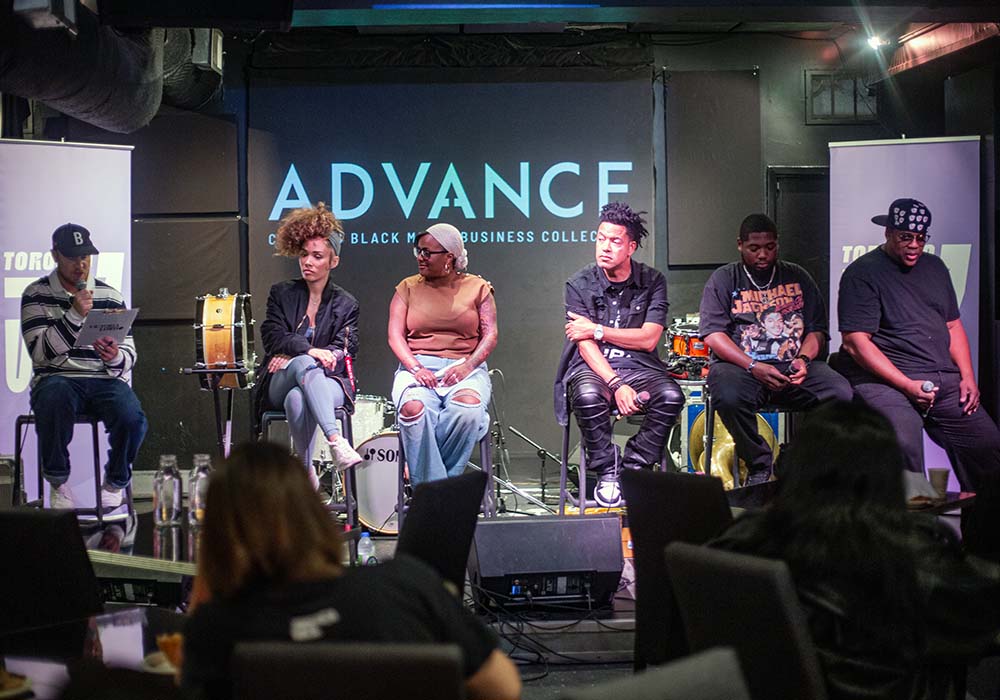
The Toronto Jazz Festival opened its 39th edition with a Black Music Month panel titled Jazz Meets Hip Hop, presented by ADVANCE. The Soul Rebels, Kreesha Turner and A&R executive Morgan MJ James joined moderator Skratch Bastid to debate sampling and generational exchange and why algorithms are pushing musicians back toward vinyl even as those algorithms quietly dissolve genre lines for Gen Z and Alpha listeners.
The room at The Pilot Tavern's Stealth Lounge had barely settled into its chairs when Skratch Bastid set up the question that would carry the rest of the morning. "We file jazz and hip-hop in separate bins," he said, "but they're closer to siblings than strangers." It was 11 a.m. on June 19, the opening morning of Toronto Jazz Festival's 39th edition, and the panel had been built specifically to test that idea against people who live inside both genres for a living.
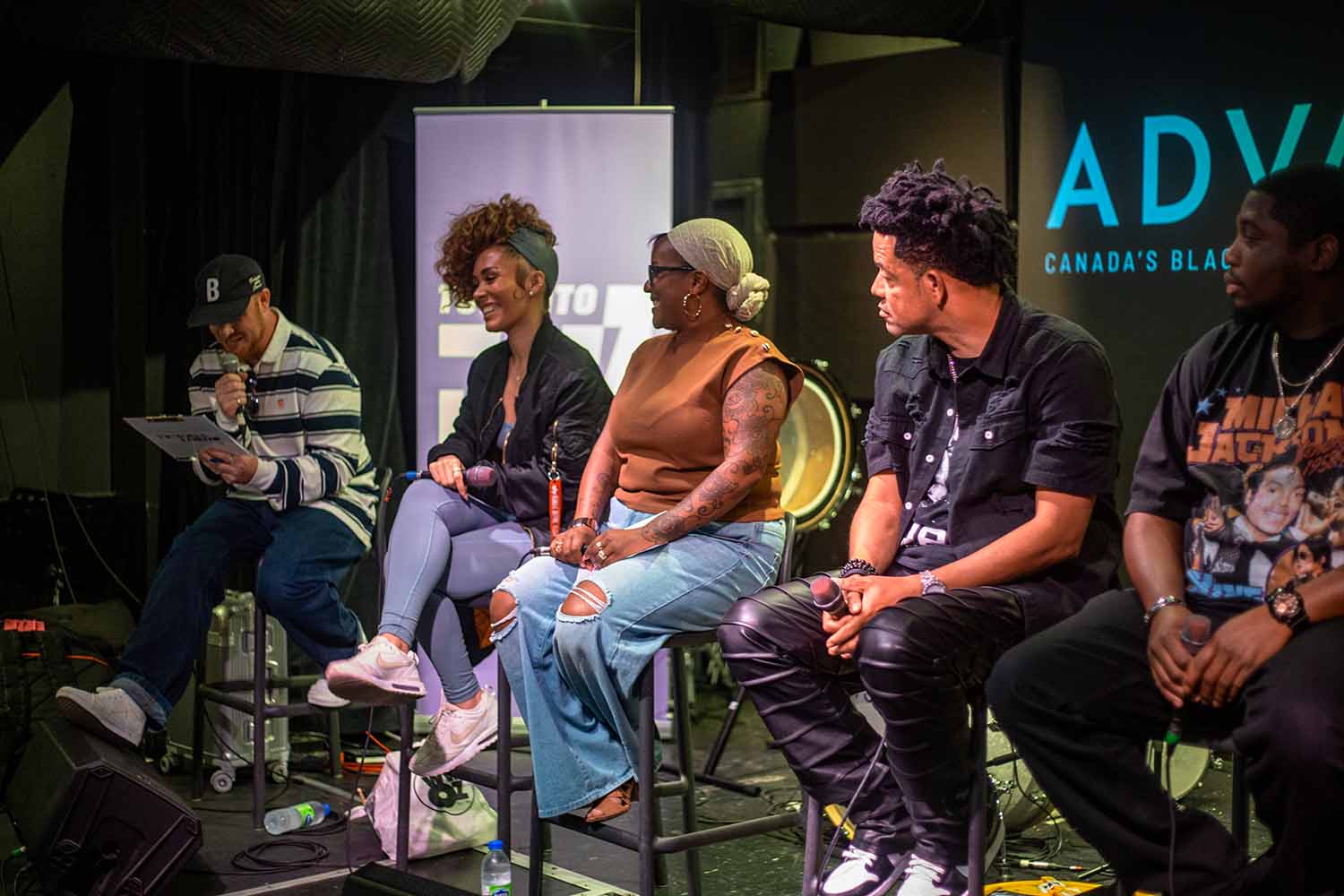
Jazz Meets Hip Hop was presented as a Black Music Month conversation with ADVANCE, Canada's Black Music Business Collective, and the panel reflected that range. Three members of New Orleans brass institution The Soul Rebels sat at the table, trumpeter and vocalist Marcus "Red" Hubbard, sousaphonist Manuel Perkins Jr. and founding snare drummer Lumar LeBlanc, alongside Edmonton-born artist Kreesha Turner and Universal Music A&R executive Morgan "MJ" James.
- Date and time: Friday, June 19, 11 a.m.
- Location: The Pilot Tavern, Stealth Lounge, 22 Cumberland Street
- Presented by: Toronto Jazz Festival and ADVANCE, Canada's Black Music Business Collective
- Panellists: Marcus "Red" Hubbard, Manuel Perkins Jr. and Lumar LeBlanc of The Soul Rebels, Kreesha Turner and Morgan "MJ" James
- Moderator: Skratch Bastid
Kinfolk, not strangers
Hubbard opened with the position he never really softened over the next hour. Jazz and hip hop are kin, he said, distant cousins at worst, because the basic tracks underneath most hip hop production carry a jazz feel, whether producers realize it or not. He went further, arguing that hip hop's growth into a full culture has obscured how much of its music was built directly off jazz in the first place. "They're gonna always be kin," he said, treating the relationship less as influence and more as bloodline.
Bastid, speaking as a working DJ rather than a moderator, pointed to the mechanism running underneath both genres. Hip hop never began as someone's plan to invent a new sound. It began with DJs lifting other people's records, jazz, funk, soul, and rock, and bending them into something else. Jazz does its own version of that trick through reinterpretation, taking a melody apart until the listener hears it differently.
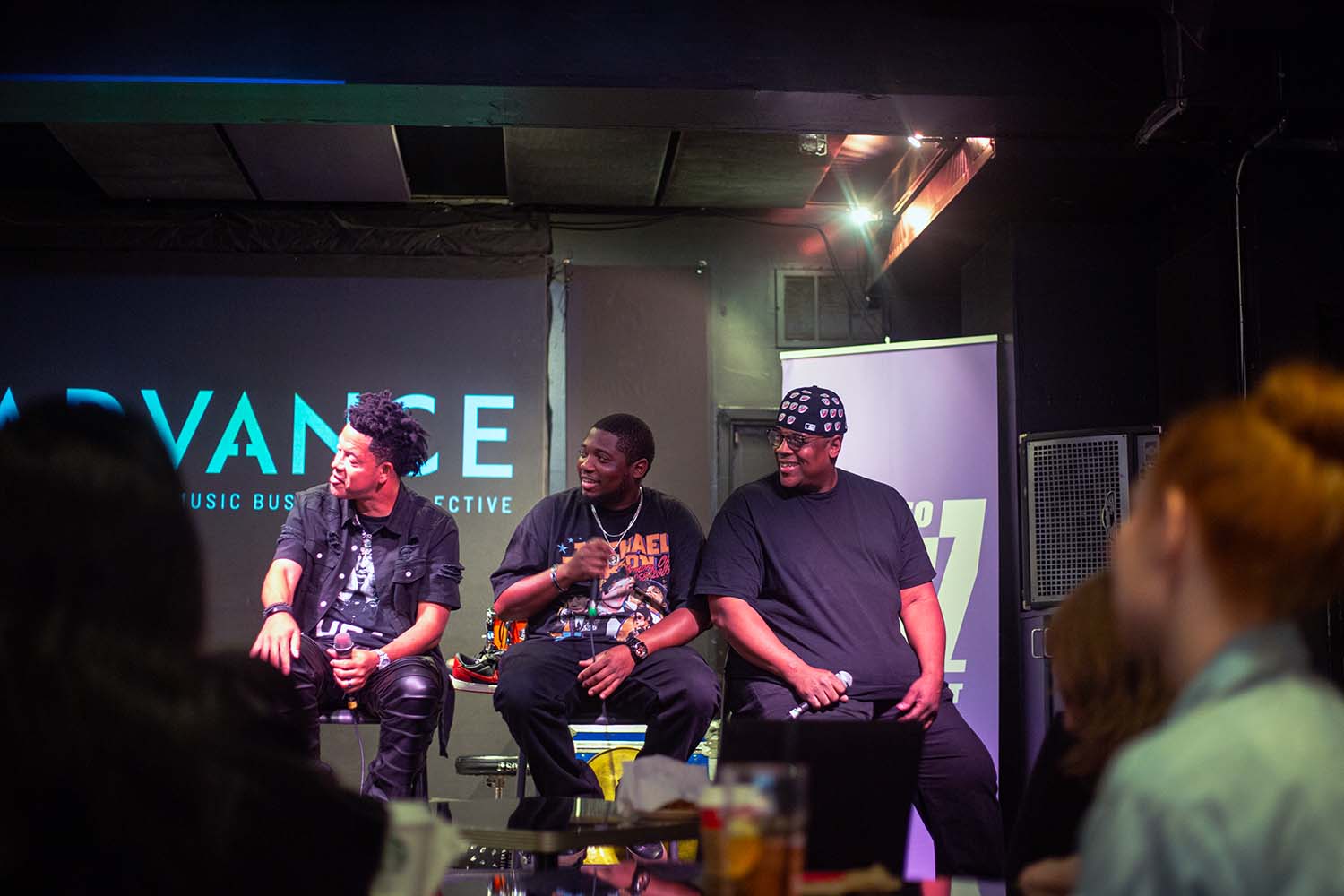
For Hubbard, the connective tissue was improvisation itself, the freedom to play whatever the moment calls for rather than follow a fixed structure. He pushed the point to its logical extreme, noting that the same resistance to gatekeeping that let Coltrane, Davis and Louis Armstrong reshape the music against the wishes of purists is exactly what keeps producing something new today. Turner offered a parallel framework rather than a rebuttal, describing jazz less as a genre than a kind of mathematics, the probability running underneath everything else in music until, as she put it, everything comes together.
The hand-off between generations
The clearest illustration of how that lineage actually survives came from James, who has spent the past year working alongside vocalist Molly Johnson, 67, and a 20-year-old producer on Johnson's new project. She described watching the two trade reference points across a fifty-year gap, catching herself mid-conversation, wondering how a 20-year-old could speak so fluently about D'Angelo, Erykah Badu and A Tribe Called Quest.
The producer built the tracks alone on a laptop before Johnson asked to bring her live band back into the process and take the songs to instrumentation. James was careful to frame the exchange as mutual rather than top-down. Johnson, with four decades in the business, did not walk into the room dictating how things should be done. She asked the producer to teach her his process so the two could build something together, which is the kind of generational exchange James sees driving the music forward more than any single breakthrough artist could.
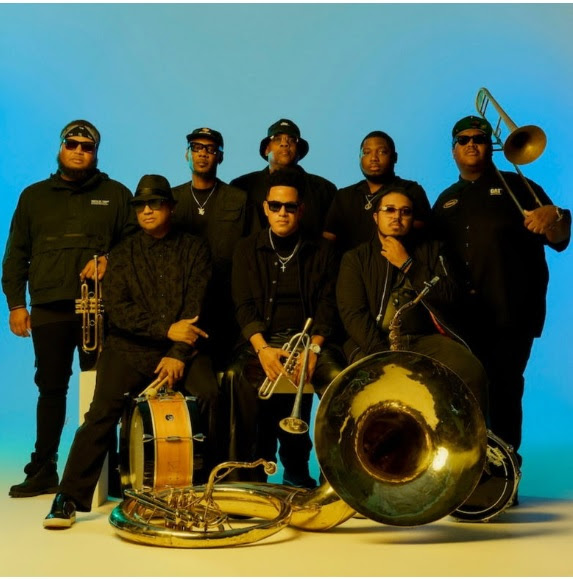
The Soul Rebels carry that same story within one band across more than three decades. Perkins Jr. pointed to the gap between the group's earlier sound and 2019's Poetry in Motion, an album built almost entirely around rap vocals while still carrying the brass and drum lines that define the band's identity, evidence, he said, that the band's musicality has kept improving project by project. Hubbard credited that growth to a deliberate refusal to settle into one lane, describing a lineup that spans an Earth, Wind and Fire era through the 2000s, each member bringing whatever generation shaped them into the room rather than defending turf.
LeBlanc, asked whether shifting genre lines changes how he writes, gave the shortest and most direct answer of the morning. It doesn't, he said, because what comes out of him at the workstation is whatever he's feeling that day, and the genre label arrives after the fact.
What streaming gives, and what it costs
The most contested terrain of the panel was the algorithm itself, and nobody pretended the picture was simple.
Hubbard made the case for its upside in plainly practical terms, comparing today's bottomless catalogue to the record store era when limited money forced a choice between two albums. Now he can give an unfamiliar artist a chance he never would have paid for in the old model, following one recommendation into a rabbit hole of music he never knew existed.
But he refused to let that upside sit uncontested, pointing out in the same breath that artists still aren't paid fairly for the plays generating all that discovery. The pro and the con, in his telling, occupy the exact same sentence.
Turner pushed the conversation into a different kind of uncertainty, one about trust rather than money. She described catching herself listening to a track and wondering whether it was AI-generated, confident that musicians can tell even when casual listeners increasingly can't. That blurred line, she argued, is producing real consequences that go beyond curiosity.

"I think ultimately, at the end of the day, authenticity and true artistry, people are revolting against the algorithm and AI and all of this. That's why vinyls are coming back in. People want analog again."
It was the most direct claim of the morning, and it reframed everything Hubbard had just said about infinite digital discovery. The same technology that generates endless choice is also generating a counterpull toward something slower and harder to fake.
Perkins Jr. made that counter-pull sound less like a market trend and more like a personal ritual. Asked what draws him back to older recordings, he didn't reach for nostalgia. He talked about needing to calm down, describing how he'll set up a vinyl record and play Coltrane or Charlie Parker specifically to relax when the noise of daily life gets to be too much. Pressed on what made the format itself calming rather than just the music, he traced it back to his own training as an instrumentalist, sitting in class transcribing the same charts the musicians he listened to had written decades earlier, a kind of education he could reactivate every time the needle dropped.
Hubbard's crate-digging and Turner's vinyl revival described the same underlying shift from two different angles: A generation raised on infinite access starting to value scarcity again, not because the music sounds better on wax, but because choosing something deliberately means something an algorithm's suggestion never will.
Culture leads the business, whether the business likes it or not
James brought arguably the sharpest line of the panel when the conversation turned to how the industry actually functions day to day. The mistake the business side keeps making, she said, is believing it shapes culture when the relationship runs in the opposite direction entirely.
"When we talk about algorithms and data, streaming, all that, I want to throw up every time it comes up in a meeting. I go based on feeling."
She backed that instinct with a story from her years programming radio in Winnipeg, where a nervous board worried that a hardcore rap format would scare off advertisers. The station rebranded as Rhythm, and James found her bridge in Digable Planets and the late producer J Dilla, building a Dilla Day tradition in which local bands performed his catalogue live, and the city, in her words, united around the idea that this was real musicianship. When her own board told her a particular show wouldn't draw a crowd, she ran it anyway and let the turnout make the case for her.
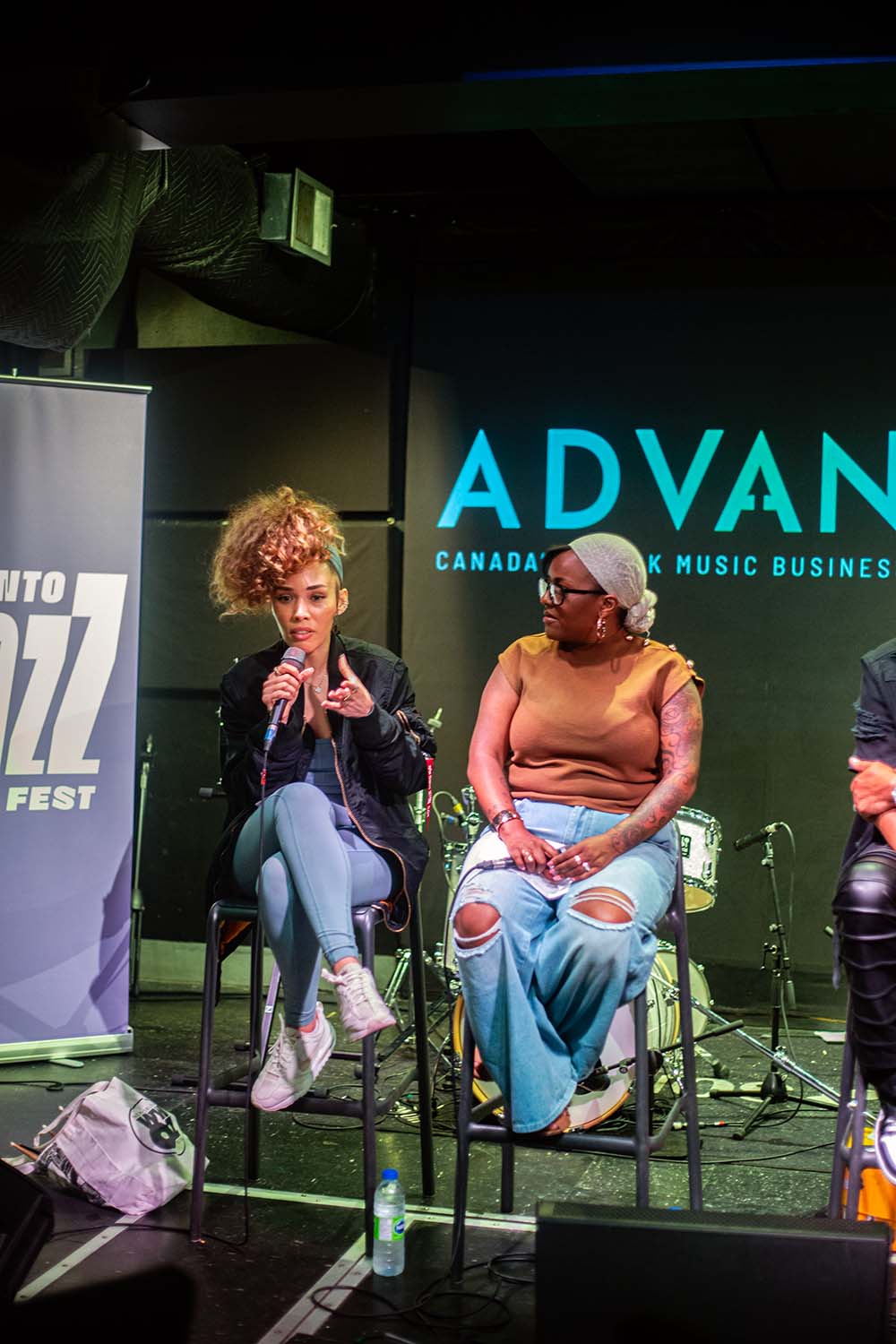
Turner's friction with the industry pointed at a related target, genre boxes rather than data. She described years on major labels being asked which Grammy category her sound would fit before she'd finished making it, an experience she traced directly to her own hybrid identity as a Canadian-Jamaican artist who was never going to sit neatly inside one lane.
Releasing music independently now, she described the freedom to record a reggae track on Wednesday and a jazz track on Thursday as one of the most liberating shifts of her career. James, sitting on the side of the business that has to sell what Turner makes, didn't dispute that freedom makes her job much harder. She simply said it's the cost of doing it right, and that her own instructions to artists in the studio are blunt: Leave the data and the radio formatting at the door, and talk to her only about what they actually want to create.
Genre dissolving in real time
Turner closed the loop on the algorithm conversation with an example that reframed everything that had been said up to that point. She described an artist named Laufay pulling tens of millions of monthly Spotify listeners and a following of over 9 million on Instagram, almost entirely from Gen Z and Generation Alpha audiences, with nothing in the artist's keywords or branding referencing jazz at all. When Turner tried to target advertising toward that same listener base, the algorithm kept routing her to other singer-songwriters rather than other jazz acts, suggesting an entire generation is absorbing jazz harmonies without ever being told that's what they're hearing.
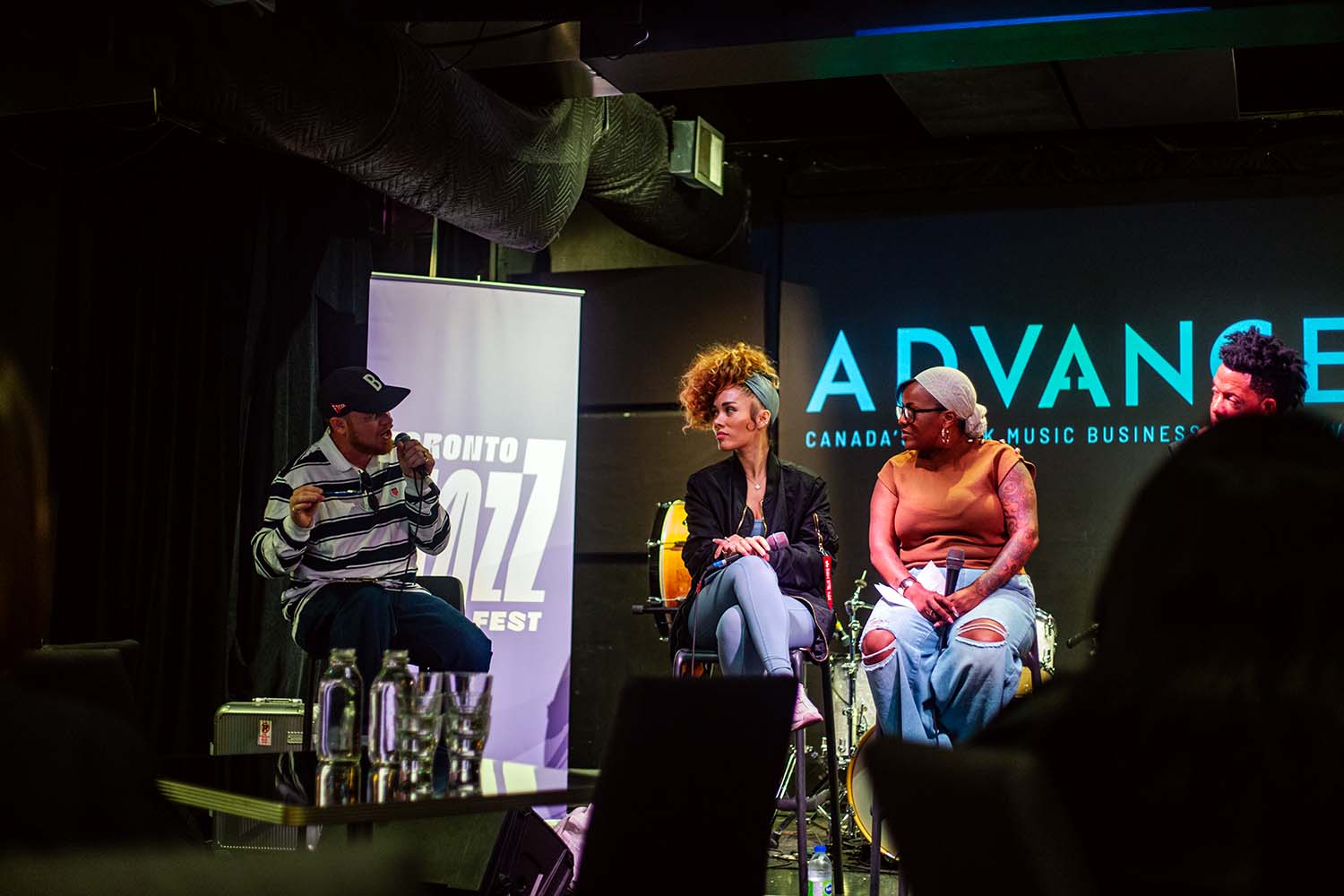
Bastid asked the obvious follow-up, whether artists like that are redefining the genre or simply abolishing it. James didn't hesitate. That's exactly what it is, she said, and Turner backed it up with a detail from her own ad campaigns, where targeting a song's emotional tone now outperforms targeting its genre tag. The infrastructure shaping how people discover music, in other words, may be quietly retiring the genre categories the industry spent a century building, replacing them with something closer to mood, without anyone deciding to make that change on purpose.
A panel that argued with itself, on purpose
What made the morning work was that nobody on stage fully agreed with anyone else, including when they did. Hubbard could call the algorithm a gift to listeners and, in the same breath, admit that it shortchanges artists. Turner could blame streaming for eroding authenticity while crediting that same anxiety with sending people back to vinyl. James could build her career on the data, she said, which makes her sick in meetings.
None of those positions cancelled each other out. They sat together the way jazz and hip hop were described all morning, not as opposites resolving into one tidy answer, but as kin who keep disagreeing productively across a long shared history.
The Soul Rebels carried that argument to The Rex Hotel stage that same night and made it physical, horns standing in for everything the panel had spent the morning putting into words. Ten days of programming followed across Yorkville and the city's concert halls, but the opening conversation had already done what Black Music Month programming is supposed to do.
It didn't just commemorate jazz's influence on what came after it. It made the case, through people who live inside both genres for a living, that the influence never stopped moving in both directions, and that whatever comes next for either one will keep being decided by the same restless, generationally inherited instinct to take what already exists and make it say something new.
The week of jazz still ahead
Friday's panel was just the overture. Toronto Jazz Festival's 39th edition runs through June 28, with free outdoor programming filling Bloor-Yorkville daily alongside ticketed shows at Koerner Hall, the Danforth Music Hall, The Rex Hotel and Jazz Bistro.
Worth building a night around:
- Cassandra Wilson and Hiromi's Sonicwonder anchor two of the week's marquee ticketed shows
- Kassa Overall, the Grammy-nominated drummer, emcee and producer, plays The Rex across two nights and might be the clearest proof of everything said inside the Stealth Lounge that morning
Full schedule and showtimes are at torontojazz.com.