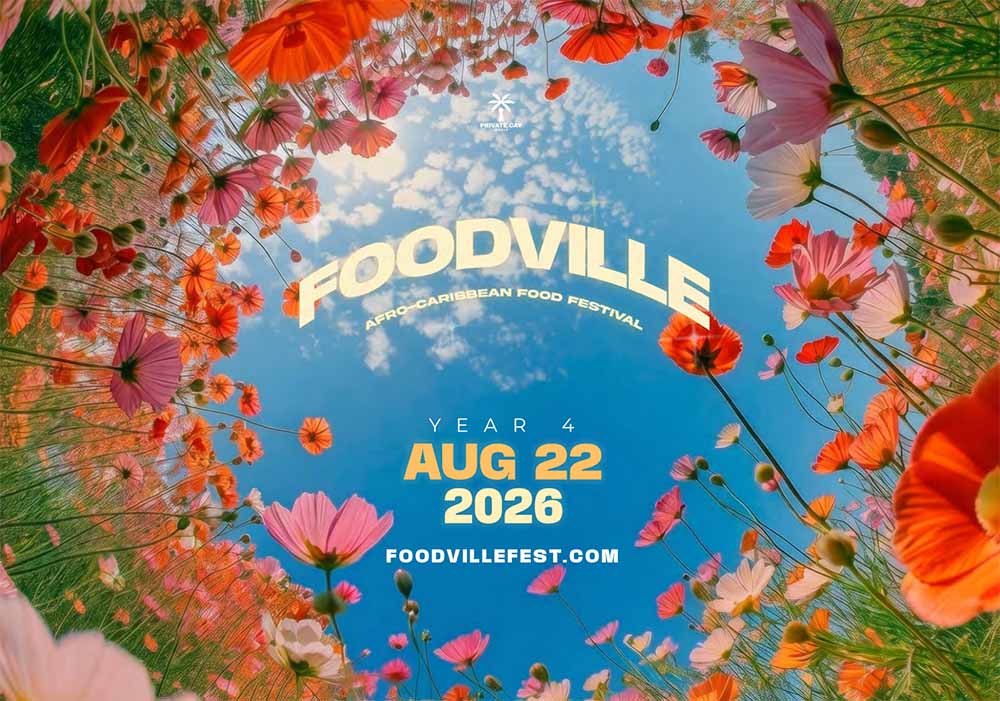
Toronto's biggest Afro-Caribbean food festival is going bigger for its fourth year, trading its longtime home at Stackt Market for the much larger Lamport Stadium and bringing in Ghanaian hitmaker Moliy, fresh off her iHeartRadio World Artist of the Year win, as headliner. Foodville Fest returns August 22 with 60-plus vendors, live music, awards and a first-ever Zero-Waste Food Program built with Table For Us.
Foodville Fest has spent three summers building a reputation as one of the GTA's fastest-growing celebrations of African, Caribbean and Afro-Latin food culture, and this year the festival is stepping into a venue that matches that growth. On August 22, Foodville moves from its longtime home at Stackt Market to Lamport Stadium, bringing with it a headliner whose year has been just as big as the festival's own trajectory. Ghanaian singer Moliy, who was named World Artist of the Year at the 2026 iHeartRadio Music Awards in March, will bring her genre-blending catalogue of Afrobeats, dancehall, highlife, Amapiano, reggae and neo-soul to a stage built around the same cultural fusion that defines her sound.
Moliy's rise over the past two years has closely tracked the kind of cross-diaspora energy that Foodville has built its identity around. Her 2024 single "Shake It to the Max (Fly)," featuring Jamaican dancehall stars Skillibeng and Shenseea, spent 12 consecutive weeks atop Billboard's U.S. Afrobeats Songs chart and became the first song featuring Jamaican artists in 22 years to reach No. 1 on Billboard's Rhythmic Top 40 Airplay chart, a record last held by Sean Paul's "Baby Boy" in 2003. That track and the global attention it drew helped push Moliy past Nigeria's Ayra Starr, South Africa's Tyla, Jackson Wang and JO1 to claim her iHeartRadio win, a fan-voted honour that made her the first Ghanaian artist to take the World Artist of the Year title.
From Stackt Market to a stadium stage
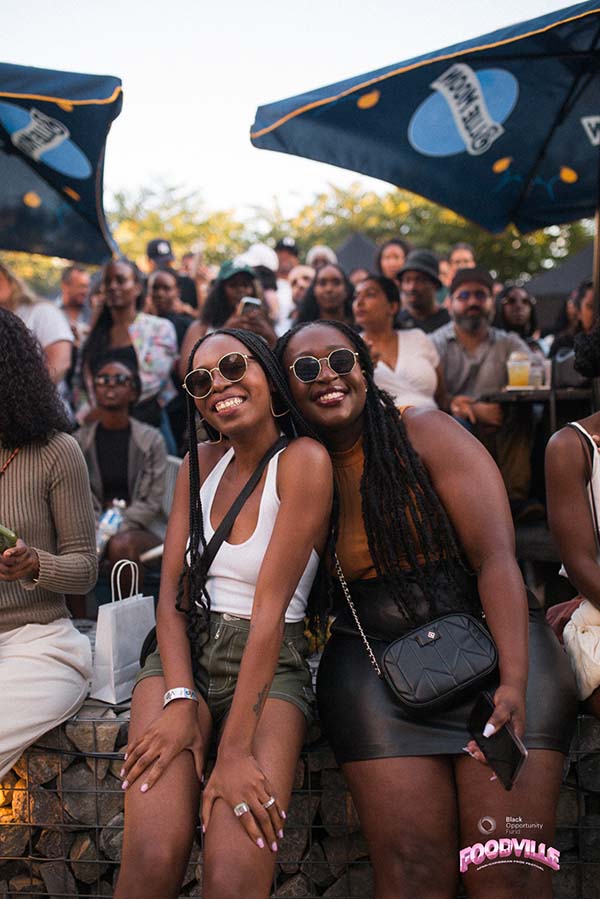
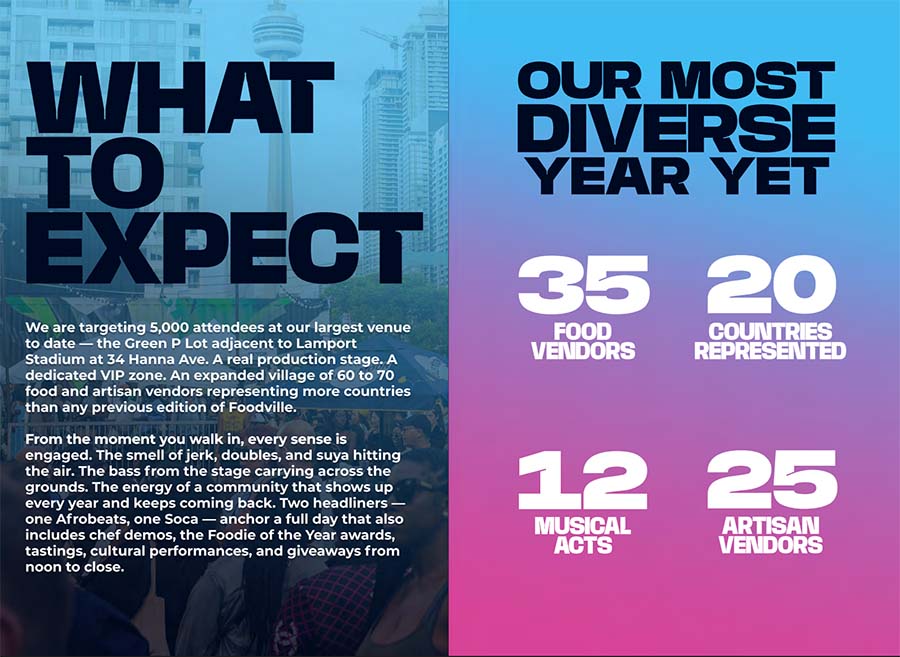
Foodville launched in 2023 as a one-day gathering at Stackt Market, drawing food lovers with a lineup of Black-owned vendors serving dishes rooted in Ghana, Jamaica, Nigeria, the Bahamas, Trinidad and beyond. The festival has welcomed more than 14,000 attendees across its runs and built partnerships along the way with Sunwing, the Black Opportunity Fund, Margaritaville Resorts and the Islands of the Bahamas tourism board. Lamport Stadium gives the event significantly more room to grow, both in vendor capacity and in the scale of programming organizers can bring to the site.
This year's edition adds two headline performers to the bill, with Moliy topping a lineup that also includes the festival's usual mix of DJs and cultural programming. Beyond the music, Foodville has built its identity on culinary creativity that leans directly into the diaspora's overlapping food traditions, and this year's in-house menu continues that approach with three signature creations designed as much for eating as for sharing online.
Attendees this year can expect the following.
- More than 60 food and artisan vendors spanning African, Caribbean and Afro-Latin cuisines
- Live performances from two headline acts, including iHeartRadio's World Artist of the Year, Moliy
- The Foodie of the Year Awards, recognizing standout vendors and creators
- Tastings, giveaways and interactive cultural experiences throughout the day
- Three exclusive in-house menu items, including a Caribbean-inspired rum ice cream made with a branded liquor partner, Afro-Caribbean fusion sushi push pops and a jerk and jollof burrito that combines two of the diaspora's most recognizable flavours in one dish
A zero-waste commitment built with Table For Us
Foodville's growth this year comes with a new commitment to the communities it draws from. The festival has partnered with Table For Us, a Toronto-rooted nonprofit working to end food insecurity across Canada through food access programs, vendor support and shared meals, to launch its first Zero-Waste Food Program. Under the partnership, surplus food from participating vendors will be collected and redistributed to households facing food insecurity across the GTA rather than being discarded at the end of the day. Foodville will also direct 10 percent of ticket revenue to Table For Us, extending the organization's ongoing work well beyond the festival grounds.
The timing aligns with a broader cultural moment that Foodville celebrates. Afrobeats, Amapiano, dancehall, soca and reggaeton have spent the past several years reshaping global charts and streaming platforms, and Black and Latino creators, chefs and storytellers are increasingly shaping mainstream entertainment and lifestyle trends well beyond music alone. Foodville's founder, Tristan Douglas, has spent more than a decade building experiences at that same intersection of food, music and community, with past work including the marketing lead role on a U.S.-based fine wine series that sold out across New York, Miami, Atlanta and Washington, D.C. and the creation of the Lite Vibes Festival in the Bahamas.
Where the festival goes from here
Foodville's move to Lamport Stadium marks the clearest sign yet that a festival built around Afro-Caribbean food culture has found a genuine audience in Toronto, one large enough to outgrow the market space that helped launch it. The addition of a fan-voted global music award winner as headliner signals an ambition to draw beyond the GTA's existing food festival crowd and toward the wider audience that has already made Moliy's music a fixture on charts from Accra to London.
What stands out most about this year's edition, though, is the Zero-Waste Food Program. Festivals built around food inevitably generate surplus, and Foodville's decision to formalize a redistribution partnership with Table For Us turns that reality into a direct benefit for GTA households facing food insecurity. Paired with the festival's continued growth in scale and star power, August 22 looks positioned to be Foodville's biggest and most consequential year yet.