
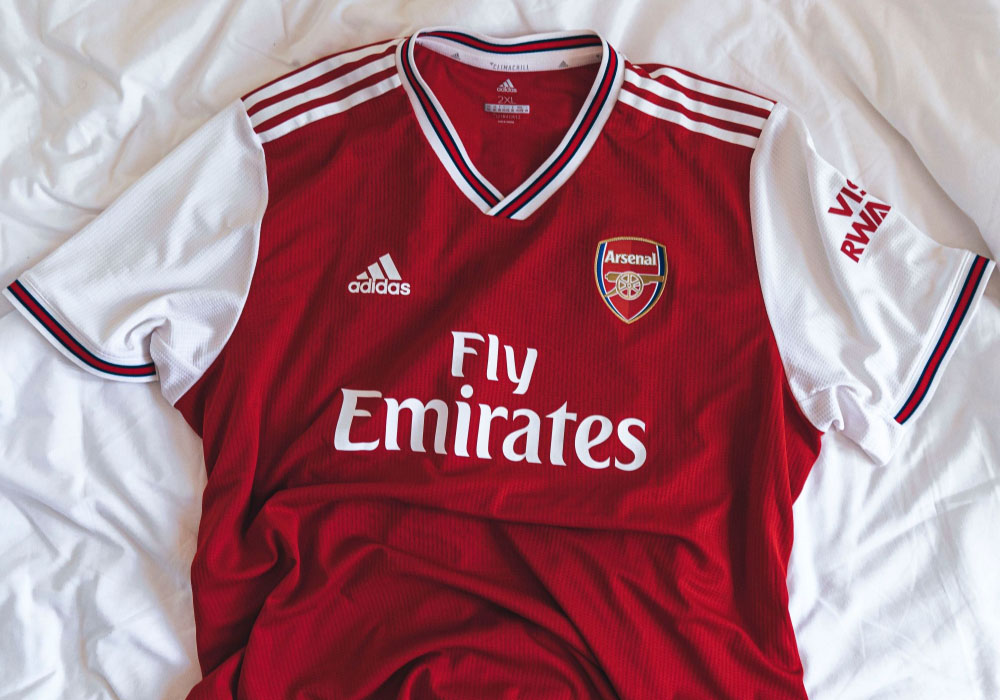
Arsenal FC carries a meaning that runs far deeper than trophies and table standings. For millions of Black fans worldwide, the north London club represents identity, pride and cultural belonging. Rooted in historically Black neighbourhoods like Hackney and Haringey, shaped by a procession of iconic Black players across generations, and now the subject of a landmark book, Arsenal has become a genuine symbol of excellence. After a 22-year wait, the Gunners are Premier League champions once more.
It was September 1991. I was 19 years old, fresh off a plane from Canada, and London was everything I had hoped it would be. I had arrived through the Student Work Abroad Program (SWAP), part of a group of about 12 Canadian students who touched down on a beautiful autumn day, full of ambition and very little else. We were placed at a hostel near Regent's Park for what three of us had somehow understood would be a full week's accommodation. It was not. On the evening of the third day, we returned from exploring the city to find our luggage sitting in the lobby. Our room had been given to someone else.
Suddenly, three young Canadians were effectively homeless in London with next to no money. We still hadn't bothered to find a job yet since we thought we had a bit of time. I had to find a solution. Quick. I spotted a discarded copy of the Evening Standard in the lobby and flipped to the classifieds. There was a listing for a small bedsit (a bachelor room) in Hackney. People warned me it was not the most desirable neighbourhood, but I was in no position to be choosy. So Hackney became my home through the final three months of 1991, and with it, north London became the landscape of one of my most formative adventures. I had no idea, standing there with my bags, that I was planting myself in the middle of one of the most historically significant Black communities in England or that a football club just up the road would permanently change the way I understood identity, pride and belonging.
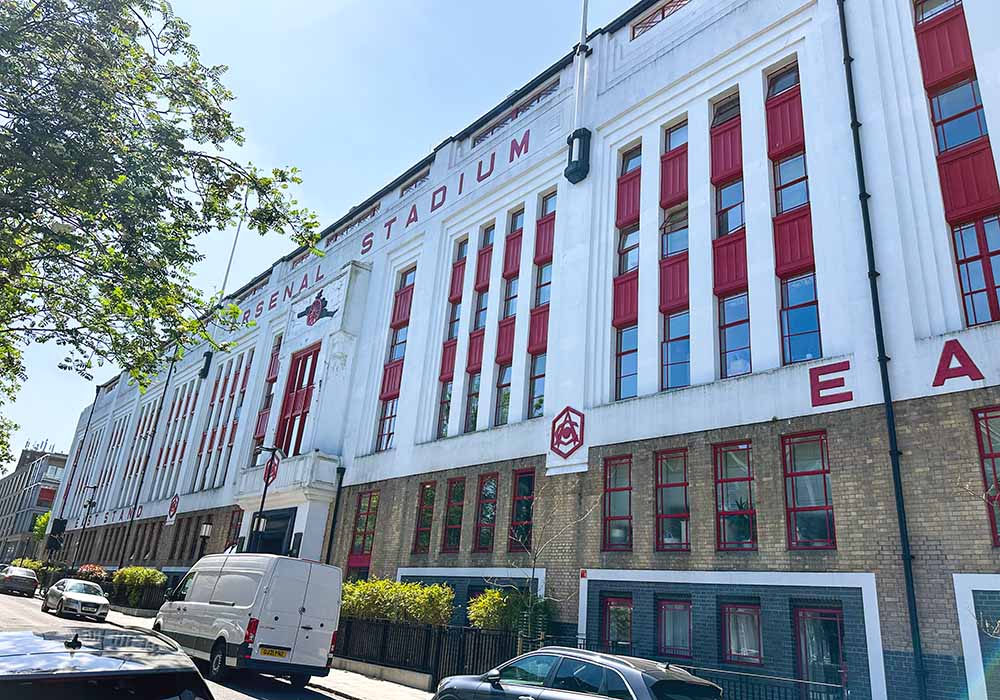
The old Highbury stadium was close enough that I could feel its energy radiating through the neighbourhood on match days. Something about that mythical building pulled at me. On December 1, 1991, I made my way through the turnstiles for a First Division North London derby, Arsenal against Tottenham Hotspur. Arsenal won 2-0. Kevin Campbell and Ian Wright scored the goals. The crowd of nearly 39,000 people roared with a collective joy I had never experienced before. As a young Black man watching two Black players dismantle a rival in front of that raucous, electric crowd, I felt something shift inside me. I became a Gooner that afternoon, and I have never looked back.
More than three decades later, when Manchester City drew 1-1 at Bournemouth on Tuesday, May 19, 2026, confirming Arsenal as Premier League champions for the first time in 22 years, I felt every single one of those years at once.
A club shaped by its community
There is a geographical reality to Arsenal's relationship with Black Britain that rarely gets spoken about plainly enough. The club's spiritual home, Highbury, sat at the heart of north London neighbourhoods that have long been among the highest-concentration Black communities in England. Hackney and Haringey, both historically home to large African, Caribbean and Black British populations, surround north London in a way that made Arsenal, almost inevitably, a club of its people. Haringey is a highly diverse borough, with a significant proportion of residents identifying as Black, Black British, Caribbean or African. Hackney has carried a similar character for generations. When Black families settled in north London from the 1950s onward, Arsenal was the local club. The connection was organic, geographical and deeply personal.
As Associate Professor of Film, Culture, and Society at University College London (UCL), Dr. Clive Chijioke Nwonka has put it: "At Arsenal, what is going on on the pitch is always a small microcosm of what's going on in the community." That observation captures something essential. The stadium did not simply exist alongside these Black communities; it grew up inside them, and they grew up around it.
When I lived in Hackney in 1991, the neighbourhood felt alive with Black culture. The markets, the music from open windows, the barbershops, the churches, the sheer vitality of people who had built their lives there from across the Caribbean and Africa. Highbury sat at the edge of all of that. To be a Black Londoner in north London and support Arsenal was, for many people, simply a natural consequence of where you lived and who you saw yourself in.
I recently went back to visit the former Highbury building. It has been converted into upscale condominiums, and the neighbourhood around it has been considerably gentrified since my early '90s days. Just up the road, the gleaming Emirates Stadium now stands as Arsenal's modern home, a world-class arena that opened in 2006 and seats over 60,000 fans.
The contrast between the two is striking.
The old Highbury, now a quiet residential conversion and the Emirates, loud, vast and alive on match days. Part of me finds that quietly sad. Standing there, though, I could still feel the old ghosts. The spirit of the place has not entirely left. If I am honest, I would welcome the chance to live in one of those Highbury apartments if the opportunity ever arose. Some places mark you permanently, and Highbury marked me.
"Black Arsenal" and why the story needed to be told
In 2024, a book arrived that put language and photography to something many of us had felt for years but never seen fully articulated. Black Arsenal, co-edited by Dr Clive Chijioke Nwonka, Associate Professor at UCL, and Matthew Harle, is the first dedicated exploration of Arsenal's relationship to contemporary Black identity and culture. Explored through a combination of stunning photography and rare archival images, the book examines how a new Black iconography emerged at Arsenal at key moments in British history, becoming crucial to the creation of new forms of Black identification.
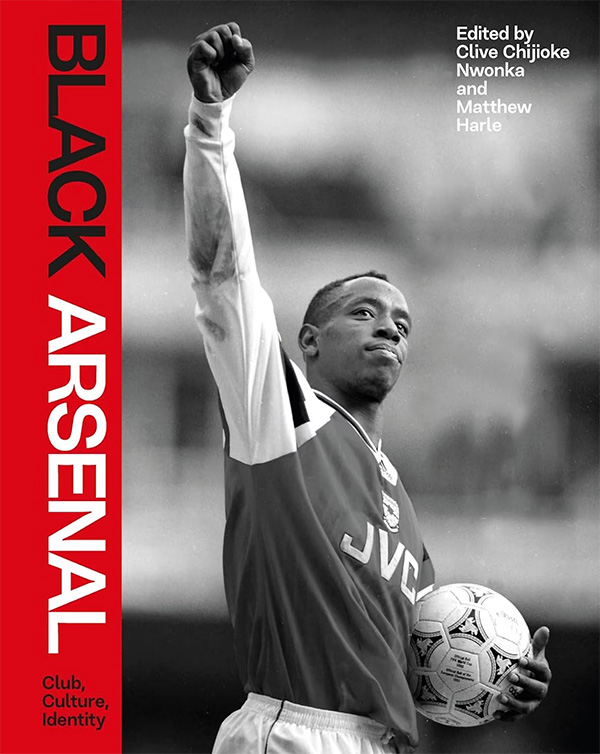
Contributors include former legends Ian Wright and Paul Davis, critical appraisals from Paul Gilroy and Gail Lewis, and personal responses from podcaster Clive Palmer, the Ezra Collective and writer Amy Lawrence, among many others. Even Jay Z and Spike Lee weigh in. The result is a remarkable document that situates Arsenal not just within football history but within Black cultural history.
Dr Nwonka has said the book attempts to reflect on what Arsenal means to Black Britons and how it continues to influence a broader sense of belonging, with Arsenal's affinity with Black identity transcending football and spreading across cultures; in the media, music, fashion, politics and everyday social experiences.
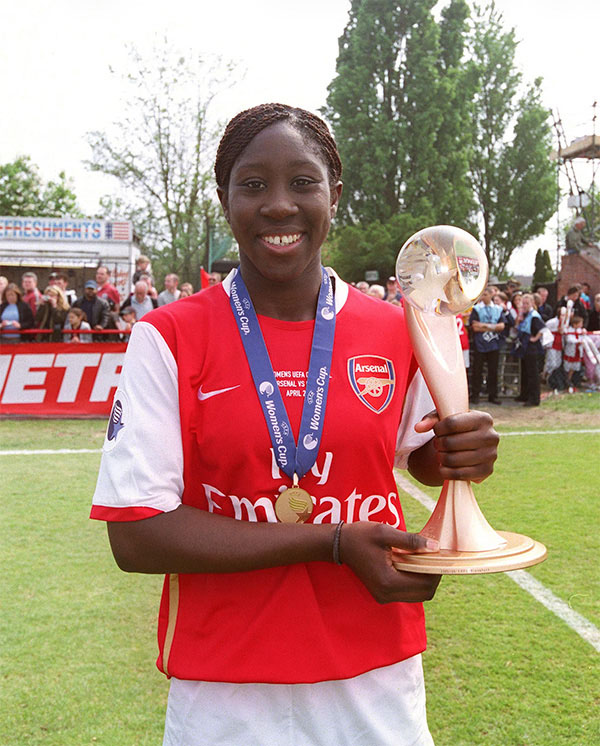
Former Arsenal Women's player Anita Asante, one of the contributors, has spoken directly to why this documentation matters: "Seeing ourselves reflected in the stories of Black Arsenal is so vital, not just for recognizing the past but for inspiring future generations. Arsenal has been a place where Black players and supporters could feel seen and celebrated, and this book captures that spirit beautifully."
For Femi Koleoso, Ezra Collective bandleader and lifelong Gooner, the connection has always been visceral: "It was a bit like 'you're Black, you're Nigerian, you're a Gooner'. We had all the kits growing up and just fell more and more in love with the club as we grew older." He points to the mural outside the Emirates celebrating Arsenal Nigeria as a perfect symbol of what the club represents: belonging without apology.
@wearetheoverlap 'It Was What It Was' new release! 🚨 Brendon Batson talks moving to England, falling for football, making history as Arsenal’s first Black player, and becoming a WBA legend. A must-listen. 👏 #arsenal #ucl #premierleague #viral #newrelease #theoverlap ♬ original sound - The Overlap
The lineage of Black excellence on the pitch
Before Ian Wright, Arsenal had a collection of Black players who wore the famous red and white, starting with Brendon Batson in the 1970s, then going on to Paul Davis, who played for Arsenal for 15 years. Davis began a conveyor belt of Black talent at Arsenal: Davis himself, Michael Thomas, David Rocastle, Kevin Campbell, Ian Wright. In 1991, Arsenal played Leicester City in the League Cup and all five of those players were in the team. That was a significant moment, even as late as 1991.
For the Black community globally, this lineage matters profoundly. Each player opened a door for the next. As one commentator has observed, that process "allowed for David Rocastle and Michael Thomas to think, 'We can do it because you did it', which then allowed for Campbell and Ian Wright to come to the club, which then allowed for Thierry Henry and Saka, and so on."
The players who defined this era, and what they meant to so many of us, are best captured in a single overview:
| Player | Position | Years at Arsenal | Significance |
|---|---|---|---|
| Brendon Batson | Defender | 1971-74 | Pioneer; among Arsenal's earliest Black players |
| Paul Davis | Midfielder | 1980-95 | 15-year servant; opened the door for a generation |
| David Rocastle | Midfielder | 1984-92 | Beloved figure; embodied the spirit of Black Arsenal |
| Michael Thomas | Midfielder | 1984-91 | Scored the title-winning goal at Anfield, 1989 |
| Kevin Campbell | Forward | 1988-95 | Prolific scorer; formed a formidable partnership with Wright |
| Ian Wright | Forward | 1991-98 | Club legend; symbol of Black joy and excellence |
| Patrick Vieira | Midfielder | 1996-2005 | Captain; led Arsenal to multiple league titles |
| Thierry Henry | Forward | 1999-2007 | All-time top scorer; global icon |
| Bukayo Saka | Winger | 2018-present | Born and raised in London; the new torchbearer |
Ian Wright was the one who hit me hardest that December night at Highbury. There was something in the way he played, raw passion, electric joy, a complete refusal to be anything other than himself, that resonated with me at a level I could not fully name at 19. "Wrighty" became the poster boy of Black excellence in the 1990s because he was arguably the best finisher in English football at the time. But to those who identified with him, it was more about how Wright handled himself. He was pure, unadulterated Ian Wright.
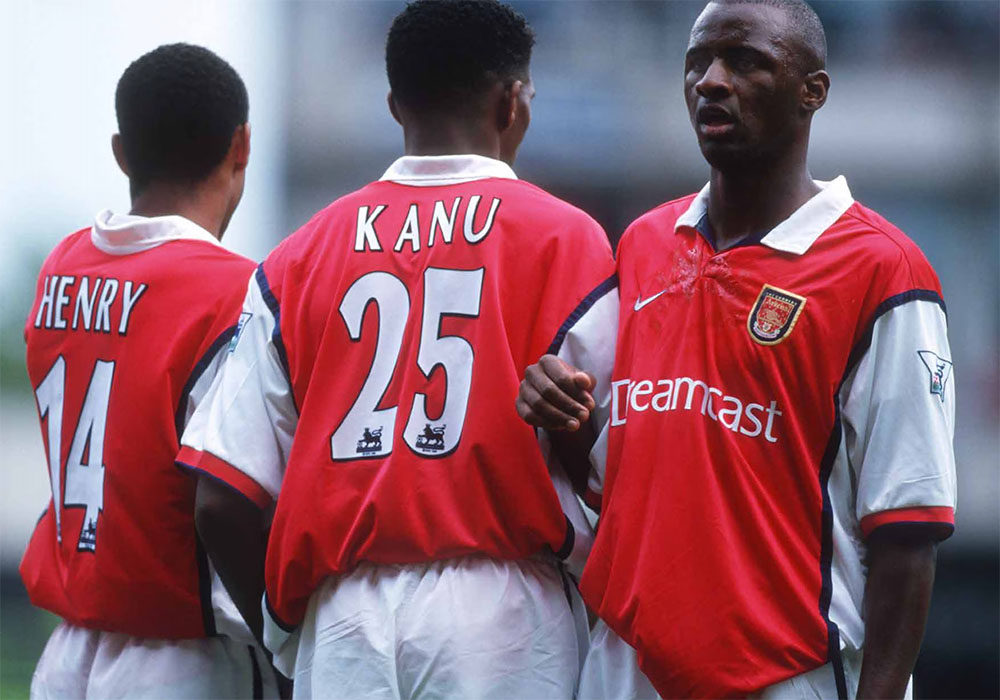
In 2002, with a team including Henry and Vieira, Arsenal became the first club to field nine Black players in a Premier League game, a 4-1 thrashing of Leeds United at Elland Road. That milestone was covered as a footnote in mainstream football media. For the Black community, it was far more than that.
What Arsène Wenger built
Much of Arsenal's global appeal to Black fans worldwide deepened under the long tenure of manager Arsène Wenger, who arrived in 1996. Wenger brought through so many African and French-African players, including Patrick Vieira, Nwankwo Kanu and Lauren, cementing Arsenal's global reach to the African continent. He did not make political statements about it. He simply picked the best players he could find and trusted them.
As observers noted at the time, Wenger did not field nine Black players to make a statement. It was entirely organic. That authenticity is precisely what made it resonate so deeply across the diaspora. When a Black kid in Toronto, Lagos, Kingston or Nairobi turned on the television and saw that Arsenal lineup, it felt like evidence of something real.
Thierry Henry stands as the most visible product of that Wenger era. He arrived from Juventus in 1999, was reinvented as a striker under Wenger's guidance, and became Arsenal's all-time leading scorer. His combination of intelligence, pace and artistry turned him into a cultural figure far beyond football. For young Black people watching him, he made grace and dominance look like the same thing.
Outreach, equality and community action
Arsenal's connection with the Black community has never been purely symbolic. The club has taken concrete steps over the years to build genuine relationships with the people who live in the boroughs surrounding its stadiums. From partnerships with anti-racism organizations to youth programs that specifically target north London's diverse communities, Arsenal has consistently used its platform for more than just promotion.
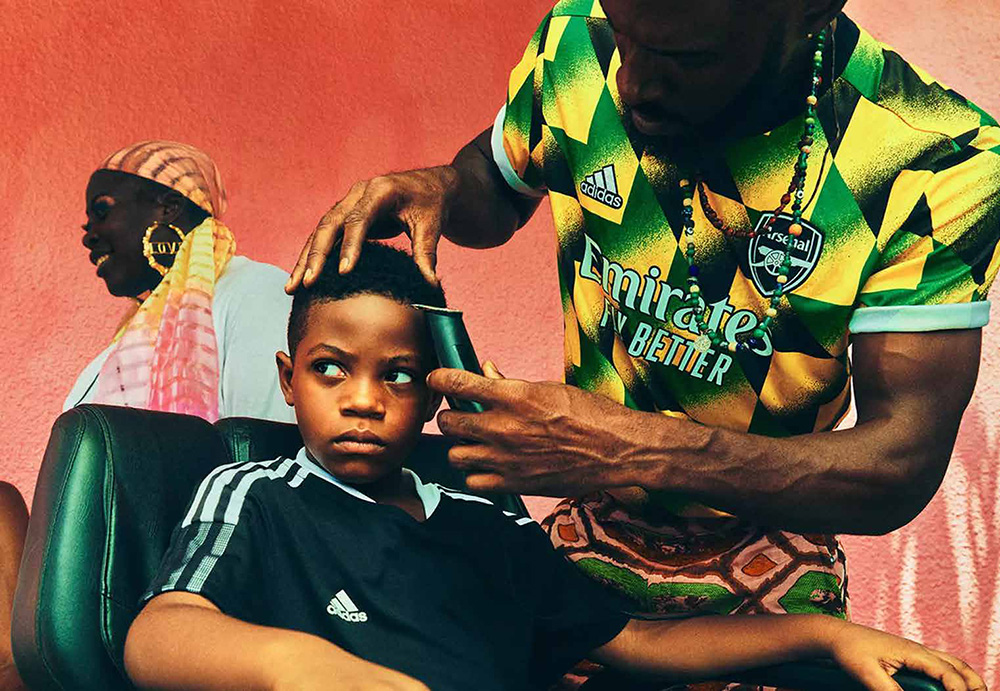
The club's community engagement programs include:
- Youth football clinics offering free training sessions for children from across Hackney, Haringey and surrounding areas
- Education support and mentorship programs connecting young people with role models inside the club
- Long-standing partnership with Kick It Out, the leading organization working to combat discrimination in football at every level
- Black History Month events that spotlight the contributions of Black players, staff and supporters across the club's 140-year history
Ian Wright himself has been clear about what all of this amounts to: "I understand what 'Black Arsenal' means now. We have the players, the fanbase, we have the history of Black players from all over the world and we have a deep connection with London. And the next generation is led by Bukayo Saka. There is my generation of 'Black Arsenal'. And here is a new one."
Saka, born and raised in west London and a product of Arsenal's Hale End academy, has carried that baton with remarkable composure. At a club that has long been connected to the people, with historic strong representation in the Black community built on the shoulders of Paul Davis, Michael Thomas, David Rocastle, Ian Wright, Thierry Henry, Patrick Vieira and Sol Campbell, Saka has picked up the mantle that so many before him carried with distinction. He is a symbol of continuity; proof that the lineage holds.
The 22-year wait is over
Arsenal won the Premier League title for the first time in 22 years when Manchester City's draw at Bournemouth confirmed the Gunners could no longer be caught at the top of the table, making them the 2025-26 Premier League champions. Their success followed three consecutive seasons as runners-up, including 2023-24 when Manchester City pipped them to the title by an agonizing two points.
For me, this title lands differently than any other sporting result in my adult life. That December night in 1991, standing inside Highbury watching Kevin Campbell and Ian Wright dismantle Tottenham in front of nearly 39,000 people, I made a commitment to this club that I have held through every heartbreak, every near-miss and every second-place finish since. I was a young Black Canadian who had stumbled into Hackney with almost nothing, and Arsenal gave me a sense of place and pride that I carried home across the Atlantic and have never put down.
Worth every year of the wait
Twenty-two years is a long time to hold faith. And yet, this title feels completely right precisely because of how hard it was to get there. Arsenal won 25 of their 37 league games, kept 19 clean sheets and led the table for 200 days before securing their 14th top-flight championship. They earned it with sustained excellence, resilience and the kind of collective purpose that mirrors what the club has always represented to its Black community; not a shortcut, but a standard maintained through adversity.
The relationship between Arsenal FC and the global Black community is woven into the fabric of football history. It lives in the streets of Hackney and Haringey, in the memories of every young person who watched Paul Davis and David Rocastle and, for the first time, understood they belonged in this sport. It lives in the legacy of Ian Wright, who played with a joy so contagious it crossed oceans; in Thierry Henry, whose artistry made north London feel like a stage for something genuinely beautiful; and now in Black Arsenal, the book that gives this entire story the depth and permanence it deserves. As Dr. Nwonka has argued, Arsenal uniquely embodies an "organic connection" with the Black community, one shaped by the community's diverse experiences, devotion and identification with the club over many decades.
The 2025-26 Premier League title is more than a trophy for the Gunners faithful. For the Black fans who have carried this club in their hearts for generations, some of them since long before they ever set foot in England, it is confirmation of something they have always known. Arsenal belong at the top. They are finally back there, and this time the moment belongs to everyone who believed when it was hard to believe.
Related Content
- Running until January 2027: The Music is Black: A British Story