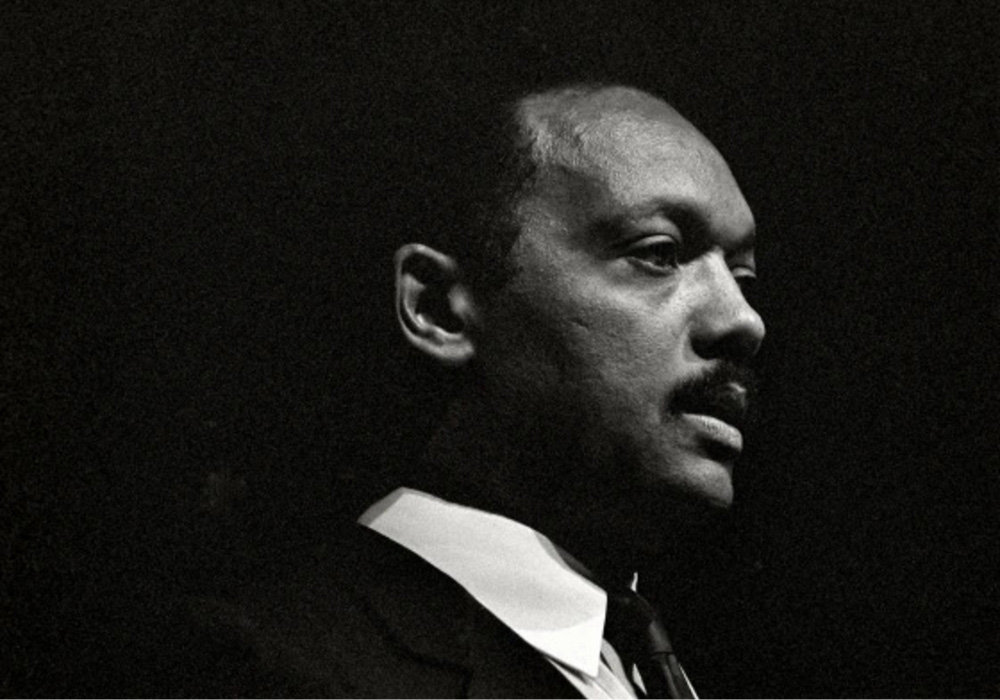
Reverend Jesse Jackson, one of the most influential civil rights leaders of the late 20th century and a two-time U.S. presidential candidate, has died at 84. A towering figure in American public life, Jackson dedicated more than five decades to advancing racial justice, economic equity, and political representation for marginalized communities.
Born in Greenville, South Carolina, in 1941, Jackson rose to national prominence during the civil rights movement of the 1960s. He worked closely with Martin Luther King Jr. and was present in Memphis at the time of King’s assassination in 1968. That moment marked a turning point. Jackson moved from the role of activist-organizer to a national leadership position, determined to continue the movement's unfinished work.
In 1971, he founded Operation PUSH (People United to Save Humanity), which later merged into the Rainbow/PUSH Coalition. Through these platforms, Jackson focused on economic empowerment, corporate accountability, voter registration, and the expansion of opportunities for Black Americans and other underrepresented groups. His approach combined grassroots mobilization with high-level political negotiation, bridging protest and policy.
Jackson’s 1984 and 1988 presidential campaigns reshaped American politics. Running in the Democratic primaries, he built a broad “Rainbow Coalition” that brought together Black voters, working-class communities, Latinos, farmers, and progressive activists. In 1988, he won several state primaries and caucuses, becoming one of the most successful Black presidential candidates in U.S. history at the time. His campaigns expanded voter participation and pushed issues such as economic inequality, apartheid in South Africa, and criminal justice reform into the national spotlight.
Beyond electoral politics, Jackson remained a visible advocate in moments of crisis, often stepping into tense situations to negotiate or mediate. He was known for travelling internationally on humanitarian missions and for using his moral authority to draw attention to injustices at home and abroad.
For Black communities across the diaspora, including in Canada, Jackson’s leadership represented a model of faith-driven activism rooted in persistence and coalition-building. His speeches echoed in churches, campuses, and community halls well beyond U.S. borders, reinforcing the idea that civil rights struggles are interconnected.
Reverend Jesse Jackson leaves behind a legacy defined by courage, discipline, and an unwavering belief in democratic participation. His life stands as a reminder that meaningful change demands organization, vision, and the willingness to challenge entrenched systems of power.