
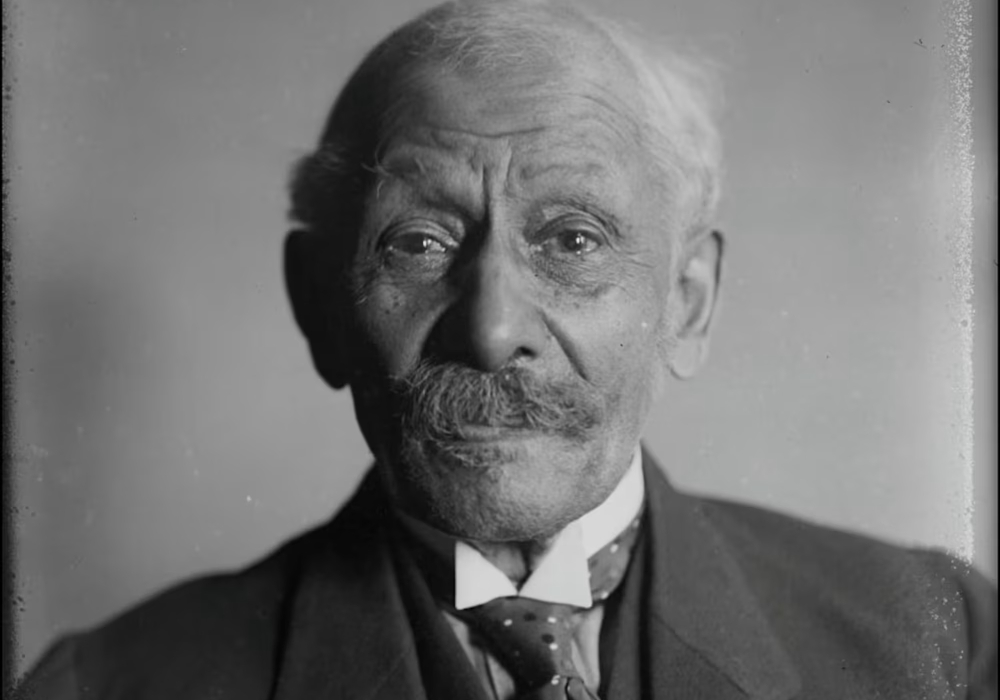
George Brown Polytechnic has named the atrium of its Chef School after William Peyton Hubbard, Toronto’s first Black elected official and an early culinary innovator. Unveiled during Black Futures Month, the tribute connects Hubbard’s roots as a baker and inventor to his decades of civic leadership, reinforcing the institution’s commitment to equity, representation, and honouring Black excellence in everyday learning spaces.
In a city shaped by visionaries who believed in public service, innovation, and community care, the name William Peyton Hubbard carries weight. This February, during Black Futures Month, George Brown Polytechnic unveiled a powerful tribute: the atrium of its Chef School at 300 Adelaide St. E. now bears the name of Toronto’s first Black elected official. The decision bridges culinary education, civic leadership, and Black Canadian history in one of downtown Toronto’s most dynamic learning spaces.
The naming honours a man whose life spanned entrepreneurship, invention, and public office. It also roots that story in a place where future chefs, bakers, and hospitality leaders sharpen their craft every day.
From baker to civic architect
Born in Toronto in 1842 to parents who had escaped enslavement, William Peyton Hubbard began his culinary career. He worked as a baker, applying creativity and mechanical ingenuity to improve food preparation and distribution. His invention, the Hubbard Portable Oven, introduced a mobile industrial oven that influenced commercial baking practices at the time.
That early chapter matters. It ties Hubbard’s legacy directly to the Chef School’s mission. Students training in kitchens and simulated work environments now pass through a space named for someone who understood food not only as sustenance, but as enterprise and innovation.
Dr. Gervan Fearon, President of George Brown Polytechnic, underscored the connection, noting that Hubbard’s career in the culinary industry aligns naturally with the learning and experimentation underway at the school today. The naming grounds institutional values in a lived example of excellence.
"Honouring William Peyton Hubbard through this atrium naming recognizes a legacy that is deeply connected to both the city of Toronto and to George Brown," said Dr. Fearon. "Hubbard's story reflects values that continue to guide our institution, and his early career in the culinary industry connects directly to the work, learning and innovation that takes place at the Chef School today."
A leader who shaped Toronto’s public life
Hubbard’s influence extended well beyond baking. He was elected to municipal office multiple times and served the city for decades. At a time when Black civic participation faced systemic barriers, he advocated for fairness, public ownership of essential services, and inclusive governance.
Among his most lasting contributions was his support for placing Toronto’s hydro-electric system in public hands. That decision helped shape the city's approach to essential infrastructure and public accountability. His leadership model centred on access, equity, and the belief that civic systems should serve everyone.
Natalie Wood, professor in the Social Service Worker program and Research Studio Lead for Black Futures Initiatives, described Hubbard’s impact as profound, emphasizing his commitment to ensuring that all people felt welcome in the city.
dsgsgfsdgd
Where history meets the next generation
The atrium naming arrives during Black Futures Month, a period dedicated to celebrating Black excellence while looking ahead to new possibilities. By situating Hubbard’s name in a prominent educational space, George Brown reinforces several key commitments:
-
Visibility in everyday spaces: Students and visitors encounter Hubbard’s name in a working academic environment, integrating Black history into daily institutional life rather than isolating it to commemorative moments.
-
Educational continuity: The naming provides a tangible entry point for conversations about Black Canadian history, civic leadership, and innovation within classrooms and beyond.
-
Institutional accountability: Aligning physical spaces with equity and belonging initiatives signals that representation is embedded in policy, programming, and campus culture.
Jennifer Grant, Associate Vice-President of Anti-Racism, Equity and Human Rights, emphasized that the tribute ensures Hubbard’s legacy remains present where students imagine their futures. It affirms that Black leadership is foundational to Toronto’s story.
"This naming ensures that the impact and legacy of William Peyton Hubbard remain visible in spaces where students learn and imagine their futures," said Grant. "It recognizes the contributions Black leaders have made to this city and the values we seek to uphold as an institution.
A culinary school anchored in history
George Brown College, operating as George Brown Polytechnic, is known for blending academic rigour with hands-on learning. With three campuses in downtown Toronto, the institution serves nearly 30,000 full-time students annually and engages thousands more through continuing education. The Chef School, including its public-facing training restaurant The Chefs’ House, functions as a living laboratory where theory meets practice.
Placing Hubbard’s name at the heart of that environment signals that culinary education is intertwined with civic consciousness. The atrium becomes more than an architectural feature. It becomes a reminder that innovation and public service can grow from the same roots.
A legacy woven into Toronto’s future
Hubbard’s story carries enduring relevance. He moved fluidly between tradesman, inventor, and elected official. He believed that access to essential services should be protected for the public good. He stood for inclusion in eras defined by exclusion. His life illustrates how technical skill and civic responsibility can reinforce one another.
In naming the Chef School atrium after William Peyton Hubbard, George Brown Polytechnic has embedded that narrative into the daily rhythms of campus life. Students preparing pastries, refining knife skills, or studying hospitality management now do so in a space that honours a baker who reshaped a city.
As Toronto continues to wrestle with questions of equity, representation, and shared prosperity, the decision feels both timely and grounded. It acknowledges that Black leadership has long been present in the city’s foundation and that future leaders, in kitchens and council chambers alike, are already in training.