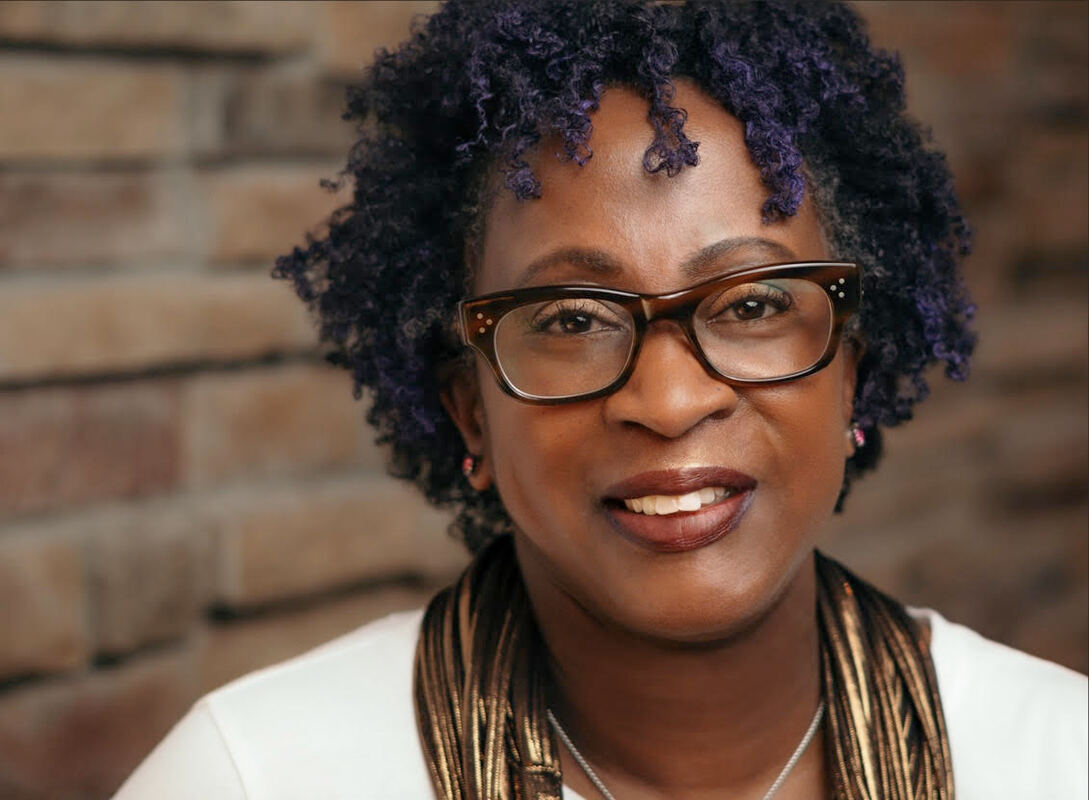
Wendy Vincent is a Toronto-based media producer whose family story is rooted in the Windrush generation, on a mission to preserve the oral histories of Caribbean migrants who helped rebuild postwar Britain and later shaped Black Canadian life. In this episode of Afropolitan Dialogues, she shares her deeply personal archival journey, her extended work with 99-year-old elder Lloyd Lindo, and her upcoming community event, Windrush in Conversation, at Blackhurst Cultural Centre in Toronto.
Some stories travel across oceans. Some travel across generations. And some arrive at your door in a dream.
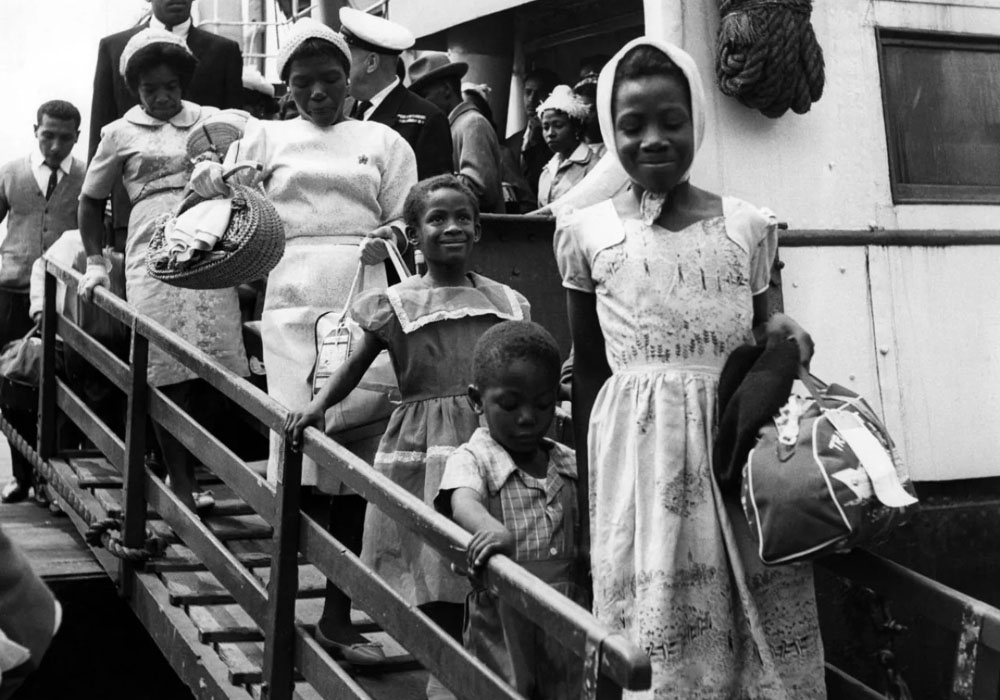
Wendy Vincent is a Toronto-based media producer and community storyteller whose family roots run directly through the Windrush generation. Her parents, her maternal grandparents, and her paternal uncle, who served with the Royal Air Force, were all part of the wave of West Indian migrants who answered Britain's postwar call to come and help rebuild a devastated nation. What began as a deeply personal family connection has grown into a full-scale preservation project, one equal parts archival urgency and ancestral love.
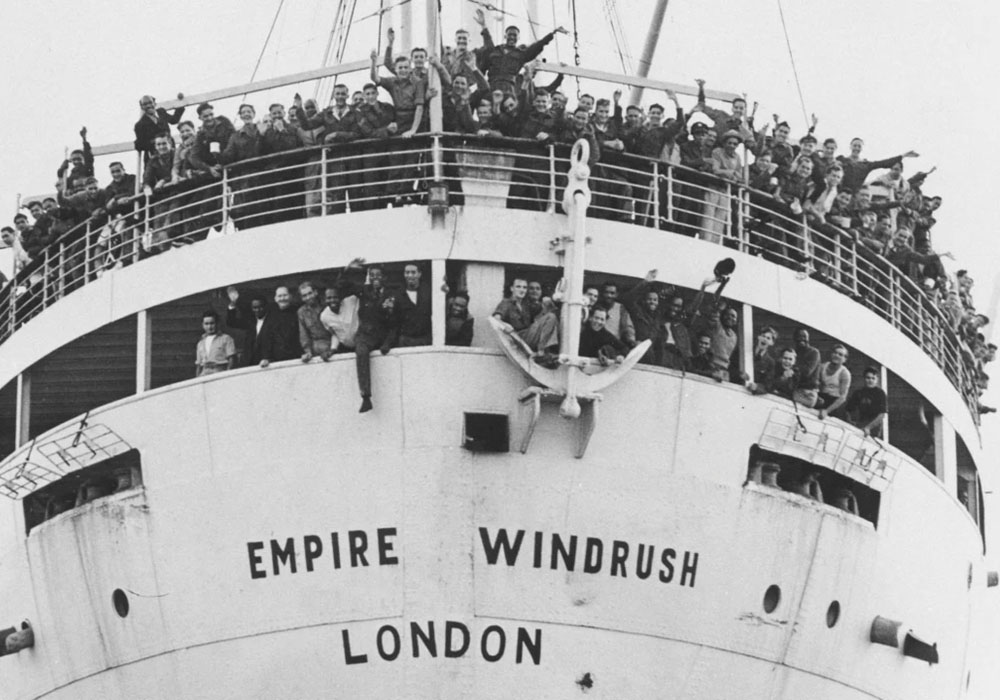
In this conversation, we trace the arc of the Windrush story from the HMT Empire Windrush's arrival at Tilbury Docks on June 22, 1948, through the establishment of Caribbean communities across Britain, to the largely untold Canadian chapter of that migration. They discuss the ecosystems of mutual support that early arrivals built to help those who followed them, the legal welcome that was met with visceral social rejection, and the 2018 Windrush scandal that stripped long-settled elders of their status and dignity.
At the centre of the conversation is Uncle Lloyd Lindo of Amaranth, Ontario, now 99 years old, whose wedding album, ship manifest, suitcase, and four-hour recorded oral history have all been entrusted to Wendy for public sharing.
This episode also previews Windrush in Conversation, a free community event on Saturday, May 16, 2026, from 4:30 to 6:30 p.m. at Blackhurst Cultural Centre, The People's Residence, 777 Bathurst Street, Toronto. The first 50 guests will receive a complimentary buffet from Carib Dish Restaurant, courtesy of ByBlacks Restaurant Week 2026.
RSVP at: windrushcanada.culturetix.ca
Conversation highlights
- Wendy describes Windrush as her birthright: Her parents, maternal grandparents, and a paternal uncle who served in the RAF were all part of the Windrush generation
- After losing her father during COVID, conversations with family friend Uncle Lloyd Lindo became a healing practice that eventually became a full archival project
- CBC Radio journalist Nick Davis encouraged Wendy to record her conversations with Uncle Lloyd, which resulted in six syndicated radio segments for Windrush Day
- Uncle Lloyd's video diary was later expanded into a 7-minute film for the City of Toronto's Migrant Stories exhibition, based on 90 minutes of footage mentioned in the conversation, which drew 2,000 visitors at St. Lawrence Market Gallery
- Wendy explains how Windrush migrants who arrived on early ships had to build sophisticated informal support ecosystems so those who followed could land more softly
- Canada was simultaneously recruiting skilled workers from Britain, and many Windrush-era migrants answered that second call, including Uncle Lloyd, who spotted a job ad on the London Underground
- The book Invisible Immigrants documented that approximately 500,000 white British migrants moved from England to Canada during that same era, a figure that mirrors the roughly 500,000 Caribbean migrants who answered Britain's call under the British Nationality Act. Two parallel movements, two recruiting nations, one postwar Commonwealth in motion.
- Uncle Lloyd was welcomed in Canada by the Walker family; when Wendy's father arrived shortly after, Uncle Lloyd extended that same hospitality, illustrating how those support networks travelled with people across the Atlantic
- Wendy addresses the 2018 Windrush scandal directly, describing it as a Home Office scandal rooted in institutional forgetting, with people detained and deported after decades of lawful residence
- She discusses the ancestral and spiritual dimensions of the project, including a dream she had the night that community elder Mrs. Walker passed away, and the discovery that Mrs. Walker had sewn the wedding dress pictured in Uncle Lloyd's album
- Wendy argues that the Windrush narrative is incomplete without the Canadian cohort and pushes back on claims that those who left Britain are not truly Windrush
- The upcoming event will feature artist and author contributions, including Robert Picart's memoir, Goddie, about his Windrush mother and newly released author Heather Beaumont
- Ray Williams, co-founder of the Black Opportunity Fund, is himself a member of the Windrush generation, bringing both lived experience and economic leadership to the conversation
Topics covered
- Wendy's personal and family connection to the Windrush generation
- The origins of the Windrush migration: The HMT Empire Windrush, Tilbury Docks, and the British Nationality Act
- The role of West Indian veterans in postwar Commonwealth recruitment
- Caribbean migrants' contributions to the NHS and British public infrastructure
- The social hostility that met legally welcomed migrants: Discriminatory signage, the Teddy Boys, and systemic exclusion
- The informal support ecosystems Caribbean communities built for survival and settlement
- The Canadian dimension of Windrush: parallel labour recruitment and continued migration across the Commonwealth
- Wendy's archival work with Uncle Lloyd Lindo: CBC radio segments, video diary, and recovered ephemera
- The Windrush scandal of 2018: Documentation destruction, wrongful detention, deportation, and unresolved harm
- The urgency of oral history preservation as the first Windrush generation ages
- The role of the Windrush in Conversation event and Blackhurst Cultural Centre in anchoring this history to Toronto's Black community
- Literary and artistic representations of Windrush: Andrea Levy's Small Island, Robert Picart's Goddie, and Heather Beaumont's When We Go Home
- The transatlantic conversation between Canadian Windrush descendants and the movement in the UK
Selected quotes with timestamps
On personal connection and birthright
"It's a personal story. This is my birthright." — Wendy Vincent, 5:20
"I realized that I grew up with a garden of Windrush in our family." — Wendy Vincent, 9:57
On the urgency of preservation
"I'm trying to capture all this data before it becomes a memory project." — Wendy Vincent, 9:57
"It's a little bit of a race against time going on." — Wendy Vincent, 9:57
"Uncle Lloyd is that disruptor. He's entrusted me to share his story. And his ephemera and his data are in equally pristine condition. He's 99 years old. Just kind of let that sink in for a minute." — Wendy Vincent, 34:19
On the contradiction of legal welcome and social rejection
"Imagine being called upon, and people are traveling independently as teens, with young children, and upon arrival, this is what meets you — this visceral violence. People are seeking lodging and in the windows, that signage: no dogs, no Blacks, no Irish." — Wendy Vincent, 18:19
"It was a matter of survival. Getting the housing, getting the employment. There were these parties people would have every weekend — community gathering, learning to navigate the education system, the legal system. That was baseline survival." — Wendy Vincent, 18:19
On the Windrush scandal
"The harm is real. People have aged out and have passed away waiting. There's that switch-up, that second look, which was so harmful and remains a blight to this day." — Wendy Vincent, 23:04
"We cannot forget them." — Wendy Vincent, 24:36
On the Canadian connection
"Canada was also calling for help. Uncle Lloyd came here because he was on the tube and there was an ad in the paper saying Canada was looking for skilled workers, and he answered that call." — Wendy Vincent, 27:03
"Those ecosystems that were established in England came with them here to Canada. Uncle Lloyd was met by the Walkers, that's where he stayed. Then my parents were met by Uncle Lloyd, that's where they stayed. Those families are connected for life because of Windrush." — Wendy Vincent, 29:06
"The Windrush narrative is not complete without the Canadians." — Wendy Vincent, 47:10
On what she wants people to carry out of the room
"I want people to be seen and feel acknowledged. These are really important chronologies, whether our elders came through the domestic worker scheme, the Windrush journey, or came directly. We have to capture these stories. We must." — Wendy Vincent, 45:03
About the guest
Wendy Vincent is a Toronto-based media producer, community storyteller, and oral historian. A Windrush birthright holder, she has dedicated several years to documenting and preserving the stories of the Windrush generation and their descendants in Canada. Her archival work has produced six syndicated CBC Radio segments for Windrush Day and a 7-minute video diary created in partnership with the City of Toronto, centred on the life of 99-year-old Windrush elder Lloyd Lindo of Amaranth, Ontario.
The Migrant Stories exhibition, which featured Uncle Lloyd's wedding album, ship manifest, and original suitcase, was displayed at the St. Lawrence Market Gallery in 2024, drawing 2,000 visitors. Wendy is the organizer of Windrush in Conversation, an ongoing public program she hopes to tour to the Caribbean and the United Kingdom.
About the project and event
Windrush in Conversation is a public program created by Wendy Vincent to amplify the largely underdocumented cohort of Windrush-generation migrants and their descendants in Canada. On Saturday, May 16, 2026, from 4:30 to 6:30 p.m., the inaugural Toronto event takes place at Blackhurst Cultural Centre, The People's Residence, 777 Bathurst Street.
The evening will feature Uncle Lloyd Lindo's video diary, a display of his original suitcase, and conversations with Windrush descendant and Black Opportunity Fund co-founder Ray Williams, with Che Marville of Ellivram Inc. serving as emcee. The program also includes literary contributions from Robert Picart (Goddie) and author Heather Beaumont (When We Go Home).
The event is free with an RSVP and coincides with ByBlacks Restaurant Week 2026. The first 50 guests will receive a complimentary buffet from Carib Dish Restaurant, generously provided by ByBlacks.com.
For inquiries, contact Wendy Vincent at:
Useful resources
- Event RSVP — Windrush in Conversation: windrushcanada.culturetix.ca
- Blackhurst Cultural Centre, The People's Residence: blackhurstcc.org | 777–779 Bathurst Street, Toronto, ON | @blackhurstcc
- ByBlacks Restaurant Week 2026 (May 11–17): byblacks.com/restaurantweek | @ByBlacks
- Black Opportunity Fund: blackopportunityfund.ca
- A Different Booklist (adjacent to Blackhurst Cultural Centre): adifferentbooklist.com
- Itah Sadu (Managing Director, Blackhurst Cultural Centre): penguinrandomhouse.ca/a-different-q-a
- Heather Beaumont — When We Go Home (2026): available at A Different Booklist and major booksellers
- Andrea Levy — Small Island (2004): available at A Different Booklist and major booksellers
- Black Cultural Archives (London, UK): bcaheritage.org.uk
- Windrush Day (June 22): windrush.org.uk
- Sickle Cell Society of Canada: sicklecellsociety.ca
- Afropolitan Dialogues on all major podcast platforms: search "Afropolitan Dialogues" on Spotify, Apple Podcasts, and Google Podcasts