
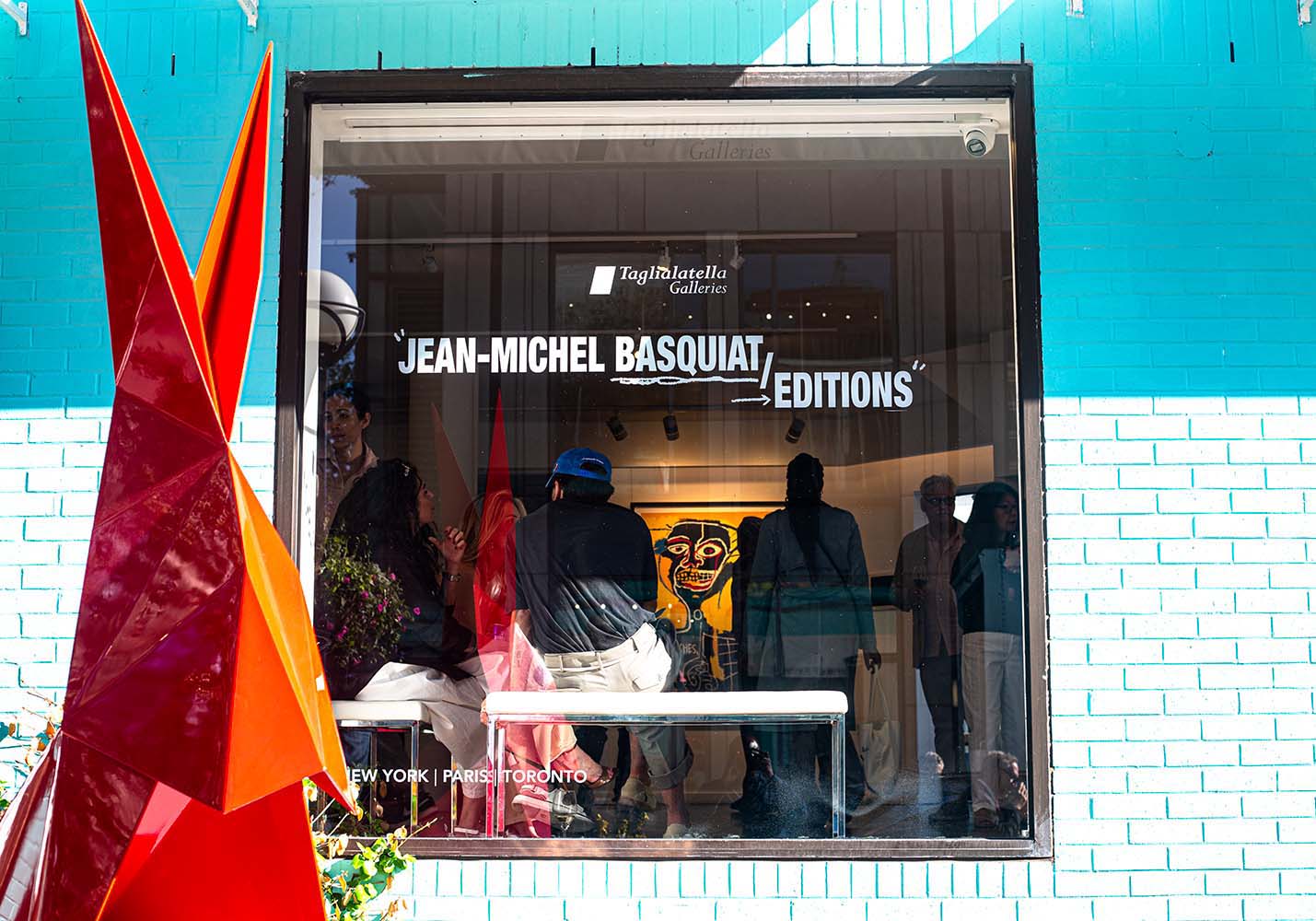
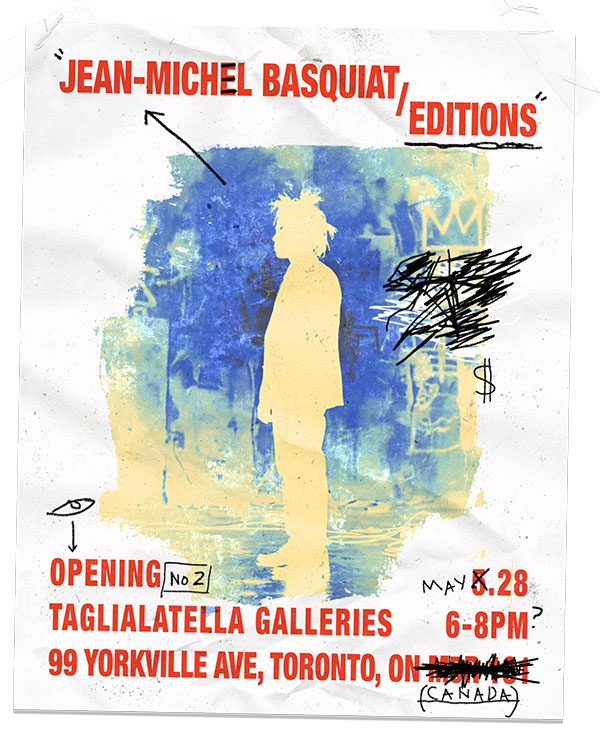
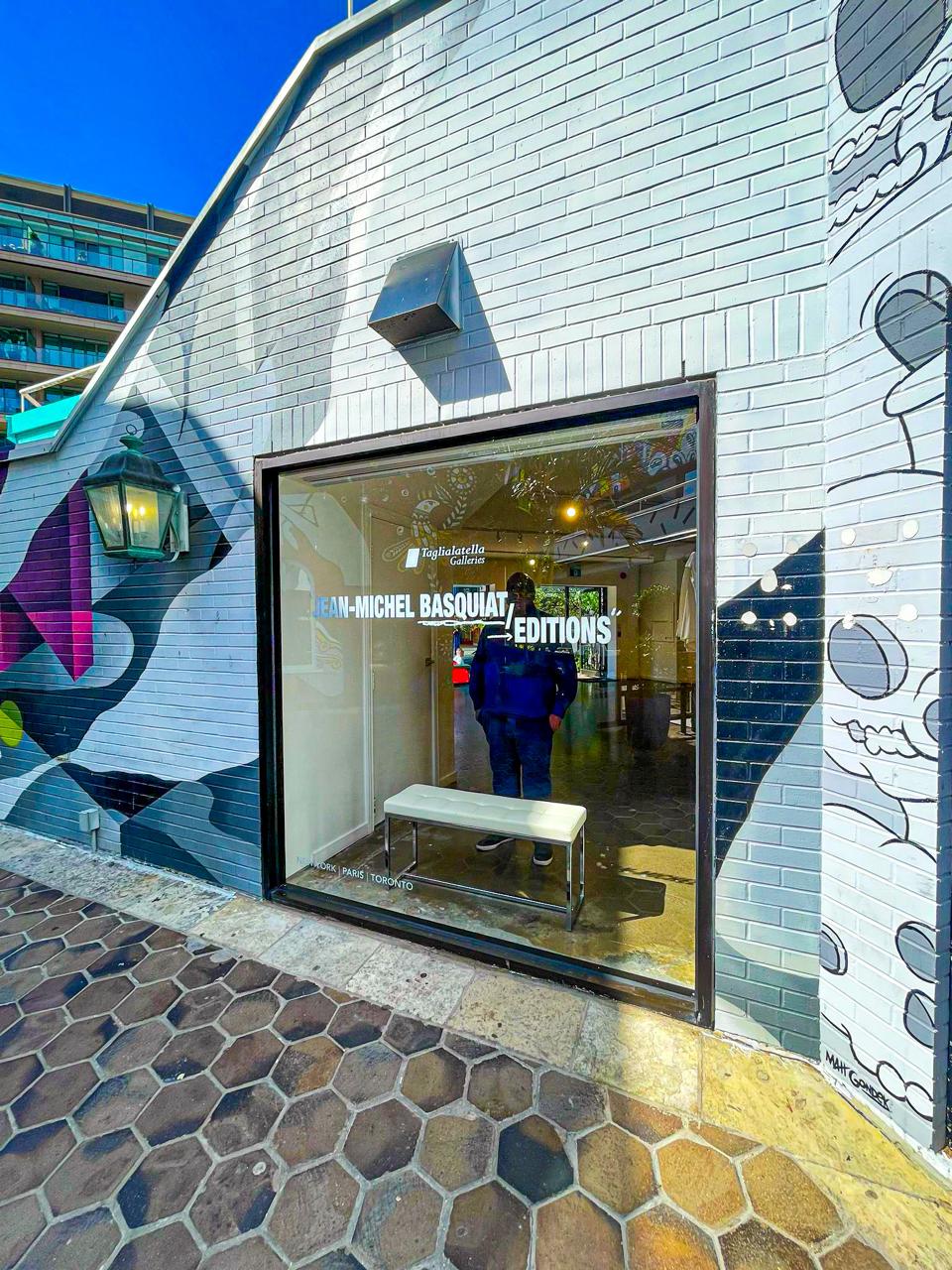
Taglialatella Galleries in Toronto's Yorkville neighbourhood is hosting Jean-Michel Basquiat / Editions, a landmark exhibition celebrating twenty-five years of limited-edition screenprints released by the Estate of Jean-Michel Basquiat. Free and open to the public through June 11, the show brings museum-calibre works to street level, offering collectors and curious newcomers alike a rare chance to stand face-to-face with one of the most urgent visual voices of the twentieth century.
There are artists whose work ages into history, and then there are artists whose work keeps aging into the present. Jean-Michel Basquiat belongs firmly to the second category. As someone of Haitian origin myself, this exhibition lands close to home. Basquiat's father, Gérard, was born in Port-au-Prince, and that Haitian root runs through everything the artist made. Haiti produced the world's first Black republic, born from a revolution that shook the colonial order to its foundation, and you can feel that revolutionary fibre in Basquiat's work: the colour, the defiance, the insistence on being seen fully and on his own terms.
More than three decades after his death at age twenty-seven, his paintings still feel like live wires, charged with the same urgency about race, identity, power and cultural memory that made them startling when they first appeared on Manhattan gallery walls in the early 1980s.
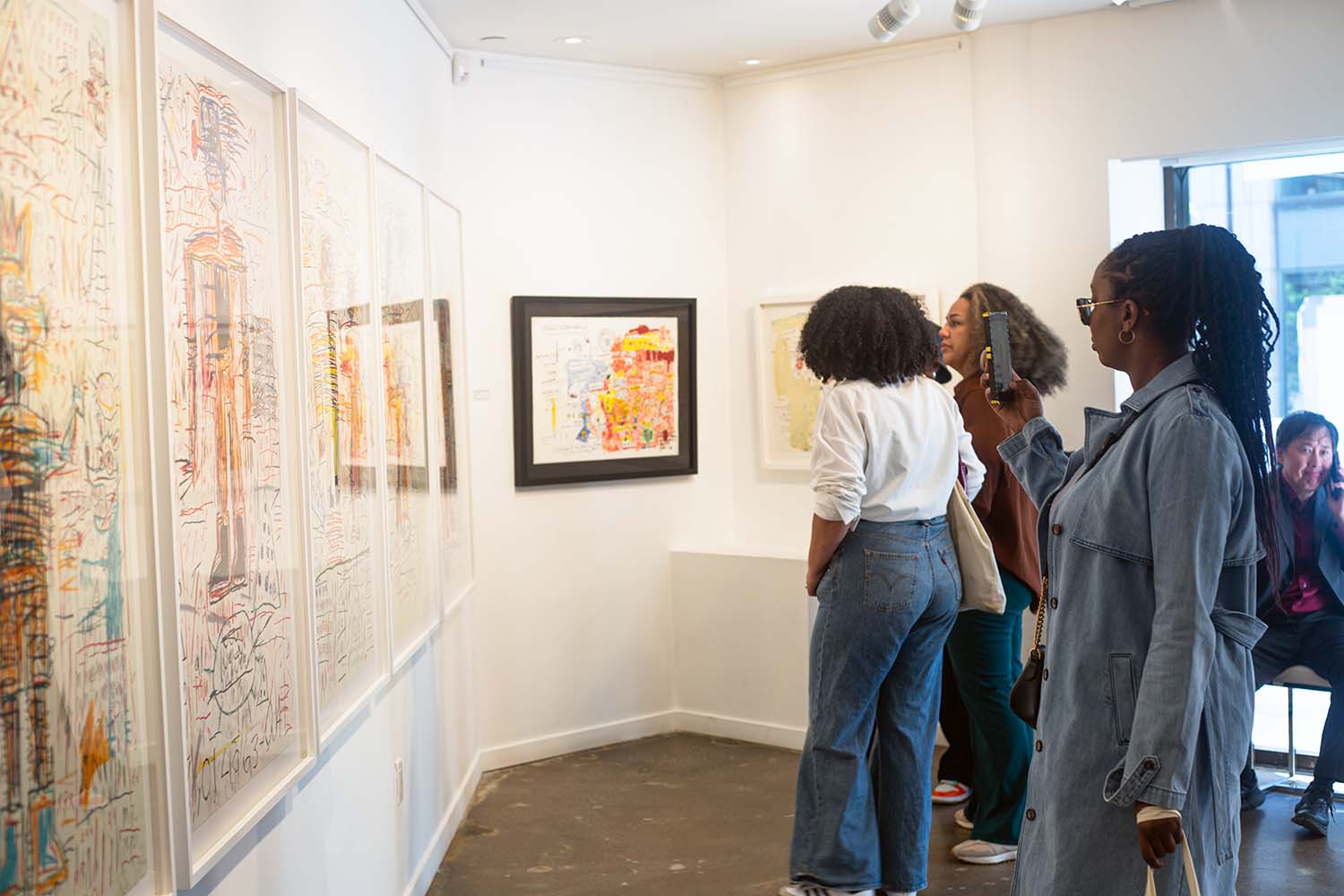
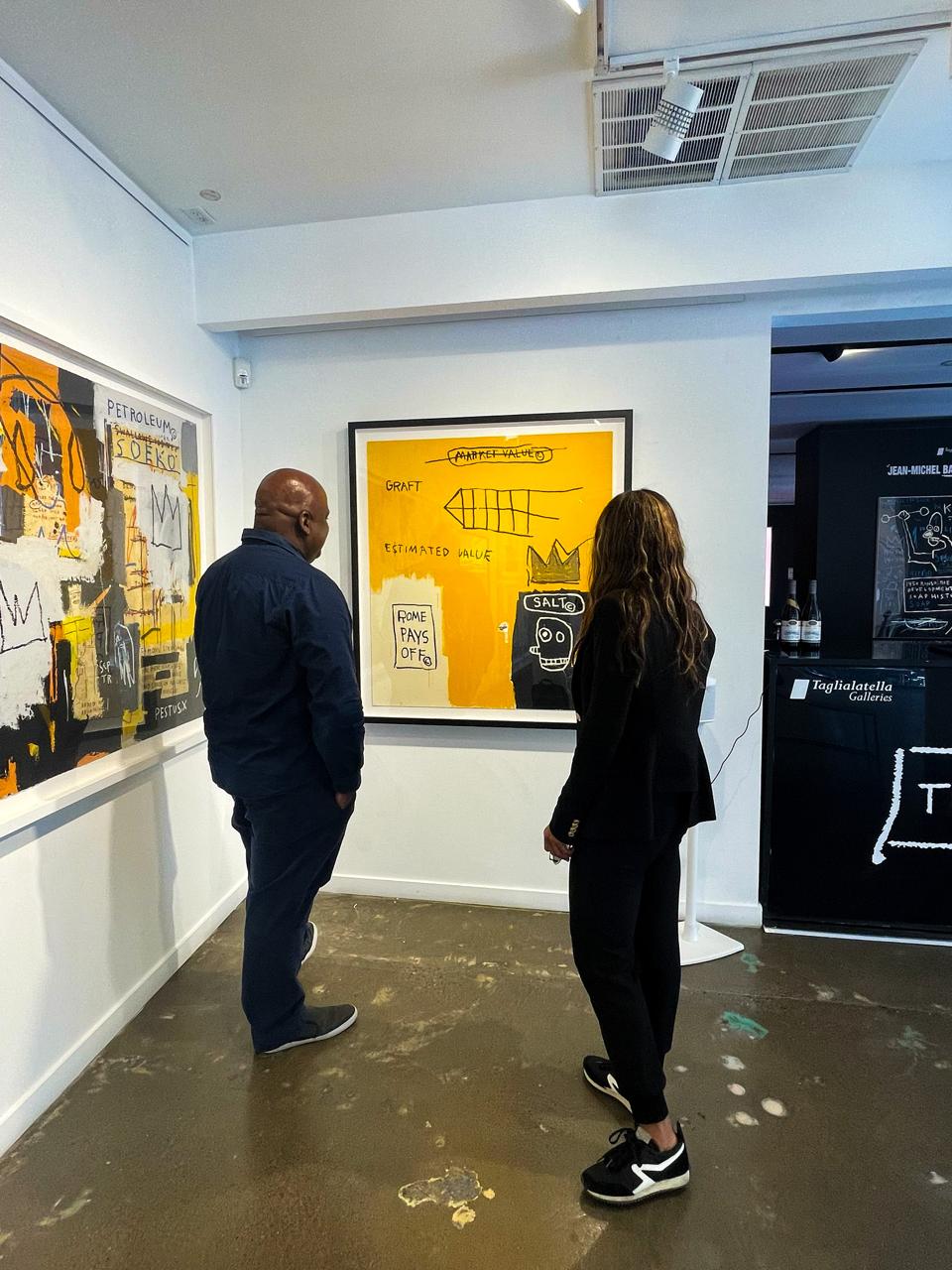
Last night, I was at the opening reception for Jean-Michel Basquiat / Editions at Taglialatella Galleries Toronto, 99 Yorkville Avenue. The room was buzzing but relaxed, the kind of energy that gathers when people are genuinely moved by what they're looking at rather than performing enthusiasm. Collectors, artists, curious walk-ins, and longtime Basquiat admirers all moved through the same space, pausing before the same prints, drawn in by the same restless visual intelligence.
The exhibition runs through June 11, with free admission throughout. Following its New York debut, the show travels to Toronto as its second and final destination, making this city the only Canadian audience to receive it.
Who was Jean-Michel Basquiat?
Basquiat was born in Brooklyn, New York, on December 22, 1960. With a Haitian-American father and a Puerto Rican mother, his diverse cultural heritage was one of his many sources of inspiration. He grew up speaking English, French and Spanish, and was taken to museums by his mother from an early age. A car accident at age seven, during which his mother gave him a copy of Gray's Anatomy to read during his recovery, planted the seeds of his lifelong obsession with the human body and its symbolic possibilities.
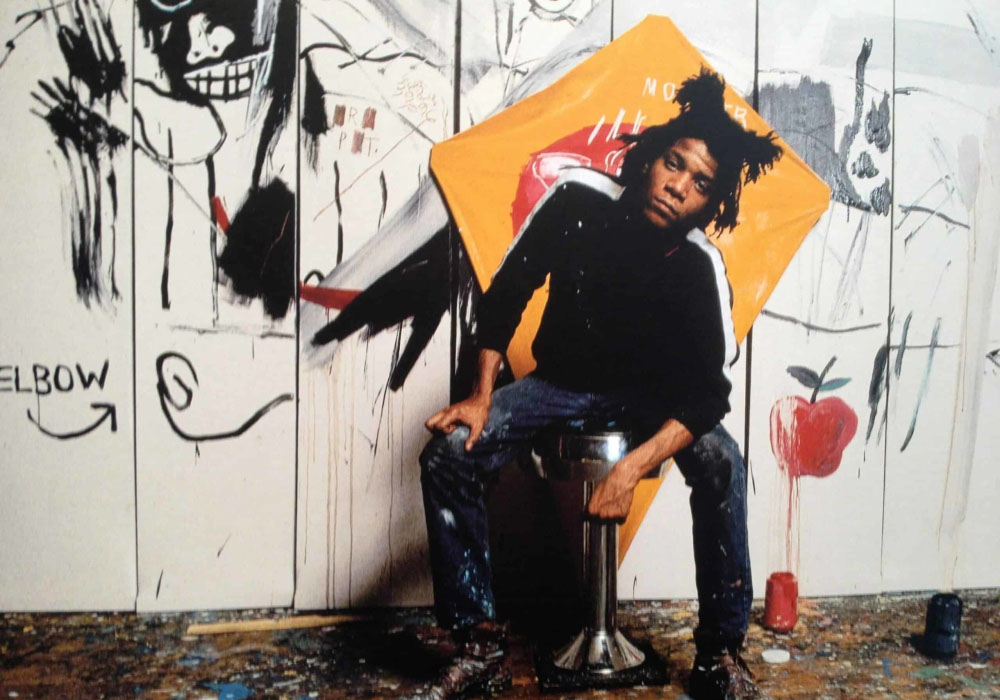
He left home as a teenager to live in Lower Manhattan, playing in a noise band, painting, and supporting himself with odd jobs. In the late 1970s, he and Al Diaz became known for their graffiti, a series of cryptic statements tagged SAMO. From those streets, Basquiat moved quickly into gallery culture, becoming by the early 1980s one of the defining voices of Neo-Expressionism.
He combined graffiti, text, drawing and abstract painting in a way that challenged social structures head-on, addressing racism, inequality, celebrity culture and historical narratives through a visual language that remains instantly recognizable today. He died on August 12, 1988, at age twenty-seven, from a drug overdose.
The exhibition: Twenty-five years of editions
Jean-Michel Basquiat / Editions brings together celebrated editioned works produced posthumously over the past quarter century by the Estate of Jean-Michel Basquiat. These are screenprints, authorized and authenticated by the Estate, produced in collaboration with publishers including Flatiron Editions and Pace Prints. They are distinct from Basquiat's original paintings, which now command prices in the tens of millions and live primarily in museums and private collections. The editioned works exist precisely to bring that legacy within reach.
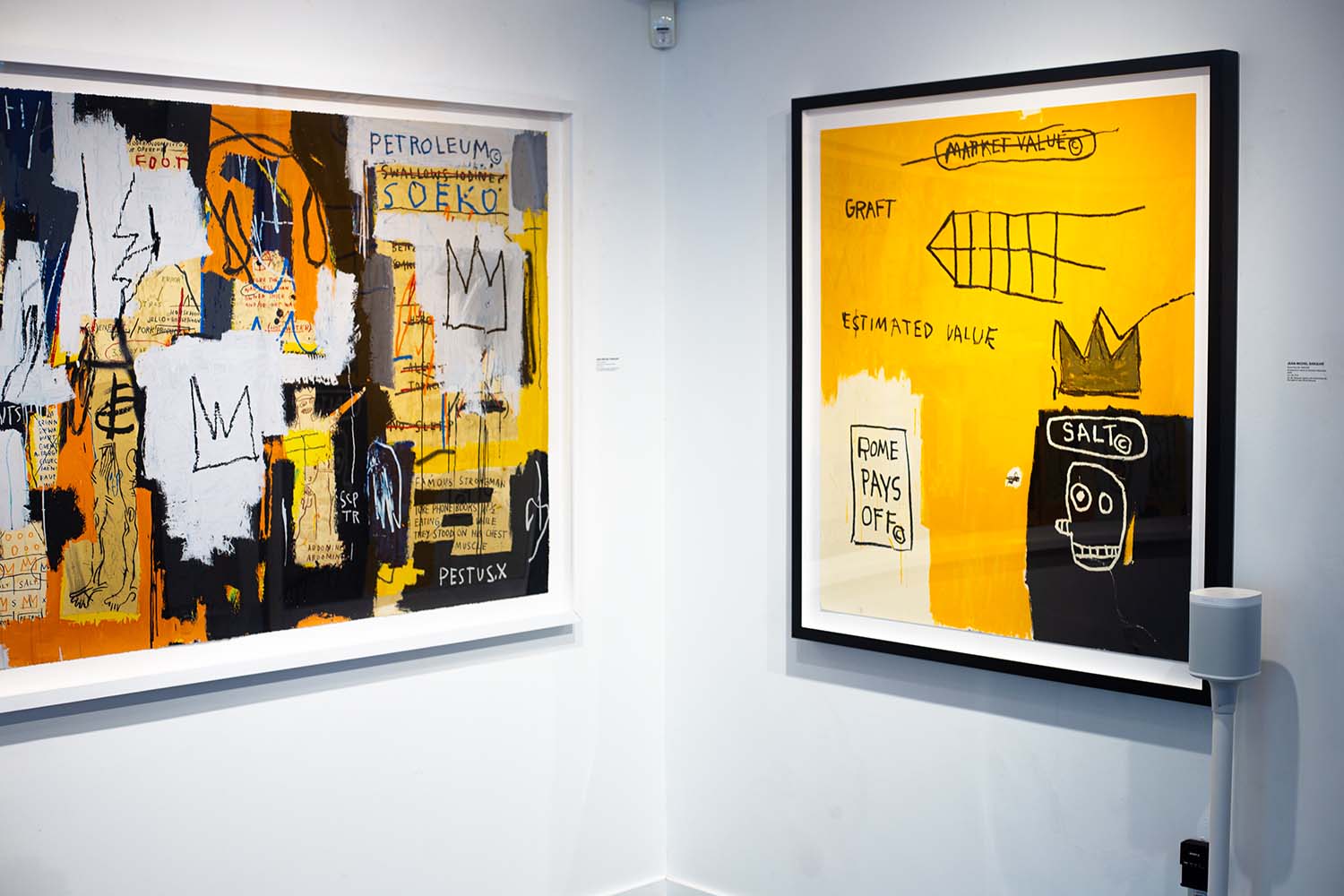
"Basquiat's work continues to resonate across generations because it speaks to culture, identity, power, and creativity in a way that still feels urgent today," said Alan Ganev, Partner of Taglialatella Galleries. "This exhibition is about making that legacy accessible. Toronto audiences will have the opportunity to experience museum-calibre Basquiat works for free, including one of the newest releases from the Estate."
Understanding the prints: A brief primer on screenprinting and estate editions
Screenprinting, or serigraphy, is a process in which ink is pushed through a fine mesh stencil onto paper or another surface, layer by layer. The technique produces bold, saturated colour and sharp graphic definition, qualities well suited to Basquiat's visual language of crowns, skeletal heads, text fragments and expressive figuration. Each colour in a composition typically requires its own pass through the press, making the production of a complex screenprint a labour-intensive, deliberate process.
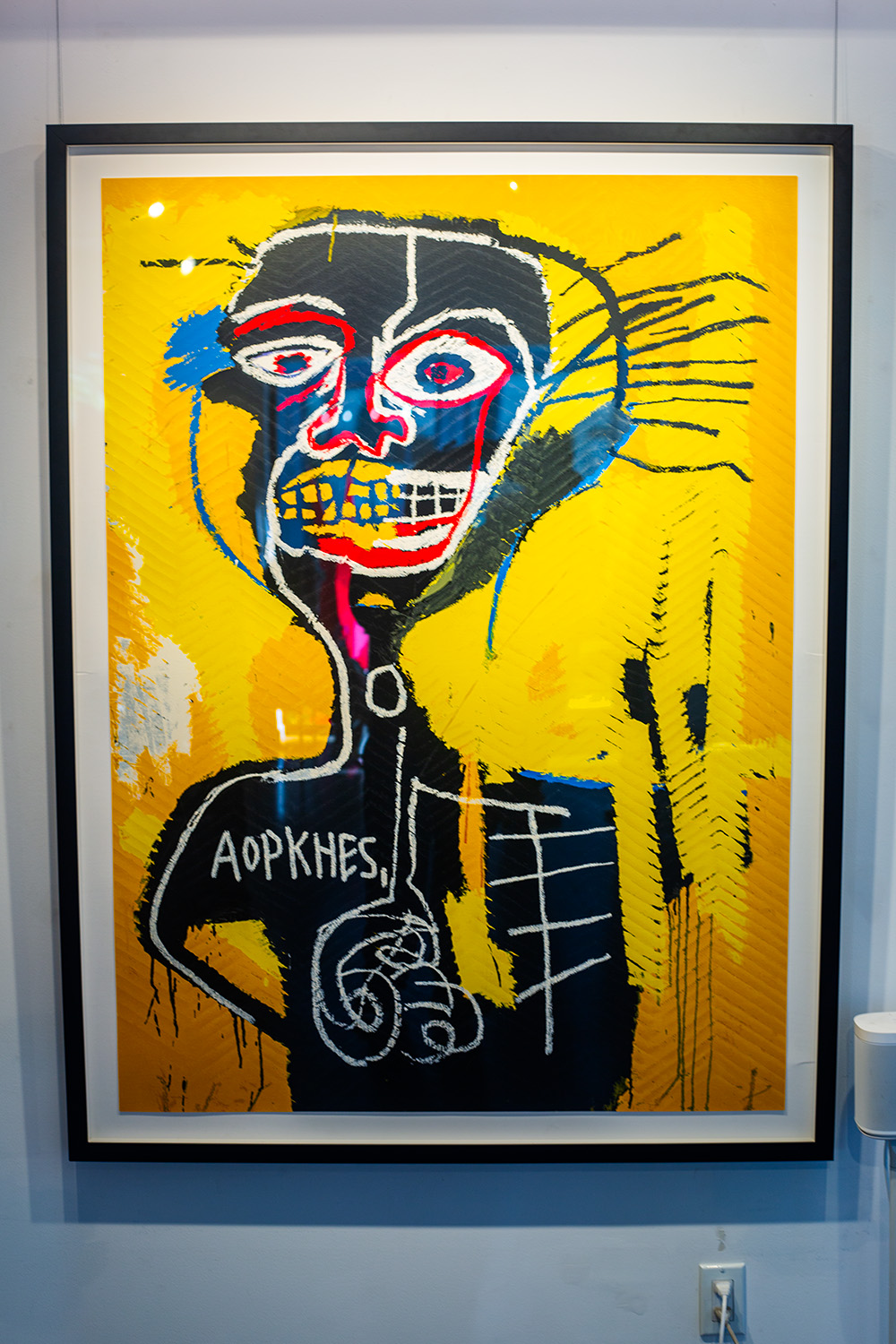
Walking through the exhibition last night, that deliberateness was visible in every piece. The prints hold a physical presence that reproductions simply cannot convey. Standing in front of Phooey or Cabeza, the scale and the density of layered mark-making register in the body before they register in the mind. For collectors and enthusiasts approaching Basquiat's editioned works for the first time, a few distinctions are worth knowing:
- The only prints produced and hand-signed by Basquiat during his lifetime are from 1983, including Anatomy and Portfolio I.
- The vast majority of screenprints available today are authorized posthumous editions, produced starting in 2001 through partnerships between the Estate and publishers such as Flatiron Editions and Pace Prints.
- Each estate-authorized print carries an official stamp on the verso, originally signed by the artist's late father Gérard Basquiat, and currently signed by his sisters Lisane Basquiat and Jeanine Heriveaux, who serve as administrators of the Estate.
- The Authentication Committee of the Estate disbanded in 2012 and no longer considers new applications. Provenance and publisher documentation are now the most reliable tools for verifying a work's legitimacy.
Highlighted works in the exhibition
The exhibition spans Basquiat's most celebrated subjects and periods. Several works stand out for their significance, both artistically and in the secondary market.
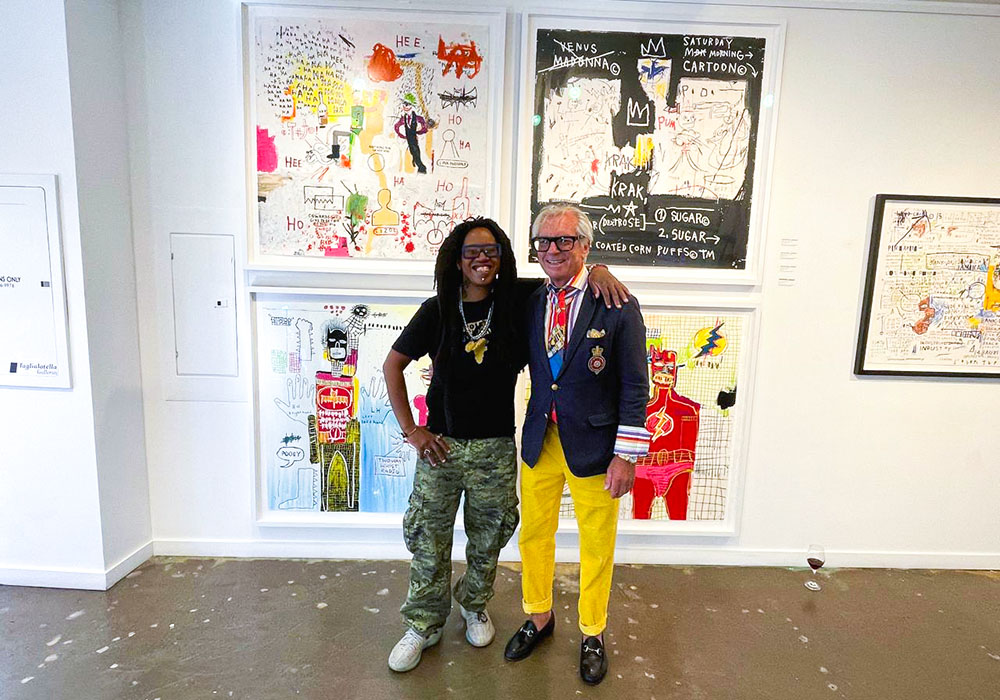 Cool cats on opening night.
King Alphonso, 1982/2025 makes its Toronto debut as the newest limited-edition release from the Estate, produced in collaboration with Pace Prints and Flatiron Editions. Limited to just 60 editions worldwide, the screenprint revisits Basquiat's celebrated 1982 imagery, exploring themes of power, race, identity and mythology, all anchored by the artist's iconic crown motif. The release generated immediate international attention following its New York unveiling, and seeing it in person last night confirmed why.
Flexible, 1984/2016 is among the most recognizable figures in Basquiat's late-period practice. The original 1984 painting, which Basquiat made on a picket fence outside his New York studio, sold for $45.3 million USD at Phillips in New York in May 2018. The editioned screenprint has since become one of the most sought-after works on the secondary market.
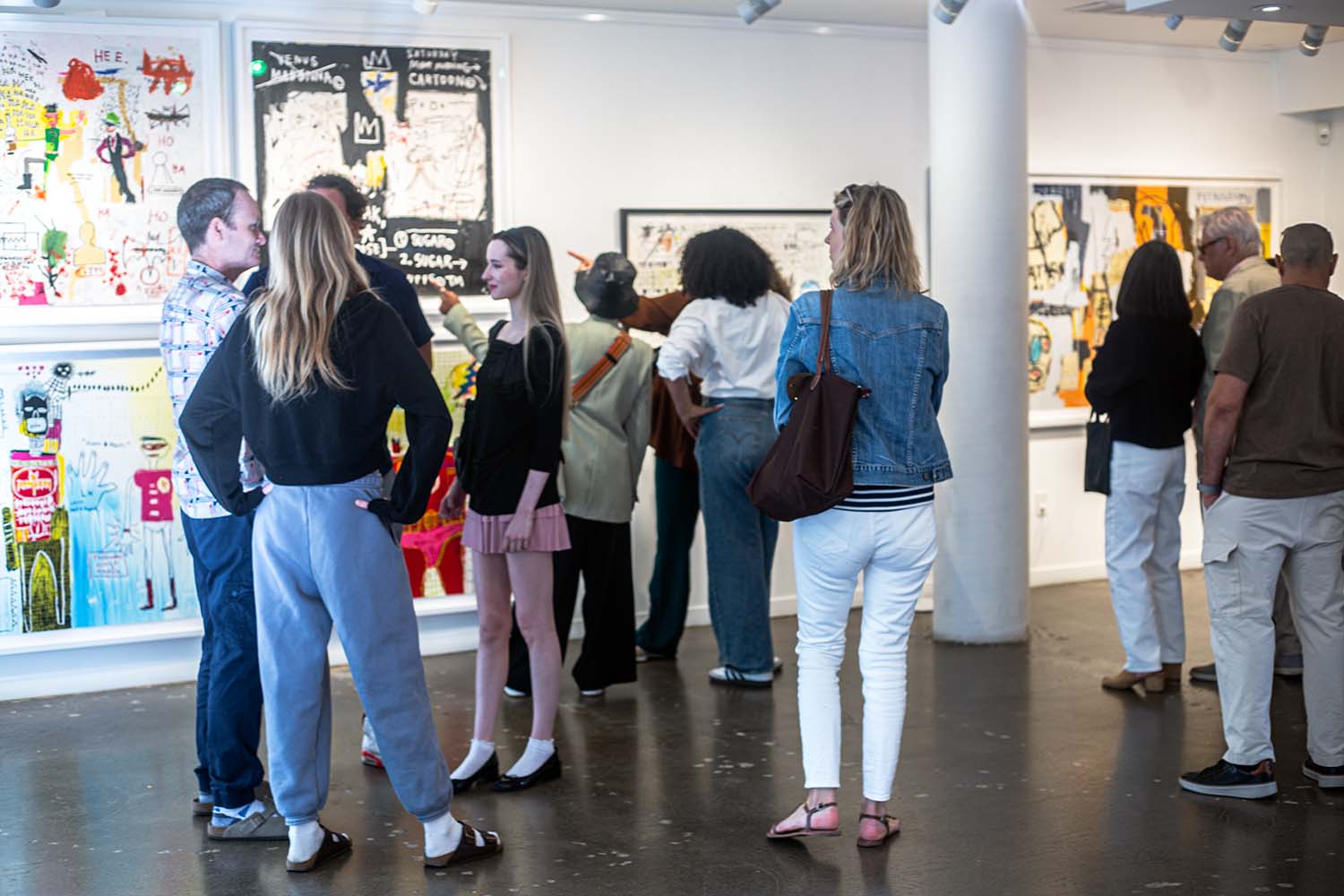
Hollywood Africans in front of the Chinese Theater with Footprints of Movie Stars, 1983/2015 stretches more than seven feet wide and references Basquiat's famed Hollywood Africans painting, widely regarded as one of his most important examinations of race, celebrity culture and the experience of Black artists navigating mainstream entertainment. The original painting resides in the permanent collection of the Whitney Museum of American Art.
Charles the First, 1982/2005 pays tribute to jazz legend Charlie Parker while exploring genius, fame, exploitation and Black cultural influence, recurring themes throughout Basquiat's practice. The work interweaves allusions to both real and fictional heroes, including the Norse god Thor and Superman, placing Parker within a narrative of nobility and royalty and underscoring Basquiat's recurring practice of inserting Black icons into traditionally white historical narratives.
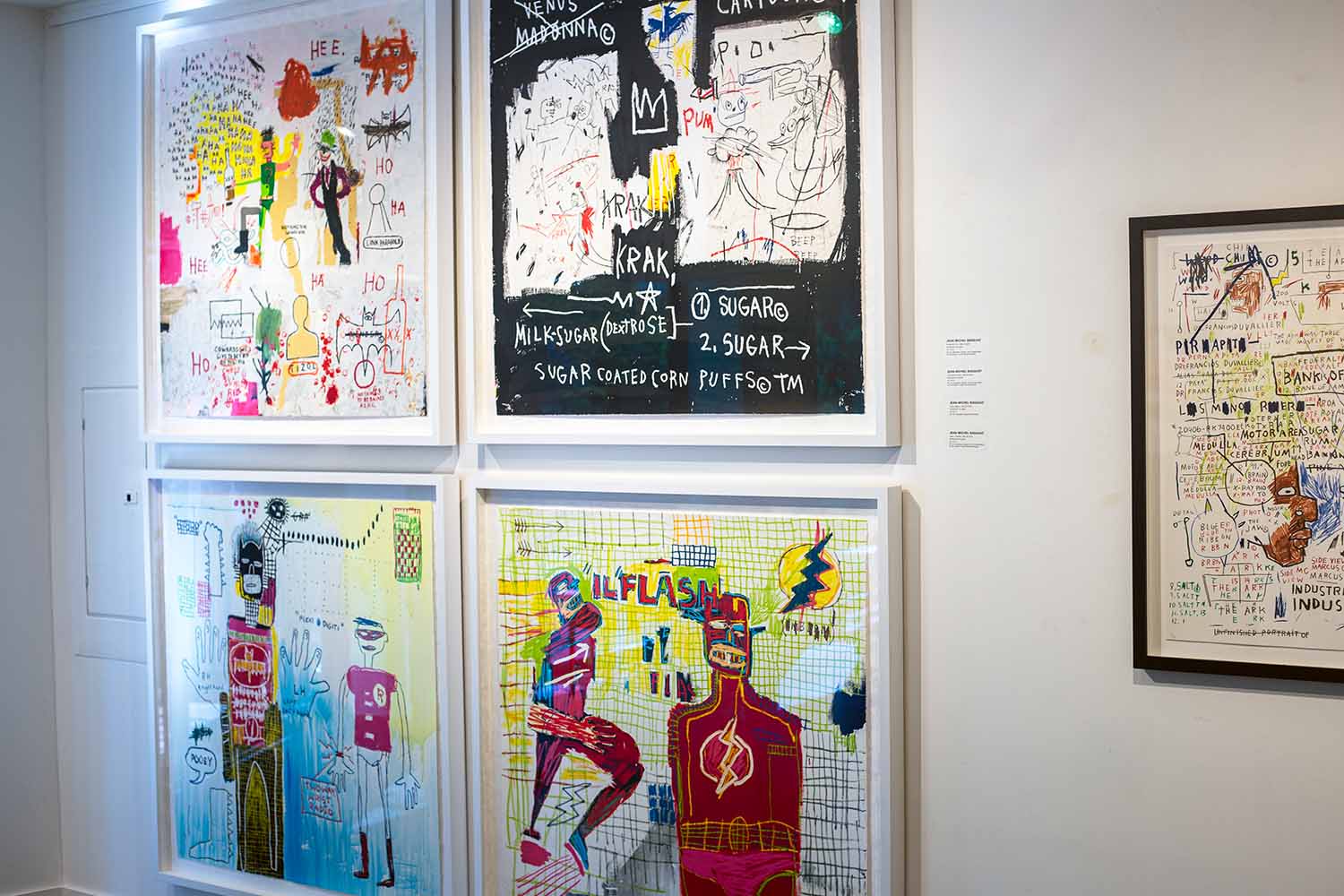
Cabeza, 1982/2005 captures the raw immediacy and expressive intensity that helped define Neo-Expressionism. Featuring Basquiat's signature skeletal head motif, it has become emblematic of his enduring visual language and its reach across contemporary art, fashion, music and design.
Phooey, 1982/2021, at more than seven feet wide, stands among the exhibition's most visually commanding works. Rich with layered symbolism, handwritten text and frenetic mark-making, the monumental print reflects the scale and energy of Basquiat's most celebrated paintings.
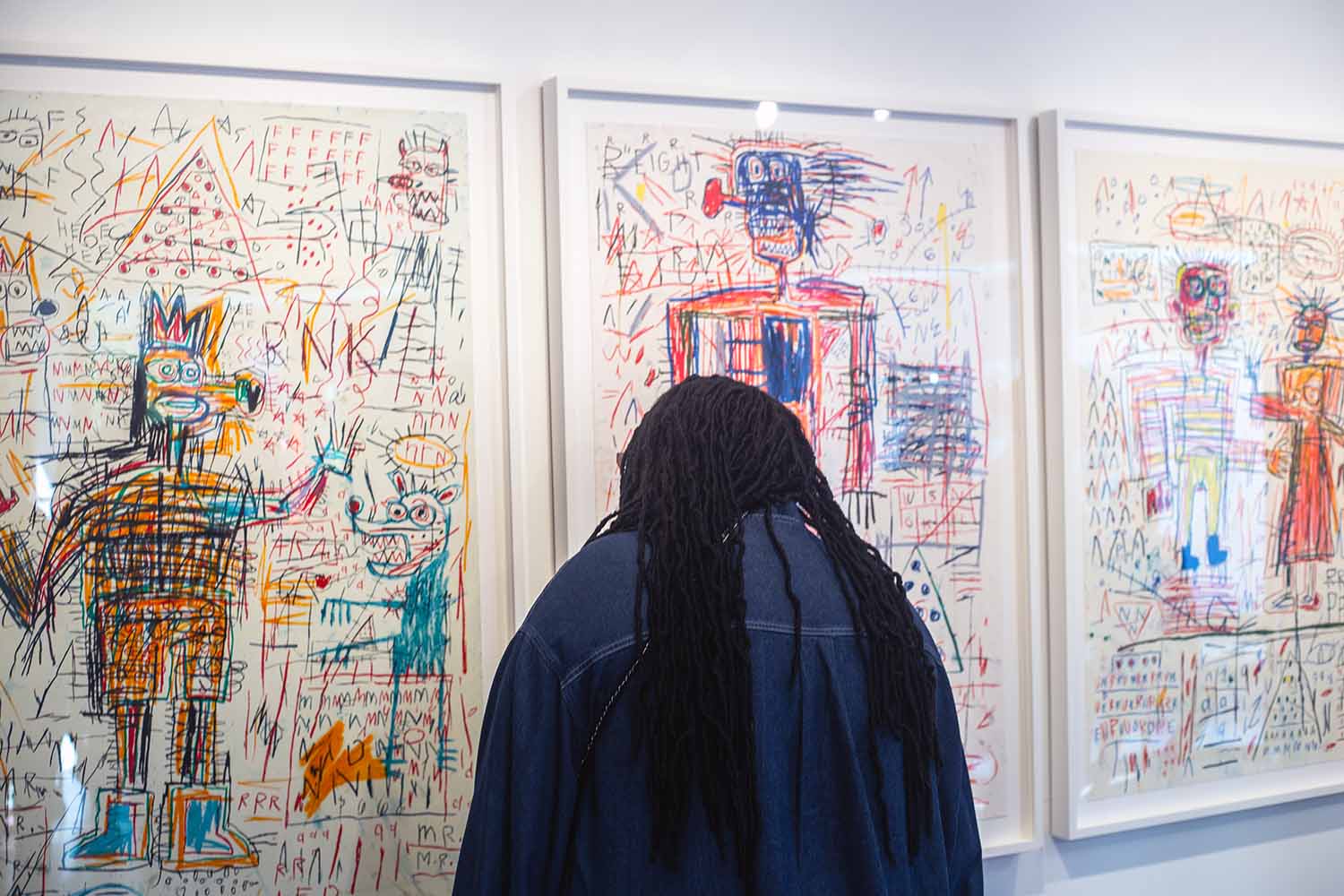
The exhibition also features The Figure Portfolio, a series of five screenprints released by the Estate in 2023. Each print is individually numbered, stamped and signed by Lisane Basquiat and Jeanine Heriveaux. The portfolio reflects Basquiat's distinctive visual language, combining raw figuration with text and symbolic forms that draw on Neo-Expressionist and Primitivist influences while engaging directly with themes of identity, power and social experience.
Why this matters for Toronto
Taglialatella Galleries expanded its program in the twenty-first century to include permanent locations in Palm Beach, Paris and most recently Toronto, where the gallery opened in July 2018. Directed by Alan Ganev, the Yorkville gallery has built a reputation for dynamic programming that bridges blue-chip secondary market work with broader public engagement. Partnered with INK Entertainment, Canada's leading lifestyle and entertainment company, the Toronto location has become a genuine destination for both seasoned collectors and first-time visitors.
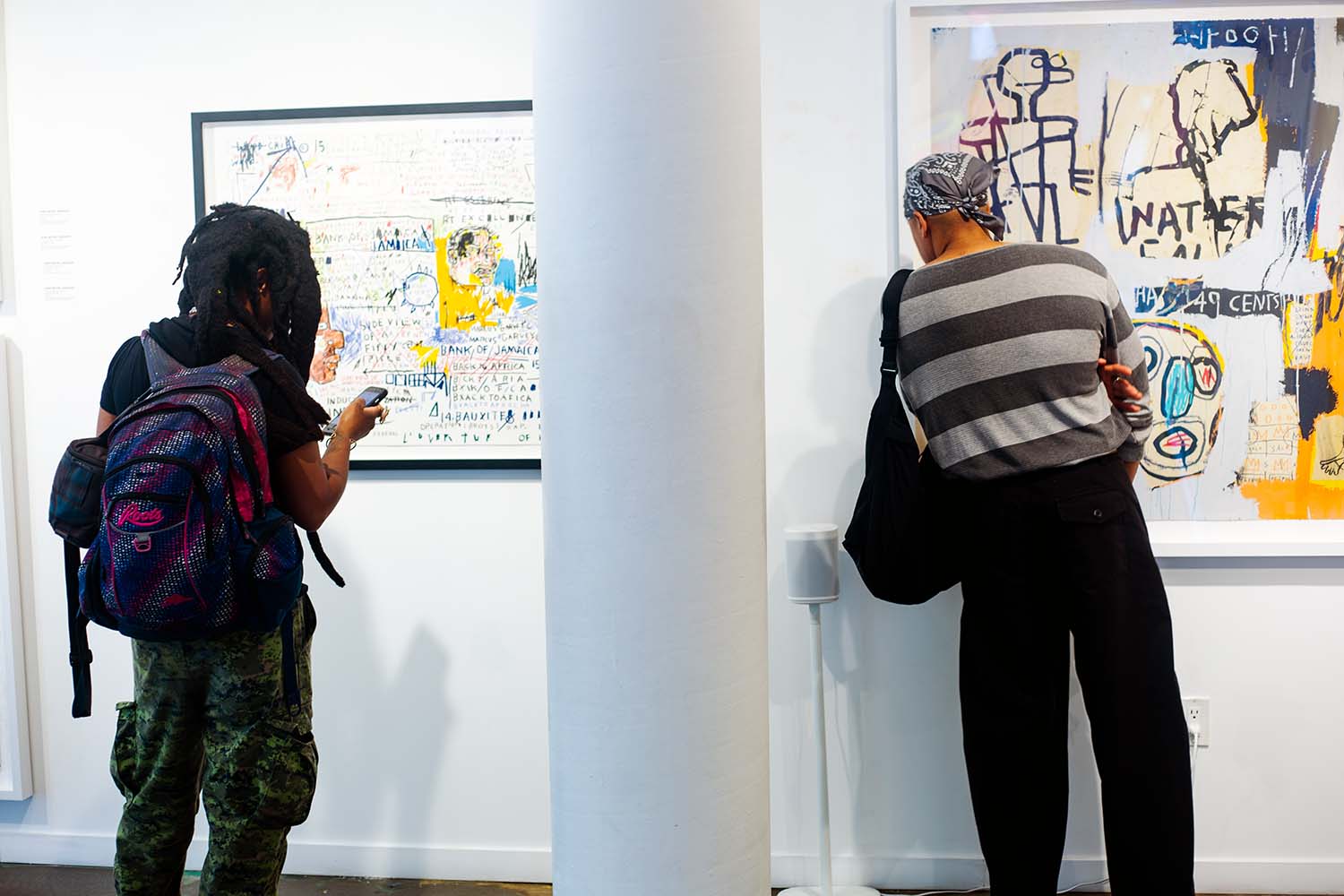
For a city as culturally diverse as Toronto, a Basquiat exhibition carries particular resonance. His work was always rooted in the Black and Caribbean diaspora experience of New York, shaped by the Haitian and Puerto Rican roots of his parents, by jazz, street culture and classical painting and by a sharp, unrelenting awareness of how race operates within the structures of art, commerce and history.
That conversation is ongoing, and Toronto audiences, many with deep ties to the same diaspora traditions Basquiat drew from, are well placed to receive it. The atmosphere at last night's opening made that clear. This was a crowd that understood the stakes of the work.
Exhibition details
Jean-Michel Basquiat / Editions runs through June 11, 2026, at Taglialatella Galleries, Toronto, 99 Yorkville Avenue. Admission is free. For those interested in acquiring a work, inquiries can be directed to
Follow the gallery on Instagram @taglialatellatoronto for updates.
The crown belongs to everyone
It would be easy to reduce Basquiat to his market value, to cite the staggering auction records and treat his prints as investment vehicles. But what draws people to stand in front of a seven-foot-wide Phooey, or to lean in close to the layered text of Charles the First, goes well beyond financial calculation. Basquiat made work that demanded to be seen, that refused the comfortable distance of museum reverence. His crowns were arguments. His skeletal figures were anatomies of power. Last night, watching a room full of strangers stop and genuinely look, that much was clear.
Exhibitions like this one serve a real and lasting purpose. They place estate-authorized works in front of audiences who may never encounter an original Basquiat painting in their lifetimes, and they do so without requiring a gallery membership or a collector's budget.
That access carries weight. Basquiat's visual world belongs to the same cultural conversation this city has been having for decades, one about who gets to be celebrated, who gets to be remembered, and who gets to wear the crown.
The exhibition is open now. Go see it.