
FILM REVIEWS:
BODYCAM (Canada 2025) **
Directed by Brandon Christensen

Two police officers investigate a domestic dispute, and there is an accidental shooting. Not wanting to be crucified by the public, the officers attempt to cover it up - only to uncover that the cameras aren't the only things watching them. The cover-up situation
This is what has been said by the D.P. of the movie:
Lots of takes. Which was afforded by the fact that every scene had a maximum of two camera angles.
So we had a camera vest with a wireless pack on it, sending it to my monitor. And we would rehearse it over and over, and the blocking had specific beats to hit to make sure they saw what we needed. They had 360-degree turning ability in any space, so we had to be far, and it gave them a real sense of being in the scene.
Then, when one angle was set, the other angle always worked faster because it was locked in.
On set, we had… Me, the DP, but he was running sound too, since he didn’t have to operate the cameras, Grip/Gaffer (one guy), Make up/Hair (one girl), production designer, a PA, and the producers (one did costumes, locations, and the other handled DIT).
Then my wife did the wardrobe from home.
It is clear that it is a labour of love from many of the filmmakers, but the result is mixed.
The film hits high expectations in the first 15 minutes when the two police officers enter a house on a call, with what is seen by the audience from what is viewed from their body cams. The film has the look of the found footage film THW BLAIR WITHC PROJECT. The images are genuinely scary, but the tactic slowly gets too familiar too soon. The segments also feel too manipulated and too jittery.
The cover-up situation at the start of the film is totally discarded by the end of the film. The story shifts to a cult that appears to be going on, but nothing is really sure with what is happening. The weak narrative hurts the film badly. No doubt there are many scary images, THE BLAIR WITCH style, but a strong story and narrative would definitely have made a more satisfactory movie.
BODYCAM is a Canadian feature. Director Brandon Christensen is a Canadian film director recognized for his distinctive contributions to the horror genre, focusing on complex familial dynamics, particularly those involving mothers and children. He began his filmmaking journey early in life, making home movies with his siblings, which ignited his passion for storytelling and cinema. Christensen's professional career includes notable works such as Night of the Reaper, Still/Born, Z, and The Puppetman - films that explore psychological and supernatural themes against the backdrop of parenting fears. His unique approach often incorporates daytime horror, challenging conventional genre norms to intensify the scare factor, showcasing his knack for crafting compelling narratives from everyday situations.
BODYCAM is a Shudder original film and opens for streaming on Shudder on March 13th.
Trailer:
BUSHIDO (Japan 2024) ***½
Directed by Kazuya Shiraishi
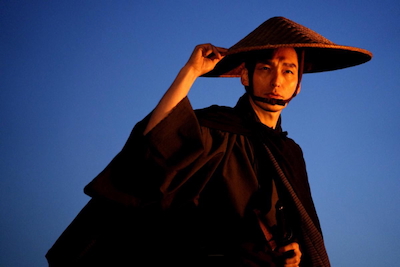
The new Japanese samurai movie is called BUSHIDO because it focuses entirely on BUSHIDO. Bushido, meaning "Way of the Warrior," is the ethical code of conduct for Japan's samurai class, focusing on honour, loyalty, martial skill, and self-discipline. Emerging from Buddhist, Shinto, and Confucian principles, it demands righteousness, courage, and fearlessness toward death, with its roots in the Kamakura period. There is minimal swordplay in the whole movie. But the movie is tense and compelling.
Key aspects of Bushido include: The Seven Core Virtues: Righteousness (Gi), Courage (Yu), Benevolence (Jin), Respect (Rei), Honesty (Makoto), Honour (Meiyo), and Loyalty (Chugi).
The film's central hero, Taciturn Kakunoshin, renowned for his formidable skills both with a sword and in the game of Go, embodies the purest ideals of the samurai code.
The film follows Kakunoshin Yanagida, a respected samurai living during Japan’s Edo period. After his wife dies, he is wrongly accused of theft by powerful members of his clan. Without a fair hearing, he is stripped of his status and forced to leave the domain, becoming a ronin (masterless samurai).
With his young daughter, Okinu, he moves to the city of Edo and lives in poverty. Kakunoshin refuses to abandon the principles of bushidō, the samurai code emphasizing honour, discipline, and fairness. To survive, he takes humble work and spends his spare time playing the strategy board game Go, which mirrors his disciplined way of thinking.
Years later, another accusation of theft threatens to ruin him again. As the truth slowly emerges, it becomes clear that his original disgrace was part of a conspiracy by corrupt officials. Kakunoshin must decide whether to quietly endure the injustice or reclaim his honour.
Supported by his devoted daughter, he eventually confronts the men responsible for his downfall. The story builds toward a final reckoning in which he tries to restore his reputation while remaining faithful to the ideals of bushidō.
The Go board flips, and a hellstorm of righteous vengeance follows.
The Go game serves as a metaphor for what is happening in Kakunoshin’s life. Though the game is unfamiliar to Westerners, the scenes in the game, I imagine, are similar to chess, delivered with precise accuracy and seriousness, with expert editing while exhibiting tension and anticipation.
The main themes in the film include:
Honour and reputation in samurai society - Kakunoshin remains honest and gains the reputation of the villagers.
Father-daughter loyalty - the daughter gives up her life to work in a brothel for the father to prove his innocence and get revenge for the family.
Justice versus revenge - Kakunoshin deserves both, to get deserved justice while also seeking revenge for the wrong done to him and his family
The moral meaning of the samurai code (busidō) - the 7 aspects of Bushido are the core to Kakunoshin’s way of life
The Japanese Edo era is masterfully crafted in this 2024 film, thanks to cinematographer d.p Jun Fukumoto’s excellent look.
From stoic honour to righteous hellfire, BUSHIDO, makes a triumphant return to the golden age of Japanese Samurai cinema, opening in theatres March 13th.
Trailer:
THE FORBIDDEN CITY (La città proibita) (ITALY 2025) ***
Directed by Gabriele Mainetti,
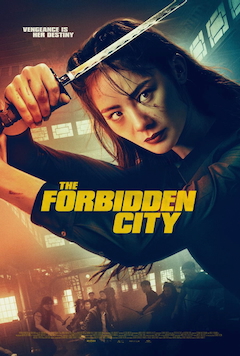
When the phrase FORBIDDEN CITY is heard, what immediately comes to mind is China’s largest and most famous palace in all of Chinese history, and it is the largest preserved royal palace complex still standing in the world. This palace gained its name from its enormous scale and severely restricted access to all but the Emperor, the Imperial family, and eunuchs; hence, the Chinese term "Forbidden City" emerged. The punishment for unauthorised entry to the palace was immediate execution. But in the new WELL GO film, THE FORBIDDEN CITY is the name of a Chinese restaurant in the heart of Rome, where questionable goings-on are carried out.
From Gabriele Mainetti, director of THEY CALL ME JEEG (that was screened a few years back at the ICFF), comes the ambitious dual-language, action-packed tale of two strangers seeking the truth and vengeance. Mei arrives in Rome looking for her missing sister and, along the way, meets Marcello, who is desperate to find his father. Together, they will fight their way through the Roman underworld.
The film begins with what looks like a Chinese-made swordplay auctioneer. The setting is 1995. Yun and Mei are two sisters born in China during the one-child policy period, which lasted from 1979 to 2015. To protect Mei, their parents decide to keep her presence a secret and raise the girls with martial arts training.
In the present day, Mei arrives in Rome to find her sister, Yun. In the Esquilino Chinatown neighborhood, she finds the restaurant "La città proibita", run by the Chinese boss Wang, which is a place of prostitution and illegal dealings. Mei confronts Wang's men in an attempt to find her sister, possibly held prisoner for sexual exploitation. She discovers that Yun is no longer there and that she might be connected to Alfredo, the owner of a nearby trattoria. Mei then goes to the "Da Alfredo" trattoria and assaults his son, Marcello, who runs the place with his mother, Lorena, since his father disappeared. Marcello claims he knows nothing about his father Alfredo, as he is said to have run away with a Chinese prostitute.
Later, Marcello tells everything to Annibale, a small neighbuorhood gangster who exploits illegal immigrants, his creditor and partner, as well as Alfredo's best friend. Annibale suspects Wang, from the rival restaurant, is behind the attack on the trattoria, and threatens him with severe retaliation.
What happens following is a cross-cultural unlikely romance between Mei and Maarcello. The cliched romance feels forced, and the chemistry is questionable, not helped by the fact that one is Italian and the other Chinese, unable to communicate easily. The action and vengeance potion of the story also feels forced, but is more interesting, and this is the pattern that propels the story forward. The action fight sequences and action set pieces are impressive and make up for the uninspiring romance and the cliched storyline. Director Mainetti tries hard, but his previous film, a simpler one, THEY CALL ME JEEG, fared better. At best, the film effectively combines both Hong Kong–style martial-arts action with Italian crime drama
The film is a lengthy 140 minutes and is in both Italian and Mandarin with English subtitles. Availability:t *On DIGITAL: MARCH 17th*
On DVD, BLU-RAY, & 4K: APRIL 21st
Trailer:
The Great Arch (France 2025) ****
Directed by Stéphane Demoustier
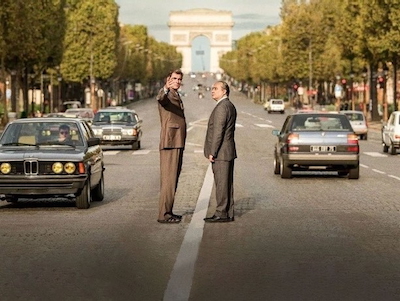
An excellent examination of the pains and effort that go into the construction of a high-profile government architectural project. This is the real thing, unlike THE BRUTALIST, and tells the true story surrounding the Danish architect who was commissioned to build the cube in 'le defense', the business area in Paris, which was named the Grand Arch or la grande arch because one can see through the cube. The setting is 1983. French President François Mitterrand
decides to launch an international architectural competition for the flagship project of his mandate: the Great Arch of La Défense, aligned with the Louvre and the Arc de Triomphe. Against all odds, Otto von Spreckelsen (Claes Bang), a Danish architect, wins the competition. Overnight, this 53-year-old man, unknown in France, arrives in Paris, where he is propelled to the helm of this pharaonic project. While the architect intends to build the
Great Arch, exactly as he envisioned, his ideas quickly clash with realistic constraints and the vicissitudes of politics. The film favors architect von Spreckelsen, who champions his ideals (the cube is his life, he says, the reason for his cry distance) and does not bend toward betrayal of his client.
The film opens on March 12th at the Bell Lightbox.
LOUIS THEROX: INSIDE THE MANOSPHERE (USA 2026) ***
Directed by Adrian Choa
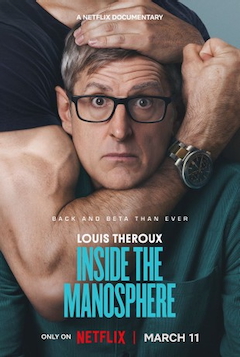
The documentary is primarily features the MANOSPHERE. It is important to know what it is. The manosphere is a varied collection of websites, blogs, and online forums promoting masculinity, misogyny, and opposition to feminism. Communities within the manosphere include men's rights activists (MRAs), incels (involuntary celibates),[3] Men Going Their Own Way (MGTOW), pick-up artists (PUA), and fathers' rights groups.[6] While the specifics of each group's beliefs sometimes conflict, they are generally united in the belief that society is biased against men due to the influence of feminism and that feminists promote misandry (hatred of men). Acceptance of these ideas is described as "taking the red pill", a metaphor borrowed from the film The Matrix. The doc highlights al the features of the manosphere while largely denouncing it.
Firstly, who is Theroux? Louis Sebastian Theroux (born 20 May 1970) is a British and American documentarian, journalist, broadcaster, and author. He has received three British Academy Television Awards and a Royal Television Society Television Award. After graduating from Magdalen College, Oxford, Theroux moved to the United States and worked as a journalist for Metro Silicon Valley and Spy. He moved into television as the presenter of offbeat segments on Michael Moore's TV Nation series. His work includes studies of unusual and taboo subcultures, crime and the justice system, and celebrities. The majority of his documentaries are set in the United States, but he has also studied cultures in South Africa, Israel, Nigeria, and the UK. The New Yorker described Theroux's work as "a piercingly humane, slyly funny guide through the funkier passages of American culture”. In this film, he documents Harrison Sullivan and a few other male influencers.
Secondly, who is Harrison Sullivan? Harrison Sullivan (born 6 October 2001) known online as HSTikkyTokky, is a British TikTok influencer who makes fitness, crypto and dating content. He is the main subject of an upcoming documentary by Louis Theroux. On camera, he is shown to be sexist and homophobic and shows to be proud of it. He also claims that women are given a gift - their vagina.
The doc works best with the most striking scenes or confro
The film examines a network of internet personalities—podcasters, livestreamers, and influencers—who promote hyper-masculinity, “red-pill” ideology, and traditional or controversial views about gender roles.
Louis Theroux immerses himself in this world as a presenter by meeting and interviewing several well-known figures in the movement, including:
Harrison Sullivan (HSTikkyTokky)
Myron Gaines
Sneako (Nicolas Kenn De Balinthazy)
Justin Waller
Ed Matthews
LOUIS THEROX: INSIDE THE MANOSPHERE features two highly popular male influencers. These two influencers are all out to make lots of money despite morals. In one way, the thesis is definitely the documentary to see on influencers - a very eye-opening and compelling watch regardless of whether one agrees with the doc’s influencers’ content.
ntations—some of them are quite revealing about how these influencers operate, and often, too, revealing who they truly are and what their ultimate goal is, which is money. This ecosystem has become influential, and what its growing popularity says about modern masculinity and internet culture cannot be ignored.
LOUIS THEROUX: INSIDE THE MANOSPHERE is a 90-minute Netflix original documentary that opens for streaming on Netflix on March 11th.
Trailer: m
THE LOVE THAT REMAINS (Icelandic: Ástin Sem Eftir Er) (Iceland 2025) ***
Directed by (Icelandic: Ástin Sem Eftir Er)
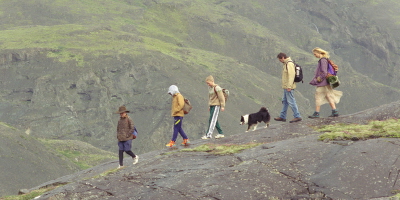
THE LOVE THAT REMAINS, written and directed by Hlynur Pálmason, stars Saga Garðarsdóttir as Saga and Sverrir Guðnason as Manus in a husband and wife relationship with their three children and pet dog, Pada (the dog has black and white colours looking like a panda). Their relationship is still there, but they have each made the decision to separate and go their own ways. But THE LOVE STILL REMAINS in this quiet, simple yet complicated love story
The film has a curious but somehow truthful look at how love manifests itself. Take these two examples. When the husband says he should spend more time disciplining the kids because he loves them, the wife holds him and then says, “Now you know how it feels. I am scolding you because I love you. Another example happens a bit later when the horses escape from the pen. The wife says: “If it is only someone I hated had forgotten to close the gate. Then I would have a reason to kill him.”
The sequence of images in the film makes one think. There is a scene of children playing with the young baby chicks, so cute and cuddly. The boy says the rooster will be fucking them if they are put together. The scenes of the chicks being cuddled are then followed by a scene where chicken wings and drumsticks are on the BBQ being cooked.
(Spoiler alert!) The film has a rather puzzling ending that is to be examined literally and metaphorically. One scene of a giant rooster that pecks Manus out of bed isan example of some surrealism found in the film. One wishes that these segments be left out, as these odd segments only appear near the end of the film. It would be better if the film were clearer. The ending suggests three core ideas that are not common in relationship-based films.
Love does not always conquer incompatibility.
Two people can care deeply for each other and still fail, which is not surprising since both have strong personalities.
What remains after love changes is nothing — it’s memory, growth, and sometimes quiet gratitude.
The love that remains is shown to be less tragic than it appears, with more acceptance and reflection on the couple than devastation. This is what distinguishes this film as a whole, making it more thoughtful and interesting. The three children also come into the picture, as they slowly grow in puberty and adulthood, thus adding to both problems and complicity. The family dog Panda steals the show, demonstrating that most families should have a pet dog.
THE LOVE THAT REMAINS had its world premiere in the Cannes Premiere section of the 2025 Cannes Film Festival on 18 May 2025, where the lead animal actor, Panda, won the Palm Dog Award. It was selected as Iceland's entry for Best International Feature Film at the 98th Academy Awards but was not nominated. The film opens in Toronto at the TIFF Lightbox on March 13th.
Trailer:
MADE IN KOREA (2026) **½
Directed by Ky Karthik

MADE IN KOREA is an odd film with a Korean title but made in India and not in Korea. Though filmed there. Made in Korea is a coming-of-age drama about a woman who travels from India to Korea chasing a dream, only to be stranded and forced to rebuild her life in a completely unfamiliar world.
Shenba is from a small Indian village in Tamil Nadu, where there is no internet signal. After being in a school play, she yearns to visit and be in Korea. There is only one thing that she loves more than Korea. And that is her boyfriend, Manu. But Manu owes money and works as a bar server. But before one can draw bad conclusions about Mani, it is revealed that the debt is derived from his father. Mani grants Sheba’s wish, and both are supposed to board a plane to Korea. But he abandons her to start a business in Mumbai with a friend instead, but still has her dreams fulfilled by paying for her flight, showing him to be a sweet chap. Long story short, Shenba is left alone in a supposedly place of her dreams, but all alone. As the saying goes, be careful of what you wish for.
One can tell that this is a learning coming-of-age story in which Shenba grows into a respectable, independent woman. It is an ambitious film that does not always work. The film is charming in a way, but also naive in the way it believes that the audience will fall for the many cliches it delivers on the way. At best, it is also a unique cross-cultural film bout chasing one’s dreams regardless of consequences.
NASH THE SLASH RISES AGAIN (Canada 2025) ***
Directed by Tim Kowalski
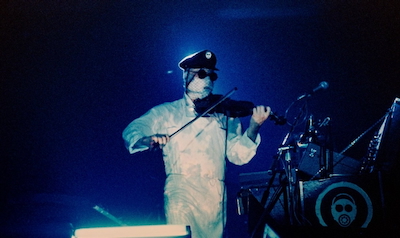
Nash the Slash is a Toronto musician/singer, and songwriter who performs his gigs with his signature bandages, top hat, and white gloves.
The "Nash the Slash" persona came from silent film, and Nash said he took his stage name from that of a killer butler encountered by Laurel and Hardy in one of their first films, Do Detectives Think? (1927).
Nash was born in Toronto. He performed with surgical bandages covering his face starting in 1979. "During a gig at The Edge in the late 1970s to raise awareness of the threat from the Three Mile Island disaster, he walked on stage wearing bandages dipped in phosphorus paint and exclaimed: 'Look, this is what happens to you.' The bandages became his trademark.
Nash's music is a complex blend of progressive rock, new wave, new age, and punk rock, using electric mandolins, violins, drum machines, and a variety of effects and sonic devices. He wrote, played, and produced most of the material on his solo albums by himself, though he also worked with producers Daniel Lanois, Steve Hillage, and Bill Nelson.
The documentary tells the story of Nash the Slash, a classically trained violinist and multi‑instrumentalist famous for blending prog‑rock, punk, classic rock, psychedelic, techno, and industrial influences long before those categories widely existed. His signature stage persona—a face covered in surgical bandages, a white tuxedo, electric mandolin and violin, and walls of electronics—made him one of Canada’s most unique performers.
The film traces Nash’s early days with the theatrical prog‑rock band Breathless, his live scoring of silent films at Toronto’s 99¢ Roxy Theatre, and his evolution into an internationally touring solo act.
It also highlights his involvement in film, including composing music for early Bruce McDonald films and appearing in Roadkill.
NASH THE SLASH RISES AGAIN. The announcement of Nash’s death bookends the film. Between his life, career, rise, and fall are documented. As they say, a doc is often as interesting as its subject. True, the subject Nash the Slash is an interesting enough subject, not a great person, but one with flaws and faults. His coke addiction is also mentioned in the film, as are his anger outbursts. His friends and family also speak about the man in the doc, and he is shown with friends and family when no in disguise.
Nash’s real identity and name were James Jeffrey "Jeff" Plewman (March 26, 1948 – May 10, 2014). Better known by his stage name Nash the Slash, was a Canadian musician.b A multi-instrumentalist, he was known primarily for playing the electric violin and mandolin, as well as the synthesizer, keyboards, glockenspiel, and other instruments (sometimes described as "devices" on album notes).
The doc ends up an innovative, eccentric, and deeply influential figure in Canada’s underground music scene. It also examines warts and all, his artistry, isolation, cultural impact, and the mythos surrounding his masked persona, while celebrating the strange and electrifying world he created.
NASH THE SLASH RISES AGAIN premiered in Toronto at Hot Doc and then last October at the BITS film festival, though there is no Blood in any snow. The film opens at the Bell Lightbox on March 13th.
Trailer: