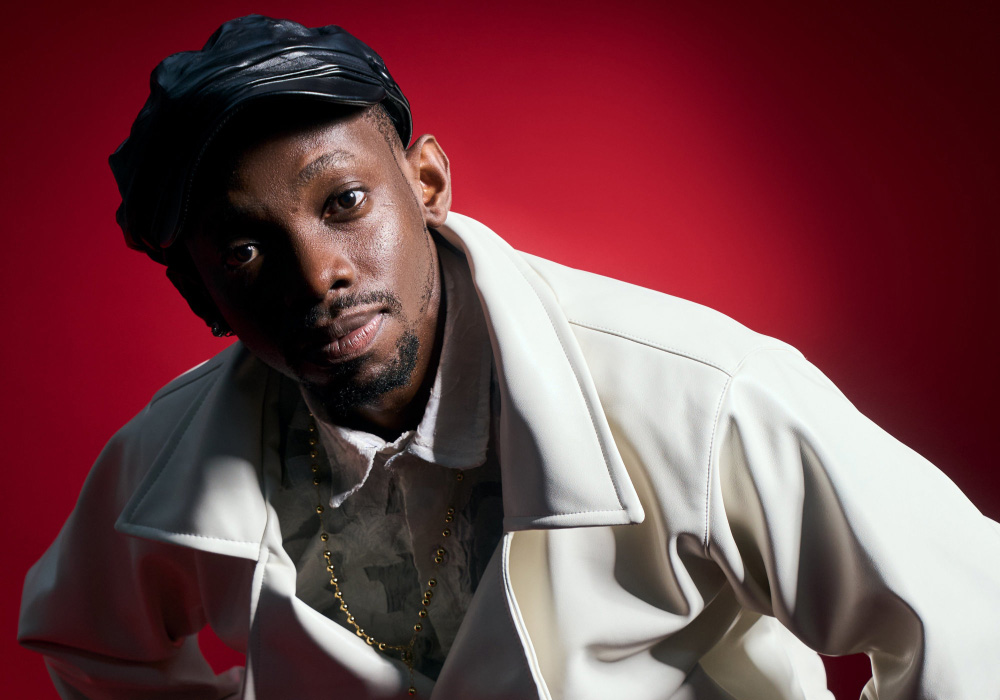
Nigerian-Canadian Afrosoul artist Ayola walked away from a career in pharmaceutical science in 2024 to pursue music full-time. Now six months into an independent cross-Canada tour, he is building his audience city by city, carrying little more than his voice, a guitar and a cajon. In this conversation, Ayola talks about the leap, his sound, life on the road and what Toronto means to him.
There are artists who drift into music gradually, and then there are those who make a clean break and bet everything on the leap. Ayola, the Nigerian-Canadian Afrosoul singer-songwriter, belongs firmly in the second camp. Born in Ilorin, Nigeria's Kwara State, shaped by years of postgraduate study in biochemistry, pharmaceutics, and medical biotechnology, and now based in Canada, he spent the better part of a decade building a career in pharmaceutical science while quietly nurturing a musical life on the side. In the summer of 2024, standing at a Burna Boy concert in London, he felt something crystallize.
By October of that same year, he had released his third album, The Life I Want, a project that proved to be more than a creative statement. It was the moment he made up his mind. Shortly afterward, he left his pharmaceutical career behind and gave himself fully to music. He has been on the road ever since.
Six months into an independent cross-Canada tour, Ayola arrives in Toronto from May 15 to 19, bringing a set of performances and a story worth knowing.
The moment everything shifted
The Burna Boy concert in London was the trigger, but Ayola is careful to say it was not really about Burna Boy himself. "It was just the feeling of doing what you truly want to do, and doing it so well that it feels like you're living your God-given purpose on earth," he explains. At the same time, his relationship with his pharmaceutical career was unravelling. He found himself falling behind at work, not from lack of ability but from a growing resentment he could no longer suppress. The deeper problem, as he saw it, was that fear of financial instability had been standing in the way of his art for years.
The release of The Life I Want brought things to a head. With only two weeks off work to shoot content and plan the rollout, he realised the arrangement could not hold. Music and a full-time science career had become incompatible. He chose music.
What makes the story even more telling is how privately he carried the decision. His family found out mostly through his own public storytelling, TikTok posts and the unfolding narrative of the tour itself. His father still does not know. His mother found out through a video post weeks after the fact. "I kept it to myself for a long time," he says, without apology.
Two worlds, one sound
Ayola describes his genre as Afrosoul: storytelling music with Afropop rhythm and folk sensibility. His listeners often tell him the music feels nostalgic, melancholic, something that makes time pass differently. He takes that as a compliment.
What sets his sound apart is a duality that runs through his whole biography. Growing up in Ilorin gave him the rhythmic foundation of Afrobeats. Canada shaped him emotionally. The result is music that sits at the intersection of those two experiences, Afropop pulse with folk storytelling at its heart, and a quality that allows listeners from very different backgrounds to find themselves in it.
"Ilorin made me, Canada shaped me, and both worlds reflect my art," he says plainly.
He no longer feels the tension between those two identities that once made him uncomfortable. If anything, he now sees the Nigerian-Canadian duality as one of his strongest assets. Artists like Burna Boy and Tems have demonstrated what is possible when that bridge is crossed with full commitment. Ayola believes he is doing something similar, but from a position that is genuinely his own rather than a constructed brand strategy.
The pharmaceutical side of him has not disappeared entirely. Running his own independent music career means thinking constantly about strategy, positioning, tour routing, outreach and audience development. His science background gives him a certain structural discipline that most artists have to learn the hard way.
But that same background created a trap he has had to work to escape. "One of the biggest things I've had to learn is separating the role of the creator from the role of the editor," he says. The creator needs freedom. The editor comes in later, with judgement. For a long time, he was trying to do both at once, and it choked his art. That distinction has been one of the defining lessons of this season.
Life on the road
A cross-Canada tour funded and organised entirely by one person is no small undertaking. Ayola handles routing, press, content, bookings, gear rentals through Long & McQuade, travel logistics and soundcheck, often in cities where he has only a few days to make an impression. He describes the financial reality without flinching: you spend a lot, and the returns are slow. But he understands he is in a building phase, and he approaches it accordingly.
What has genuinely surprised him is the depth of human connection the tour has produced. Whether in a small folk venue, on a university campus, or in post-show conversations with strangers, people open up to him and to the music in ways he did not anticipate. Ottawa, in particular, left a mark. He met Black founders, artists and community organisers there who made him feel, as he puts it, like a pastor on an evangelism mission. There was a sense of purpose that extended beyond performing.
His approach to each city has been deliberate. Rather than passing through as a touring act, he seeks out the Black creative communities in each place, connects with them and spotlights what they are doing. The tour becomes a form of cultural exchange as much as a promotional run.
What keeps him grounded on harder days is a thought he returns to regularly: the moment he is in will never come again exactly this way. That awareness keeps him present when anxiety about the future starts pulling him away.
What Toronto means
Toronto carries weight for Ayola. As the cultural and entertainment capital of Canada, it represents both the largest concentration of West African and Afrobeats community in the country and a proving ground for any artist serious about breaking through. During his May 15 to 19 stay, he plans to do a significant amount of busking across the city, perform at intimate sessions and connect with Toronto's creative community with the same intention he has brought to every other stop on the tour. He is particularly hoping to find artists in the soulful and alternative Afrobeats space, naming Toronto-based Afropop artist Aiza and Brampton-based soul singer ZENESOUL as artists whose worlds feel adjacent to his own.
Gallery spaces, creative hubs and stripped-back performances are all part of what he is looking for. Discovering a city through its creative community rather than its tourist circuit is, by now, a philosophy he has refined across the entire tour.
The question no one asks
When asked what the tour has not shown the public, Ayola pauses before answering. The highlight reel, he says, leaves out how genuinely tedious the journey can be. Some days feel transcendent. Others feel completely disorienting. There is no manual for any of it, and much of the time he is simply making decisions and hoping his instincts are sound.
Something else has emerged through the experience that he did not expect. Having drifted away from religion for a period, he finds himself returning to it. As a Muslim who had spent time as an agnostic, he has started going to the mosque again on Fridays. The feeling of helplessness that sometimes comes with building something from scratch in real time has brought him back to faith. He describes it without drama, as a natural thing that is happening, a full circle that makes sense only in retrospect.
For those watching from the sidelines
There are many young Nigerians and African diaspora professionals who feel drawn to creative work but have not made the move. Ayola does not push a simple answer at them. He is clear that the decision requires honest self-assessment. You have to know how deeply you care about the dream and whether you could live with the weight of not pursuing it.
"Time is the one thing you never really get back," he says.
But he is equally clear that blind leaps rarely work. Planning and patience matter. What he has learned is that clarity comes gradually to those who refuse to stop trying to figure it out. Many things he understands now were simply not available to him earlier. The preparation and the journey, it turns out, are the same thing.
The road builds the artist
Ayola's story resists easy framing. It is not a straightforward pivot narrative, nor a simple immigrant success story. It is something more honest than both: a person who spent years in one world, built real knowledge and discipline there, and eventually found that the cost of staying was too high.
His music carries that weight. Songs that begin as quiet observations, living at the intersection of reflection and raw storytelling, come from someone who has actually been somewhere. The Afrosoul tag is accurate, but what it points to is a practice of paying close attention to life and finding the language for what most people cannot quite name.
Touring with a voice, a guitar and a cajon, city by city, room by room, Ayola is doing exactly what he said he wanted to do. The roots are going down. The momentum is building. Toronto, starting May 15, is the next chapter.
Follow Ayola on Instagram (@ayolamusic), X (@ayolamusic), TikTok (@ayolamusic), Facebook (ayolamusic) and YouTube (@ayolamusic). Stream his music on Apple Music and Spotify.