
AT THE PLACE OF GHOSTS (Canada 2025) ***
Directed by Bretten Hannam
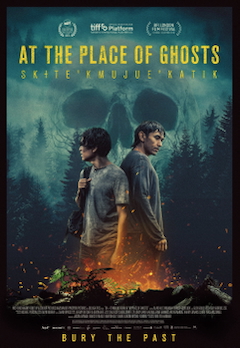
Siblings Mise’l and Antle, close confidants as children, have drifted apart as adults. When a malevolent spirit begins tormenting them, the siblings are forced to reunite and journey into Sk+te’kmujue’katik (the Place of Ghosts). This primordial forest exists outside of time, to confront their violent upbringing.
The film is a slow burn for a ghost story and not the typical Hollywood horror, with hardly any jump scares or cliched horror techniques like searching through winding corridors or old houses. The forest is the scary fixture of the story. This forest is portrayed as ancient, spiritually alive and outside normal time. As the two brothers travel deeper inside, reality becomes unstable. The forest contains ancestral spirits, echoes of memory, visions of the past, possible futures and manifestations of emotional pain, with time in the forest circular rather than linear. This is where the film stands out as a unique horror film.
The story centres on two Mi’kmaq brothers Mise’l and Antle. As children, they were inseparable. They grew up in rural Nova Scotia under a harsh and abusive father whose violence and homophobia shaped both of their lives. Mise’l, the elder, was more emotionally sensitive and struggled with his queer identity in an environment that viewed vulnerability as weakness, while Antle coped differently, suppressing emotion, trying to survive while distancing himself from his brother. Over time, the trauma between them created silence and resentment.
In their adult lives, years later, the brothers barely speak. In the story, the brothers reunite reluctantly and travel into the forest to Sk+te'kmujue'katik — “The Place of Ghosts”, something they claim, but not made very clear to the audience, as they have to do.
The brothers finally meet the entity in the forest at the film's conclusion, where spirituality and emotions take hold.
The film opens on May 8th.
THE BUTCHER’S BLADE (China 2026) ****
Directed by Liu Wenpu
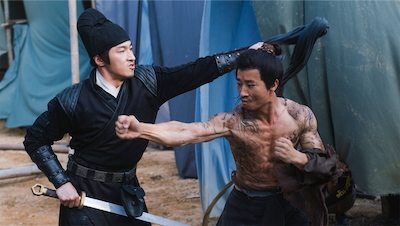
THE BUTCHER’S BLADE is a gritty Chinese wuxia thriller about a low-ranking constable who becomes trapped inside a violent political conspiracy during a period of social collapse and corruption.
The protagonist, Xue Buyi, is a modest constable trying to survive in a decaying imperial system. Unlike many action films, Xue is neither a legendary martial-arts master nor a noble hero at the beginning of the film. After a transport of relief silver disappears, Xue is falsely implicated in the theft and becomes the target of corrupt officials and hired assassins.
The deeper he digs, the more he realises the system itself is rotten.
He proves himself slowly and eventually in an empire where officials profit while common people suffer, justice is manipulated, and loyalty is transactional. Xue gradually understands that the law he served is deeply compromised.
THE BUTCHER’S BLADE is so-called for the fighting style that typically of the main hero, Xue, who resembles a butcher cutting meat rather than an aristocratic martial artist performing refined forms. Unlike elegant scholar-swordsmen in traditional wuxia films, Xue fights using heavy chopping motions, shoulder-powered strikes, and short-range killing blows with efficient and practical violence. His fighting style resembles a butcher cutting meat rather than an aristocratic martial artist performing refined forms. There is no butcher blade seen in the film
The fighting scenes resemble the Shaw Brothers' 60s and 70s swordplay films that they produced from their Shaw Studios almost weekly, released to their own chain of cinemas throughout South-East Asia, where this film reviewer grew up, till film piracy destroyed cinema in South East Asia.
It is the action sequences that make this film stand above the traditional run-of-the-mill martial arts films, aided by a solid plot involving a down-and-out constable whom audiences can root for as he tries to redeem himself in a corrupt world.
Two fight sequences stand out. One is the fireworks flash and fight sequence between Xue and the masked fireworks assassin. Xue now changes his role from hunter to survivor in a fight where he is more in survival mode. The two fighters' fighting techniques differ, with acrobatic wall movement, spinning-blade attacks, and extremely fast directional changes noticeable. The fight and flash fights have the fighters during flashes of light between bursts of smoke, thus creating a rhythm where the audience briefly sees movement, then everything vanishes into darkness again. The film impressively uses fireworks almost like strobe lighting.
The second, and arguably the best, is the hanging cloth fight. This reminds one of the often-used fight amidst multiple mirrors in Western films. This involves Xue fighting an opponent who works in a cloth-dyeing factory. In it, Xue fights the assassin inside a textile-drying courtyard filled with hanging sheets and cloth banners. The fighting style leans heavily into traditional wuxia movement, wire-assisted acrobatics, and concealment-based swordplay. The fighters use disappearing movements through cloth curtains, hidden blade attacks, and spinning sabre strikes. Brilliantly, the cloth becomes part of the choreography with wrapping weapons, blinding opponents, masking direction changes, and clearly outstanding fight choreography.
There is also a message in the film in which the ending emphasises the personal cost of revenge, corruption’s persistence, and the loss of innocence. The Action-Packed Wuxia Crime Drama Hits Digital May 12.
Trailer:
THE LAST ONE FOR THE ROAD (Italy/Germany 2025) ***
Directed by Francesco Sossai
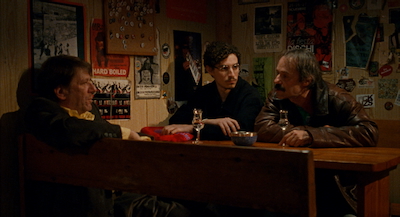
The film begins with two isolated incidents, each not too exciting. As they say, if a film does not grab one's attention in the first few minutes, then the audience will be put off and leave. Well, the film does not get much more exciting; it just meanders on, as it is about two old drunks who keep having one more (drink) for the road. Like the men, the film rambles on and on. It is an Italian road trip film. The two old men pick up a youth on their travels. One good thing about the film is that it avoids clichés. The two old men don't learn from the young one, and neither does the young one from the older men. But their behaviour affects each party, so the audience has to be patient and see how the film unfolds.
The bottom has fallen out for Carlobianchi and Doriano, two small-time Italian crooks. They haven’t been able to mount an honest scam since the 2008 financial crisis and now face the impending mediocrity of middle age. The return of an exiled partner-in-crime from Argentina affords a second chance for long-buried riches, but can Carlobianchi and Doriano put down their beers long enough to keep their eyes on the prize? Along their slow-motion, alcoholic grand tour of the Venetian countryside, they cross paths with Giulio, a shy architecture student who reluctantly warms to the sodden pair and indulges their rants about the folly of globalisation and the slow decline of local colour. Each roadside tavern offers the promise of one last drink – unless the next one ups the ante. “Never mixed the new wine with the old!” The wine in the glass must be finished before the glass is filled. Francesco Sossai’s dazzling sophomore feature is many things at once: a road movie, a casual caper, a tribute to a vanishing industrial Italy, a scruffy intergenerational odyssey, and a free-flowing bender through time and space.
In the story, the two men travel together. The older men pull Giulio, as they share dubious advice, stories, and a carefree “live for today” attitude. What starts as aimless wandering becomes a kind of coming-of-age journey for Giulio. The film requires patience. It is like hanging around a drunk friend, tolerating his or her nonsense. The setting is rural Italy, where the audience is given, at best, a subtle look at economic and social changes.
This film has garnered rave reviews, which is a surprise considering that the film meanders all over the place with apparently not much direction or narrative. A few unconnected segments, like a gay kissing segment, make little sense either.
THE LAST ONE FOR THE ROAD premiered at Cannes in 2025 in the United Certain Regard section. The film screened in TIFF’s Centrepiece program, as well as at VIFF and NYFF, where it steadily built momentum on the festival circuit. It has since become one of the most nominated films at this year’s David di Donatello Awards, with 17 nominations.
The film opens in Toronto on May 8th.
Trailer:
LIVING THE LAND (China 2025) ****
Directed by Hugo Meng
LIVING THE LAND immediately brings to mind the pastoral literature classic Pearl S. Buck’s THE GOOD EARTH, which was also adapted to Sidney Franklin’s 1937 film about poverty and a Chinese farmer, Wang Lung, living the land. This reviewer studied the novel in secondary school, and watching LIVING THE LAND is indeed nostalgic as it captures all the drama, poetry and hardship of farmers and traditions.
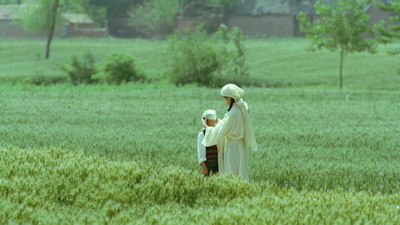
The film is set in the village of Bawangtai in 1991, where time appears to have stood still. Despite the rapid industrialisation happening in cities across China, everyday rural life for farming families in Henan province remains steadfastly tied to the demands of the land. 10-year-old Xu Chuang, the third-born child of one such family, is unceremoniously left with his wheat farmer uncle when his parents and older siblings set out to find work in the Southern city of Shenzhen. Cared for though unable to shake the feeling he doesn’t belong with the extended Li family, Chuang finds comfort in a young aunt, who feels similarly uneasy as she is pressured to marry, and his surly but kind nonagenarian great-grandmother. However, what is different from THE GOOD EARTH is that, as the trend of becoming migrant workers grew, the younger generation slowly departed for city life, subtly transforming the rural landscape.
The Silver Bear winner for Best Director at the 2025 Berlin Film Festival, Chinese filmmaker Huo Meng’s elliptical and elegant sophomore feature proves “a cinema of patience is also a cinema of assurance” (Indiewire). Equal parts coming-of-age tale and epic portrait of provincial life, Living the Land exists at an apex for Chinese culture in the 1990s, “a time when major reforms were transforming China from a nation of rural labourers into the industrial powerhouse it is today.”
The film also explains the culture and work ethics of the Chinese folk. Unlike their western counterparts, particularly Trump’s America, who are lazy and want everything given to them, the Chinese are willing to suffer and work hard to achieve the bare minimum for essential living while often under pressure by an unrelenting Government who would punish their citizens with re-education and sometimes death. The modern Chinese cities are a start entreats to their countryside.
At best, the film examines and demonstrates the resilience of the human spirit of any person willing to go all out to achieve their goal in life.
LiIVING THE LAND had its world premiere on 14 February 2025, as part of the 75th Berlin International Film Festival, in Competition. On 10 October 2025, it will be showcased in the Showcase section of the 2025 Vancouver International Film Festival. Later, it competed in the 'Official Section' of the 70th Valladolid International Film Festival for Golden Spike. It will be presented in the 'Rising Stars - 2025' section of the 56th International Film Festival of India in November 2025. The film was overlooked by the Toronto International Film Festival and also currently has no theatrical or Digital opening.
The film opens on Wednesday at the TIFF Lightbox.
MARAMA (New Zealand 2025) ***½
Directed by Taratoa Stappard
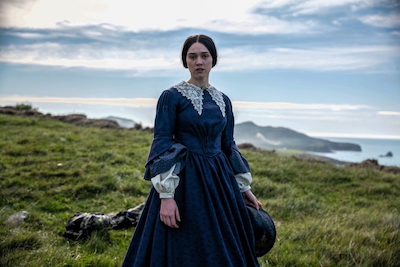
Written and directed by Taratoa Stappard, MARAMA is an impressive gothic horror that has, at the time of this written review, a 100% on Rotten Tomatoes
Upon receiving a letter from a mysterious stranger claiming to have information about her parents, orphan Mary Stevens (Mārama) arrives in Yorkshire, England, to find out more about her whakapapa.
The film opens with Mary arriving in Yorkshire. The slope is steep, as the driver of the coach who drops her warns Mary. The year is 1865. So far, the film looks very impressive with the wardrobe, setting, and atmosphere created.
On her arrival at Hawkser Manor, Mart is eagerly met by Nathanial Cole, who offers her a position as governess for his granddaughter Ann, but the house does not feel right. What must Mārama do to discover her tūpuna (family heritage), and how far will she go to protect them?
MARAMA should not be dismissed as a mere horror movie. The film works on several levels. One is the timely issue of forced colonisation, an issue that has rocked the world recently, especially in Canada, with the discovery of mass graves. In MARAMA, the main story concerns the Indigenous Maori people in New Zealand as the main character, Marama, who is Maori and who travels all the way by ship (the story is set in 1895), taking many, many days in order to reach Yorkshire, England. Reaching there, Marama finds and meets an English coloniser who has abused the Maori people, as the story slowly reveals. The film involves a few Maori warrior dances,, reminiscent of what can be seen in the Maori classic ONCE WERE WARRIORS. Maori warriors love to stick out their tongue way out from their mouths while making loud noises. The film is also handsomely shot, looking priorly gothic while also showing the beauty of the Yorkshire countryside, including craggy cliffs and stretching pastures.
The horror element comes from the spirit's connection with Marama and her ancestors. As she reconnects with her extended family and local traditions, she learns that her mother was deeply involved in protecting sacred land tied to ancestral spirits. There are hints of a past conflict involving developers and community divisions, suggesting her mother’s death may not have been accidental. Haunted by visions and memories that are not her own, she begins to unravel a horrifying truth. As the sinister nature of Cole’s intentions comes into focus, Mārama transforms into a blood-tinged reckoning that never shies from the grotesque. What begins as a search for identity becomes a fight for freedom, dignity, and spiritual survival.
Ariāna Osborne delivers a knockout performance as Mary Stevens, displaying both the ferocity and sensitivity of her character. Toby Stephens also impresses as Sir Nathaniel, the man who seems welcoming at first but later reveals a much darker side.
MARAMA had its world premiere at the Toronto International Film Festival last year and opens at the TIFF Lightbox on Friday, May 8th.
Trailer:
MY DEAR ASSASSIN (Thailand 2026) **½
Directed by Taweewat Wantha
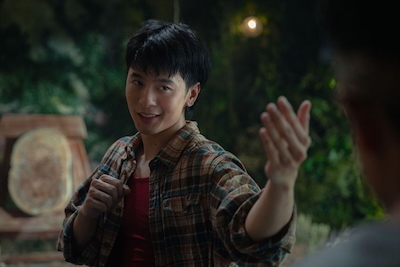
The 2026 Thai Netflix film My Dearest Assassin is an action-romance thriller about a young woman named Lhan whose extremely rare blood type makes her the target of ruthless killers.
The Thai actors are all quite good-looking, with one quite a handsome Elon Musk look-alike. The editing of the Vietnamese film is distinctly different and is sharp while possessing continuity, something not seen in other films.
The film opens with an intriguing premise. An older man in Dubai needs a transfusion from a rare blood type. Sometimes, films educate, and this film teaches about the rare blood type called Aurum blood.
Aurum” is Latin for gold. So “aurum blood” literally translates to “golden blood”, referring to the extremely rare Rh null blood type as it lacks all Rh antigens (unlike normal blood types). But what is remarkable is that fewer than 50 people worldwide are known to have it.
It is very valuable for transfusions because it can be compatible with many Rh systems
But it is also risky, since donors are extremely scarce. What is most interesting to note is that many known donors keep frozen emergency supplies of their own blood while international donor registries coordinate transfusions for emergencies.
The film continues in Vietnam, with a girl witnessing her parents being killed and being abducted. It is assumed, and rightly so, that she possesses the rare blood type. She is rescued and raised by “House 89,” a secretive family of assassins. Although she grows up among trained killers, she herself is never taught to fight — until a violent attack destroys much of the only family she has ever known.
Forced to stop running, Lhan undergoes intense combat training and joins forces with Pran, the heir to House 89 and the assassin she loves. Together they battle an old enemy who still wants her blood, while dealing with betrayal, loyalty, revenge, and a complicated love triangle involving another assassin.
The fight sequences are ok for an action film, though not spectacularly impressive. The film’s unique premise of the durum blood slowly loses its spark, and the film descends into the typical action film so common these days. Strictly for martial arts fans.
MY DEAR ASSASSIN opens for streaming on Netflix on May 6th.
Trailer:
OUR LAND (NuestraTierra) (Argentina/USA/Mexico/France/Netherlands/Denmark 2026) ****
Directed by Lucretia Martel
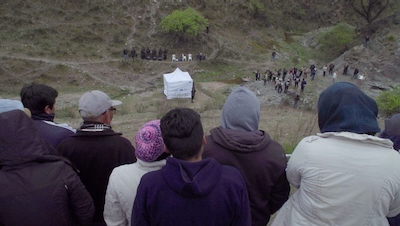
Armed men kill Indigenous leader Javier Chocobar during an attempted eviction in Argentina, 2009. After years of protests, a court case opened in 2018. Community voices and trial footage are shown amid colonial land struggles.
Argentine auteur Lucrecia Martel makes her first foray into feature documentary filmmaking with this haunting investigation into the killing of an Indigenous community leader.
Lucrecia Martel is an acclaimed Argentine filmmaker known for atmospheric, psychologically rich films that often explore class, gender, family tension, and social decay. Her films include the internaOUR LAND opens at the TIFF Lightbox and is one of the best docs this year,tionally acclaimed THE HEADLESS WOMAN and LA CIENAGA.
Her detailed and carefully crafted filmmaking is immediately apparent in the first few minutes of the documentary. The camera hovers over mountains and the Indigenous land that the story is about. This is an ancient Indigenous land that is about to be stolen by the mining companies. The film then moves to a courtroom where three men, immaculately dressed, testify as defendants after the murder of an Indigenous community leader. The three all sound very decent, but one can tell that these are evil people who are lying through their teeth and will do anything to get acquitted.
The story sold, but surely unfolds. In 2009, three men entered a Chuschagasta community in Northern Argentina. They were armed and, claiming ownership of the land, intended to evict the Chuschagasta. During the confrontation, without provocation, these men killed community leader Javier Chocobar. This crime was plainly captured on video, yet it took nine years of protests before the culprits were brought to trial, where they claimed no wrongdoing.
Our Land alternates between monitoring the tense legal proceedings, allowing Chuschagasta community members to share their stories through interviews and archival materials, and offering breathtaking explorations of this beautiful land that is being reduced to property, and whose ownership is being contested. All the while, meaning and historical context accumulate through the observation of seemingly small things, such as the presence of animals, the details of courtroom interactions, or a man uncovering parallels between the struggle of the Chuschagasta against the modern world of capitalism and colonialism.
With an approach at once deeply empathic and fundamentally unsentimental, Martel allows this story to unfold unencumbered by editorialising, until its gut-wrenching unfairness simply speaks for itself.
OUR LAND, as evident in her many other works, demonstrates dense sound design with natural sounds of the Indigenous people, layered storytelling often showing the different points of view of the accused murderers and the victims, with intimate camera work often blending close-ups of faces showing emotional tension with distant shots. The multiple themes of repression, privilege, colonialism, and social unease are impressively displayed in this remarkable documentary.
Among the multiple awards earned, the film won the prestigious Best Film Award at the BFI London Film Festival.
OUR LAND opens at the TIFF Lightbox this week and marks one of the best docs to be screened this year. Highly recommended viewing!
Trailer:
REMARKABLY BRIGHT CREATURES (USA 2026) ***½
Directed by Olivia Newman
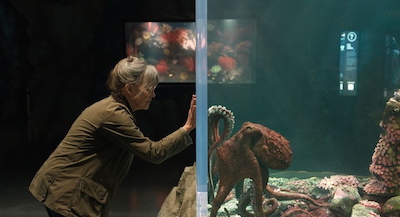
Oddly, REMARKABLY BRIGHT CREATURES is the second animal featured film solving a mystery opening this week, the other one being THE SHEEP DETECTIVES.
Netflix's adaptation of Shelby Van Pelt's best-selling novel about an octopus, Remarkably Bright Creatures (written in 2022), finally reaches Netflix streaming this Friday, May 8th. The book was a success, reportedly selling over two million copies and going through 30 re-printings since its 2022 debut. Olivia Newman directs and co-writes the screenplay with John Whittington, with two-time Academy Award-winning actress Sally Field cast in the lead role as Tova.
The story focuses on three characters, two human and one octopus, the three forming the remarkably beautiful creatures of the film title. There is Tova, an elderly widow struggling with grief after losing her husband—and years earlier, her son. Cameron, a drifting young man searching for his father and a sense of purpose, and Marcellus, a highly intelligent (and somewhat grumpy) octopus living in an aquarium. The three all help each other move forward in their lives, resulting in a charming and whimsical yet grounded film.
Director Newman takes her time to introduce the town’s characters, which also includes a storekeeper played by Irish actor Colm Meaney, who provides most of the humour of the film. His winning Irish accent casts a quaint spell over audiences. Tova is a sad woman, though she never shows it. Tova is also very helpful to her new helper after she suffers a fall. The new help is Cameron (Lewis Pullman), a drifter who comes to town and has to work to get his camper fixed after a blown radiator. Cameron is looking to find a man who owes him some money.
Actor Alfred Molina voices Marcellius.
The film setting is Sowell Bay. Sowell Bay is a fictional town in Washington state that is depicted as a small, charming Puget Sound coastal town, with many readers identifying its description as similar to Anacortes or areas near Skagit Bay. The film was shot primarily at Deep Cove in Canada. This location is a beautiful and scenic area around Panorama Park, Cates Park, and along Gallant Avenue, representing the quaint seaside town. The aquarium in the film was created by transforming a local yacht club
As their lives intertwine, a quiet mystery (though it takes a while for the film to kick in) unfolds—connected to Tova’s long-missing son and Cameron’s identity. With Marcellus (who knows more than anyone suspects) subtly guiding events, the characters slowly uncover hidden truths.
The film is charming, with Sally Field doing her best to get the audience to really, really like her. Tova has lost her son, but no details are given in the early part of the film. She is at the point of decision and has finally decided to sell her house and move into a nursing home, where many of her friends are. The film is also a bit of a tear-jerker.
REMARKABLY BRIGHT CREATURES opens for streaming Friday, May 8th.
Trailer:
THE SHEEP DETECTIVES (UK 2026) ****
Directed by Kyle Balda
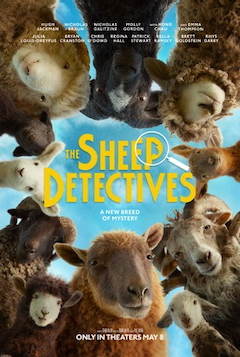
THE SHEEP DETECTIVES is an upcoming mystery comedy film directed by Kyle Balda and written by Craig Mazin, based on the 2005 German novel Three Bags Full by Leonie Swann. The film features an ensemble cast including Hugh Jackman, Nicholas Braun, Nicholas Galitzine, Molly Gordon, Hong Chau, and Emma Thompson, with the voices of Julia Louis-Dreyfus, Bryan Cranston, Chris O'Dowd, Regina Hall, Patrick Stewart, Bella Ramsey, and Brett Goldstein.
The basic premise involves a flock of sheep setting off to solve the mystery of who murdered their beloved shepherd.
In the Irish village of Glenkill, George Glenn (Hugh Jackman) is a shepherd who is a loner, estranged from his wife, and is fond only of his sheep. Every day, after he lets them out to graze, he reads to them from romance adventure novels and textbooks on sheep diseases. At the start of the book, the sheep find George dead, pinned to the ground by a spade. The film becomes a murder mystery - and quite a good one at that! The rattled sheep decide that they must find their killer. This turns into a difficult task, as sheep can't talk to people, and though they understand the human conversations they listen in on, like the one between George's widow Kate and Bible-basher Beth Jameson, they do not always understand the details. Not even the smartest of them, Miss Maple type, renamed Iris Othello and Mopple the Whale, can understand the humans' behaviour, and are particularly confused by the neighbourhood priest, though they conclude that his name is evidently God. They are afraid to confront suspects like butcher Abraham Rackham, and are suspicious but fearful of their new shepherd, Gabriel O'Rourke, who is raising a flock of sheep for slaughter. And even after a series of providential discoveries and brainwaves reveal the answer to the mystery, they still have to figure out how to let the humans know.
The film feels like a fairy tale fable that a mother would read to a child. The film does have an endearing, wonderful and charming atmosphere, and with animals in the spotlight, makes the film even more delightful.
Sheep have always been depicted as stupid animals. The film begs to differ. Instead of human detectives, the sheep themselves try to solve the mystery - as stupid as sheep! In this case. Each sheep has its own personality: Some are brave and curious, while others are fearful or easily distracted. A few try to think logically (with mixed success). They interpret human actions in often humorous or misguided ways, leading to both comedy and genuine mystery-solving.
The film also balances light humour with a real murder plot, with a perspective shift of humans being seen through the eyes of animals, making everyday behaviour seem strange or suspicious
The film benefits from performances of heavyweights, Academy Award Winner Emma Thompson and Hugh Jackman, which should attract more adults to this family-oriented film.
THE SHEEP DETECTIVES opens in Toronto Friday.
Trailer:
A YARD OF JACKALS (Patio de Chacales) (Chile 2024) ***1/2
Directed by Diego Figueroa
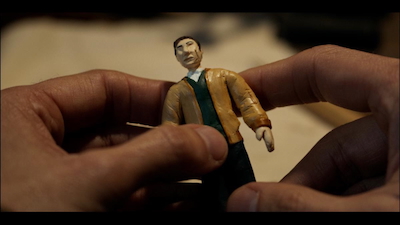
A YARD OF JACKALS is a claustrophobic Kafkaesque political thriller in every sense of the word, reminiscent of the recent TWO PROSECUTORS.
It is the winter of 1978, under Chile’s military regime in Santiago. Raúl Peralta, a lonely architectural model maker, lives a quiet life with only his ailing mother and a pet canary for company. His routine is upended by the arrival of new neighbours whose sinister activities seem to hide dark secrets. Desperately clinging to the last remnants of his sanity, Raúl’s life increasingly intertwines with Guillermo, a mysterious man in dark glasses. As reality unravels, the echoes of Raúl’s past collide with the horrors of his present in a psychological thriller that leaves behind a deep, indelible scar.
The film has an authentic feel throughout, for the director Diego Figueroa did a lot of research on such cases during his studies years earlier.
The genesis of the film began back in 2014 when \the director was working on my thesis project for the Film and Television program at the University of Chile. During an in-depth investigation into the dictatorship’s repressive forces and their relationship with civil society, he came across a series of studies on private homes that had been used as clandestine centres for detention, torture, and, in some cases, extermination. This led me to conduct further research into some of these well-known locations and connect with investigative authors like Javier Rebolledo, whose research into the civilian aspect of the dictatorship and its connections resulted in his book trilogyLos Cuervos.
It turns out the neighbours are secret police agents linked to the dictatorship, and the sounds coming through the walls are interrogations and torture of political prisoners.
As Raúl listens through a stethoscope-type instrument, he becomes aware of this as he hears loud music covering screams of confession under torture. He is drawn into a nightmarish moral situation. His attempts to report or intervene are ignored—or dangerous. He tries to contact through a radio station. He becomes psychologically unravelled, haunted by what he hears but powerless to stop it. To add to the anxiety, Ray is disabled and suffers from some foreign object inns le. But he has a girlfriend who cares, but he cannot reciprocate.
The life and paranoia are effectively created and felt throughout the entire movie, a lowborn in which one can feel the heat of the burn.
One can feel and root for Raul, but things do not look too good for him. His girlfriend escapes to Paris. The film offers Raul a route of escape when his a=bedridden mother passes away, the excuse he always gives for not going out.
One can feel and root for Raul, but things do not look too good for him. His girlfriend escapes to Paris. The film offers Raul a route of escape when his bedridden mother passes away, the excuse he always gives for not going out. The only solace is his girlfriend who takes a liking to him.
The film has an ending (not to be revealed in this review) that is quite ambiguous and disturbing. The audience might not like the ambiguity, but the disturbing factor is expected.
A YARD OF JACKALS premieres exclusively on IndiePix Unlimited on May 8th, 2026.
Trailer: