

Toronto Black Maternal Health Week returns with a powerful Practitioner Day event at North York General Hospital on April 13, 2026, bringing together health leaders, clinicians, and community voices. Co-hosted with the Black Maternal Health Collective of Canada, the roundtable confronts a stark reality: Black women in Canada face disproportionate risks during pregnancy and the postpartum period. This year's focus shifts firmly from awareness to accountability and action.
Black women in Canada are dying at disproportionate rates during and after childbirth, and for too long, that reality has been met with inadequate data, insufficient training, and systemic silence. This April, a coalition of some of Canada's most prominent health leaders is choosing a different path. On April 13, 2026, North York General Hospital (NYG) will host Practitioner Day as part of the inaugural Toronto Black Maternal Health Week, an event officially recognized by the City of Toronto and running April 11–17, 2026.
Co-presented with the Black Maternal Health Collective of Canada (BMHCC), the event brings together physicians, nurses, community advocates, and institutional leaders for a frank, solutions-focused conversation about what equitable maternal care actually looks like and what it will take to get there.
This is a pivotal moment. The BMHCC, founded in 2024, developed Toronto Black Maternal Health Week with a clear mandate: to move the needle on outcomes that have long been dismissed or undercounted. Last year's inaugural week amplified voices. This year, the focus shifts to action and accountability.
A high-powered panel with a serious agenda
The roundtable assembled for Practitioner Day reflects the breadth of leadership this issue demands. Dr. Zainab Abdurrahman, President of the Ontario Medical Association, and NP Lhamo Dolkar, President of the Registered Nurses' Association of Ontario, will join Dr. Everton Gooden, President and CEO of North York General, and Dr. Modupe Tunde-Byass, obstetrician-gynecologist and President of the Federation of Medical Women of Canada. The discussion will be moderated by Bee Quammie, an award-winning writer and media commentator whose work has long centred Black women's health and wellbeing.
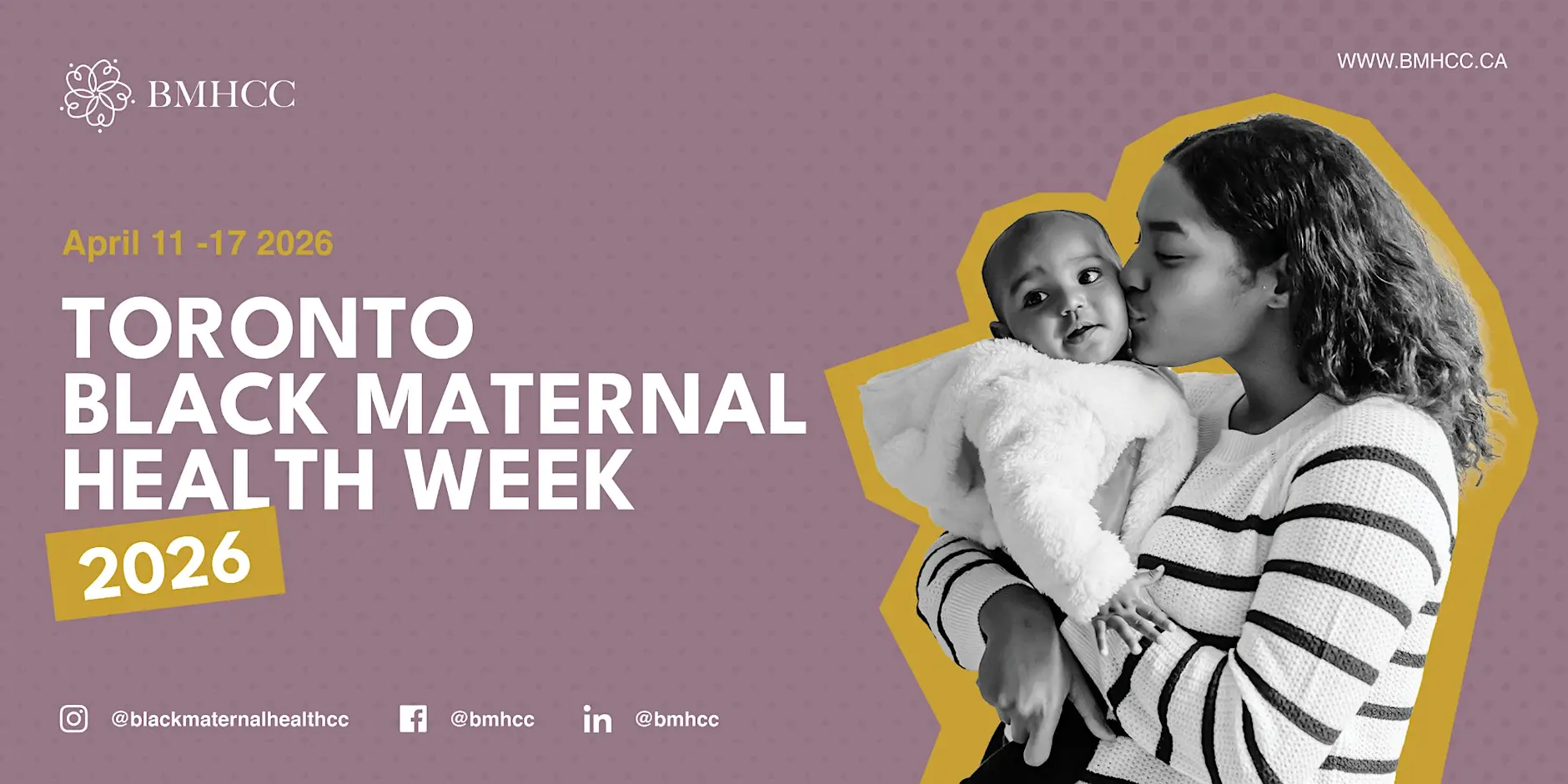
The panel discussion will focus on addressing maternal health disparities facing Black women and their families in Canada, and the importance of increasing diversity in the health care system. These are conversations that health institutions have too often deferred. Having them in a public, accountable setting — with the weight of professional associations behind them — matters.
The data tells a difficult story
The urgency of this event is grounded in documented, measurable harm. The few studies conducted in Canada show that Black women can feel unheard and mistreated when accessing maternal care, and they make up a disproportionate number of maternal deaths, particularly in the postpartum period. These findings mirror global research pointing to race-based gaps in care quality, provider responsiveness, and patient outcomes.
Research and lived experiences from across several countries show that Black women and birthing people face higher risks of pregnancy complications and maternal mortality, as Dr. Gooden has noted directly. The problem is well-documented internationally. In Canada, however, the infrastructure to fully understand and address it is still being built.
Because of minimal data or initiatives to publicize Black maternal health outcomes in Canada, many health care providers may not be knowledgeable about the unique health issues facing Black communities, and so deliver inadequate care. That knowledge gap has real consequences for real families.
What meaningful change looks like
Beyond a conversation, the roundtable is a framework for action. Examples of what health care and other leaders can do to improve Black maternal health include strengthening the collection of race-based health data, expanding training in culturally safe maternal care and anti-Black racism, and establishing pathways for Black internationally trained professionals to practice in Canada.
North York General has already taken concrete steps in this direction. This past year, NYG launched a partnership with Mino Care to expand access to culturally safe Black maternal and reproductive care across the Greater Toronto Area. The hospital has also begun collecting race-based data — a foundational step toward designing care that responds to the actual demographics of the communities it serves rather than assuming a one-size-fits-all approach.
These moves are meaningful. But individual institutional actions, however well-intentioned, are insufficient on their own. Systemic change requires systemic coordination, which is precisely why Practitioner Day brings multiple stakeholders to the same table.
Why accountability is the theme of 2026
When Jenelle Ambrose-Dash, Chair of the BMHCC, speaks about this year's priorities, the message is clear and direct. "Last year we amplified our voices. This year, we're calling on families, allies, and systems to step into action," she says. "Toronto Black Maternal Health Week is about building accountability, and Practitioner Day is instrumental in the ongoing discussion of what accountability looks like."
That framing matters. Accountability means institutions commit to measurable outcomes, not just expressed intentions. It means training isn't optional or ad hoc. It means data is collected, published, and acted upon. And it means Black women's experiences in the health care system are treated as a policy priority — not an afterthought.
A community call to show up
The Practitioner Day event is open to public health leaders, clinicians, and community organizations. It takes place on April 13, 2026, from 2 p.m. to 3 p.m. at North York General Hospital, 4001 Leslie St., followed by a networking reception. Attendance connects you directly to the people shaping the future of maternal health equity in Canada.
This is the kind of event that deserves community presence — not just professional attendance. The conversations happening in that room will influence policy, training standards, and the lived experiences of Black women giving birth in this city and across this country.
The work of building something better
Toronto Black Maternal Health Week represents more than a calendar moment. It is a growing movement with institutional backing and community roots, demanding that the health care system see Black women fully — as patients whose lives and wellbeing deserve the same standard of care afforded to everyone else.
The data is clear. The lived experience is undeniable. What remains to be written is what institutions actually do next. Practitioner Day at North York General offers a rare opportunity to hold that question open, publicly, with the people positioned to answer it. If you work in health care, community services, or advocacy — or if you simply care about what happens to Black mothers in this country — this is a room worth being in.
Event details
- What: Toronto Black Maternal Health Week — Practitioner Day
- Where: North York General Hospital, 4001 Leslie St., Toronto
- When: Monday, April 13, 2026, 2 p.m. – 3 p.m. (Attendance by invitation. Networking reception to follow)
- Who: Public health leaders, clinicians, and community organizations focused on advancing maternal health equity