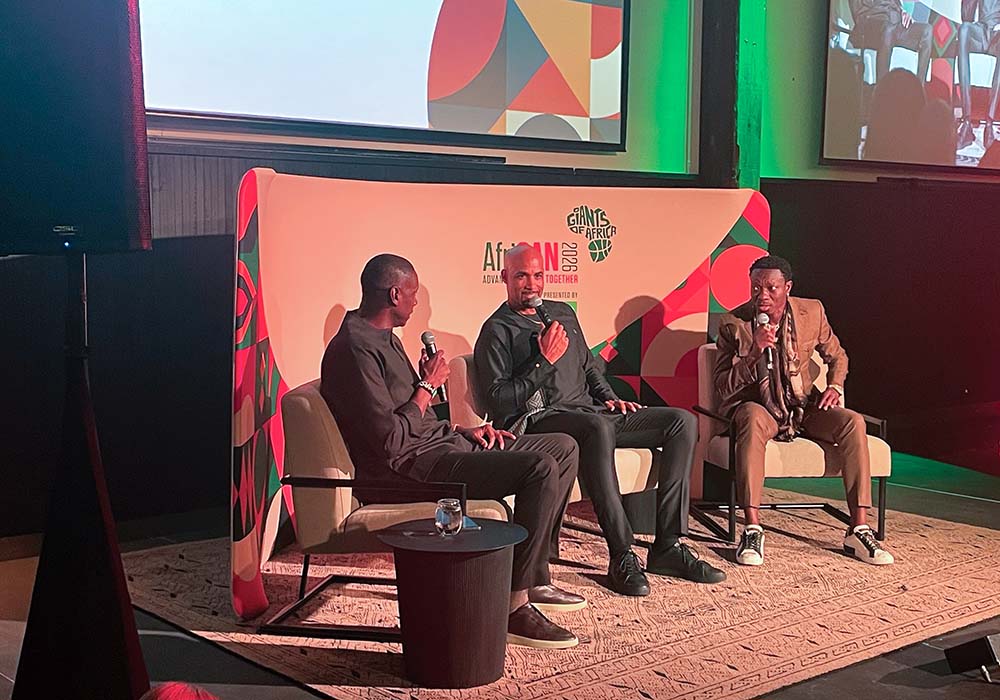
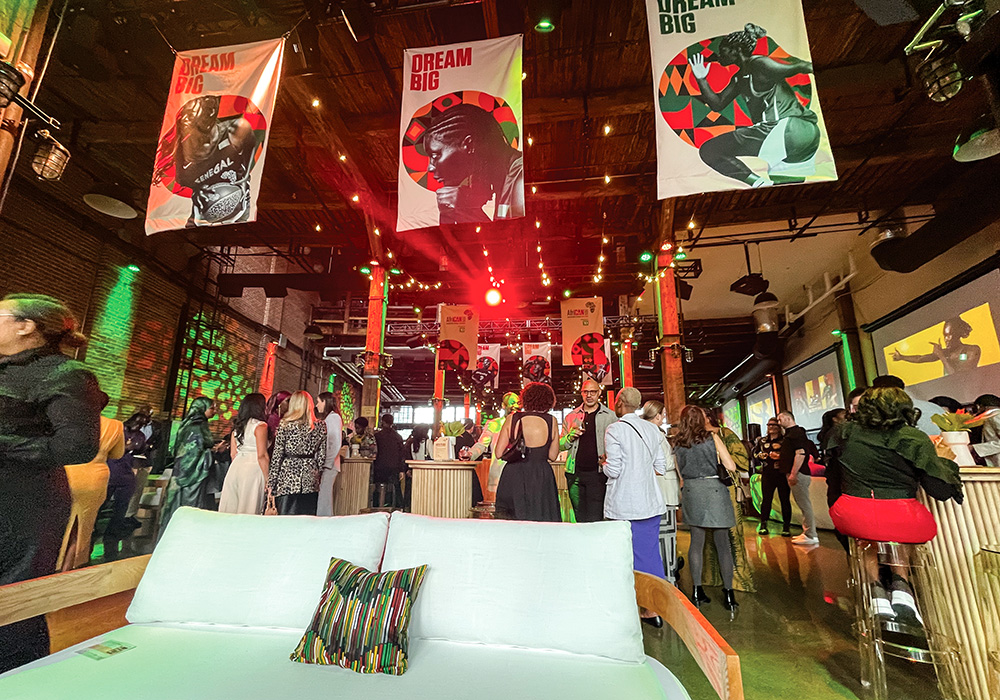
On May 6, 2026, Giants of Africa brought its annual AfriCAN celebration back to Toronto's Steam Whistle Brewing, drawing a powerful gathering of community leaders, artists, chefs and diaspora professionals. Anchored by Masai Ujiri, Boris Kodjoe and Michael Blackson, the evening moved well beyond cultural pageantry. It delivered a sharp, data-backed argument for why Africa's moment in the global economy has arrived, and who needs to own it.
Since 2003, Giants of Africa has used basketball to open doors for youth across the African continent. AfriCAN 2026, held May 6 at Steam Whistle Brewing in Toronto, brought that mission into a room packed with diaspora professionals ready to take the conversation further. From the moment guests arrived at 255 Bremner Blvd., the atmosphere carried a specific kind of charge that only happens when a community gathers with both joy and intention.
The event, organized by Giants of Africa (GOA), the non-profit founded by Masai Ujiri in 2003, was a fundraiser in form and a cultural reckoning in spirit. Chefs were plating food that told stories. Designers were showing work that demanded attention. And by the time Ujiri, Boris Kodjoe and Michael Blackson took the stage for the evening's centrepiece conversation, it was clear that AfriCAN had never been content to simply celebrate. It came to build something.
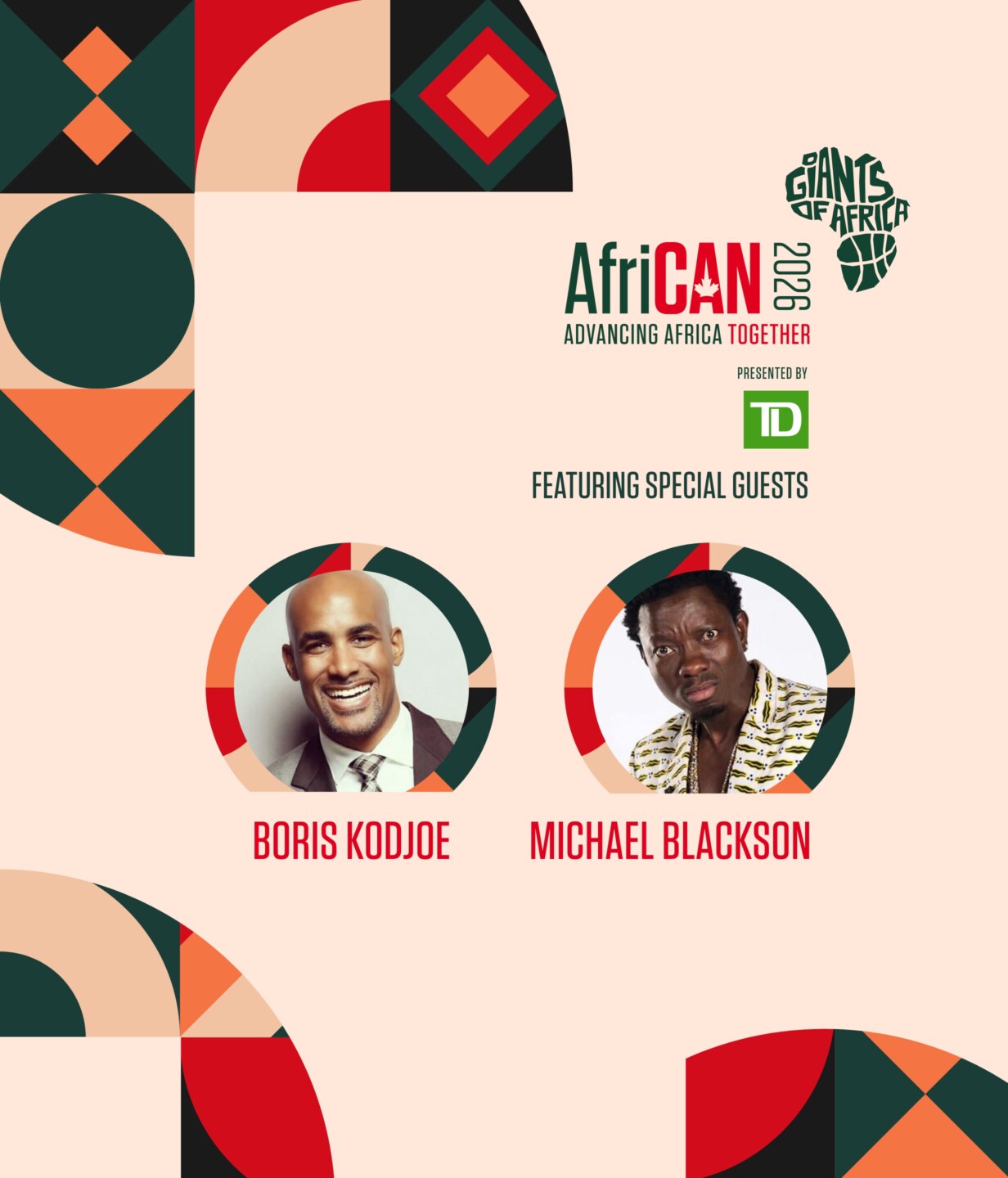
Running from 6 p.m. to 11 p.m. and presented in part by TD, the event drew working professionals, artists, entrepreneurs and community figures from across Toronto's African diaspora. Comedian Hassan Phills, one of Canada's fastest-rising voices, warmed up the room. Chefs Rachel Adjei, Victor Ugwueke and Bashir Munye served curated dishes that drew on culinary traditions across the continent. DJ Revy B kept the energy moving. A cultural marketplace put African design front and centre, offering guests something to feel, wear and take home. The whole evening served as a living argument for what the diaspora looks like when operating at full capacity.
Giants of Africa: Building courts, building futures
Before the speeches and the panel, it helps to understand what Giants of Africa actually does on the ground. Founded by Ujiri in 2003, GOA uses basketball as a vehicle for youth empowerment across Africa. The organization has built courts in countries including Kenya, Ghana, Eswatini and Rwanda, runs coaching clinics led by figures like Mélanie Danna (GOA's Senior Director of Strategy and Operations), and works in partnership with the United Nations to advocate for young people who face real barriers to opportunity. GOA operates across more than 20 African countries, reaching youth who might otherwise have no access to structured mentorship, sport or educational programming.
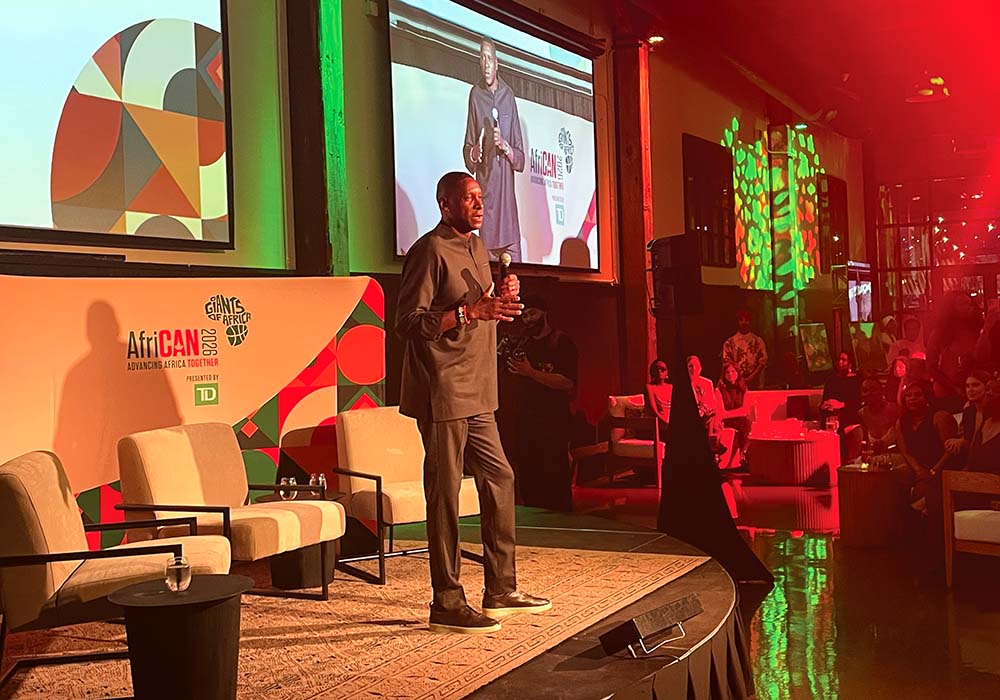
The scale of that work was on Ujiri's mind as he spoke during the evening. Addressing the room with the warmth of someone genuinely at home among friends, he reflected on a year that took him away from the NBA spotlight and deeper into the continent's communities.
"I took the year off, and it's been such a journey, especially with my Giants of Africa guys," he said. "All the courts that we've built on the continent. In Kenya, Ghana and Eswatini. These young girls coming up, the coaching clinics that Mélanie Danna is doing — we are so proud of this fantastic program."
His message, stripped of fanfare, was straightforward. Giving back does not require a title or a platform. It requires a decision. "It doesn't have to be in big positions or small positions. It does have to be a voice that has a lending hand."
For Ujiri, that conviction runs alongside a professional chapter full of momentum. In late March 2026, he joined the Toronto Tempo ownership group as a principal owner of Canada's first-ever WNBA franchise. By early May, he had been named president of the Dallas Mavericks. It is against this backdrop that his line landed with particular resonance: "One red ball. One ball that has made all of this happen."
The panel: Africa as author of its own story
The evening's most substantive exchange came during a fireside-style conversation between Masai Ujiri, Boris Kodjoe and Michael Blackson. Three men with different entry points into the diaspora conversation, all pointing in the same direction.
Boris Kodjoe is an actor, director, producer and investor known for his roles in House of Cards, Brown Sugar and Soul Food. A German-Ghanaian dual citizen, he co-founded Full Circle Africa, which connects business leaders, cultural influencers and government officials from the continent and diaspora to drive investment, tourism and economic development. He also launched the Full Circle Streamline travel platform, which helps diasporans reconnect with their ancestry.
Kodjoe came loaded with numbers, and he deployed them with purpose. When the conversation turned to the persistent myth that Africa is too risky for serious investment, he pushed back hard.
"Those statements are based on a false representation of Africa," he said. "The average return of foreign investment in Africa is 11.4%. The global average is 7%. Those are the real numbers."
He framed the stakes plainly: Africa's participation in the global economy depends on Africans and the diaspora taking ownership of their own narratives. "Africa has to stop being the subject of other people's stories. We have to start being the authors of our own stories, so that we can not only control the narrative, but also redefine our identity in a global context. We go from zebras and huts to technology, innovation, progress, complexity and opportunity."
The content economy: Africa's next frontier
Kodjoe's sharpest argument centred on content creation, and he made it with the confidence of someone who has watched the numbers move in real time. Afrobeats, he noted, has taken over global music over the past decade. The visual medium is following the same arc. But none of that cultural influence has translated into economic ownership for the creators and communities behind it.
"We've been the original cultural influences for a hundred years or more. Yet we don't have any ownership," he said. The solution, in his view, requires controlling the entire content value chain: production, distribution, monetization, intellectual property and the marketing infrastructure to support all of it.
The numbers Kodjoe cited are striking. While he cited a $500 billion figure, which in fact refers to the global creator economy, Africa's share of that total is projected to reach $29.84 billion by 2032. He added that African content, when it reaches global audiences, consistently ranks among the top 3% most popular and in-demand content worldwide. And that demand is not concentrated in one or two markets. Ninety per cent of it is distributed across multiple regions, including Asia, Europe, South America and beyond.
It should also be noted that Next Narrative Africa Fund found that non-English-language African stories account for 28% of global audience demand but only 16% of available supply, revealing a structural gap in the global streaming ecosystem.
The demographic argument may be the most powerful of all. By 2030, 40% of the world's youth will live in Africa. The median age in the United States is currently 32. In Europe, it is 42. In Africa, it is 19. As Kodjoe put it: "Africa is getting younger and everybody else is getting older. The entire content industry is moving to Africa."
He closed with an invitation to act on that reality, announcing that Full Circle Africa is moving some of its December programming to a full-circle summer festival in Accra, running August 3 to 10. "Historic sites, cultural engagements, shopping trips, beach, investment summits — join us in Accra in August."
Michael Blackson: Building a school because you can
Michael Blackson, the Ghanaian-American comedian and entertainer, brought a different kind of testimony to the conversation. Known globally for his comedy, Blackson has spent the last decade quietly building something concrete back home in Ghana: A school for children who cannot afford fees elsewhere.
"When you go back home and start looking around you, you cannot ignore what bothers you," he said. "What bothered me the most was a lot of kids not going to school."
His school, now in its fourth year of operation, covers teacher salaries, uniforms, lunches and electricity. He described the process with a disarming directness. "If God has blessed me and I can give back, I built this school." Giants of Africa recently built a basketball court on that same campus, an event that Blackson said reverberated well beyond the school's walls. "The whole country was jealous."
Ujiri used Blackson's example to pivot the conversation toward infrastructure and investment, calling on the room to rethink how sport and creative industries are understood on the continent. "We see sport as recreation and competition. We don't see the business side of it." That shift in thinking, from sport as a pastime to sport as an industry, sits at the core of what GOA is working to change.
Community, cuisine and the culture that holds it together
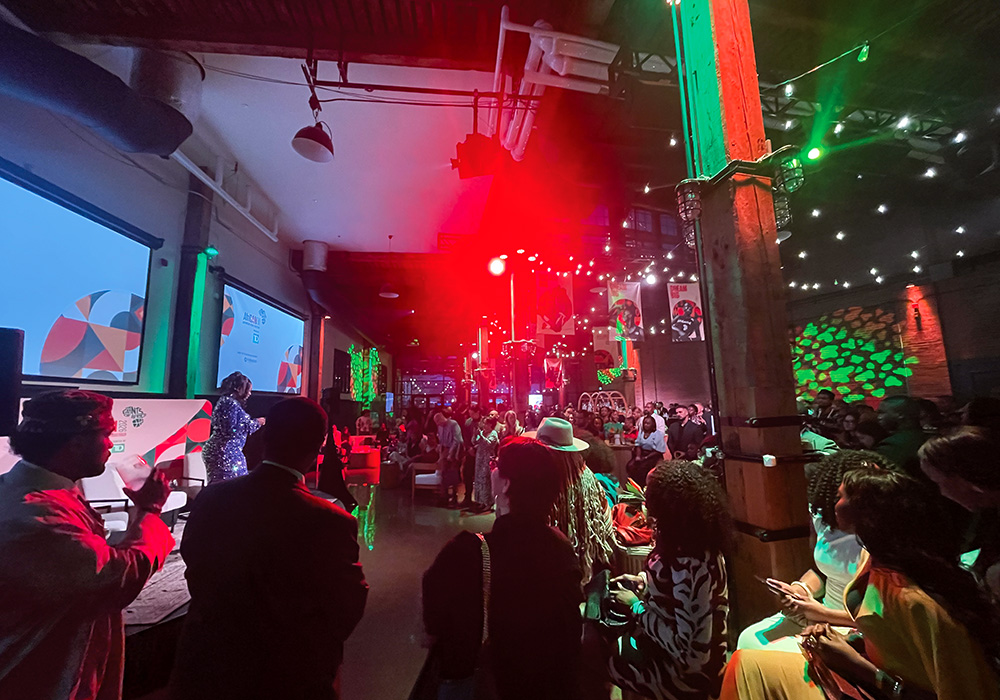
What distinguished AfriCAN 2026 from a conventional gala was the deliberate texture of the entire evening. The cultural marketplace was active, not decorative. The food from chefs Adjei, Ugwueke and Munye placed the continent's culinary range at the centre of the experience. Comedy, music and design occupied the same space as investment pitches and policy arguments.
That mix is intentional. AfriCAN has always understood that culture is infrastructure. The way a community eats together, laughs together and shops together shapes how it thinks together. Steam Whistle's Locomotive Hall held all of it without strain, the industrial space made warm by the energy of people who had shown up with something to say and the will to hear each other out.
Where the joy is going
AfriCAN 2026 was a reminder that some of the most important conversations about Africa's future are happening in Toronto. The city's diaspora is not simply watching events unfold elsewhere. It is generating ideas, capital and creative energy that flow in both directions across the Atlantic.
Masai Ujiri said it simply near the start of the evening: "The joy is coming. When the world looks like this, that means there's opportunity. That means we should keep fighting and keep going."
The room that night looked like the world Boris Kodjoe is arguing Africa deserves to be seen as. Technology, innovation, complexity, creativity and a whole lot of potential. Giants of Africa built the court. AfriCAN 2026 showed what happens when the community shows up to play.
For anyone still sitting on the sidelines about what Africa represents, the data has been delivered. The stories have been told. The only question left is whether you are ready to be part of writing what comes next.