
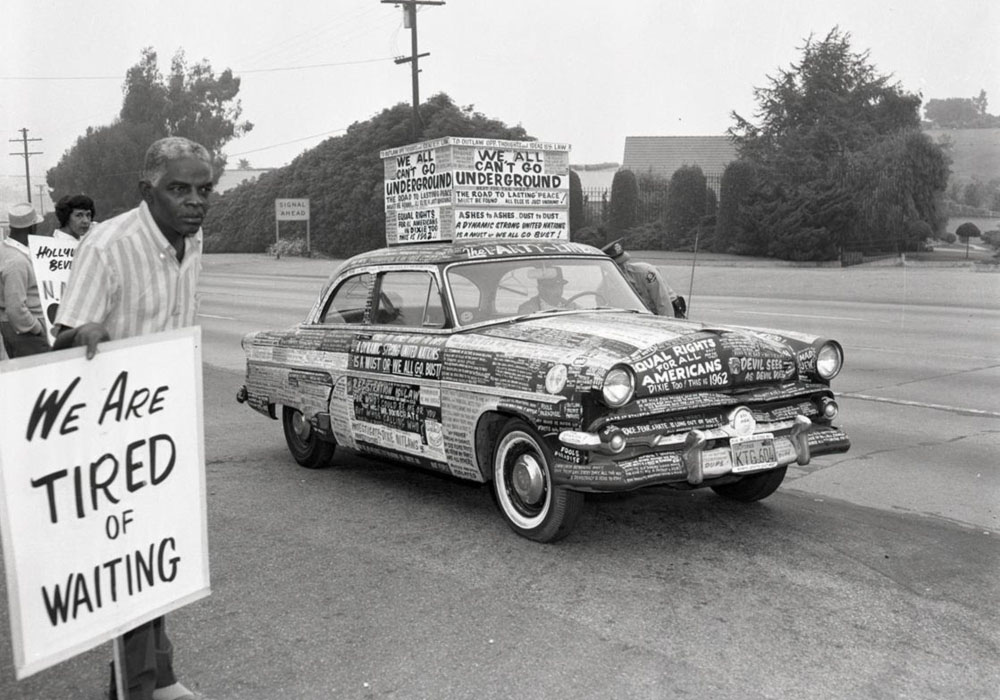
A landmark exhibition tracing photography's role in the Black Arts Movement arrives at the Mississippi Museum of Art in Jackson from July 25 to November 8, 2026. Photography and the Black Arts Movement, 1955–1985 brings together over 150 works by more than 100 artists from across the African diaspora. For Black Canadian travellers, it's a rare invitation to combine cultural pilgrimage with the deep, soulful history of the American South.
There are exhibitions, and then there are events that feel more like a reckoning. Photography and the Black Arts Movement, 1955–1985, currently on a national tour organized by the National Gallery of Art in Washington, D.C., is firmly in the second category. This summer, it lands at the Mississippi Museum of Art (MMA) in Jackson, on view from July 25 to November 8, 2026, marking its final stop after acclaimed runs at the National Gallery and the J. Paul Getty Museum in Los Angeles.
For Black Canadian travellers with an appetite for art and history, this exhibition is reason enough to book a flight. It presents 150 examples tracing the Black Arts Movement from its roots to its lasting impacts, from 1955 to 1985, drawing on work by painters, photographers, filmmakers, graphic designers and community organizers whose creative labour helped forge a distinctly Black visual culture during one of the most turbulent and transformative periods in modern history.
The exhibition features over 100 artists, including Billy Abernathy, Romare Bearden, Kwame Brathwaite, Roy DeCarava, Doris Derby, Emory Douglas, Barkley Hendricks, Barbara McCullough, Betye Saar and Ming Smith. This is a diaspora roll call as much as it is a curated list. Many of these artists will be familiar to readers who follow Black creative history closely; others may be new discoveries in the making.
Co-curator Deborah Willis, speaking to the power of the work, noted that the images operate as evidence and testimony, that self-representation is political, that visibility is power, and that aesthetics can carry revolutionary meaning. That framing matters deeply, especially right now.
What makes the MMA presentation particularly compelling is its local dimension. MMA has partnered with Jackson State University's Margaret Walker Center, which operates the Council of Federated Organizations (COFO) Learning Center. COFO was the epicentre of the modern civil rights movement in Mississippi and served as the organizational home for Freedom Riders in 1964.
The MMA presentation also includes rarely seen photographs taken at Jackson State University in 1973, during the inaugural Phillis Wheatley Poetry Festival, organized by poet Margaret Walker, which gathered leading Black women writers, including Audre Lorde, Alice Walker, Sonia Sanchez, and Nikki Giovanni, for readings, conversations, and cultural exchange. Those images alone are worth the trip.
Getting there from Toronto
There are no direct flights from Toronto to Jackson, Mississippi. The most popular route connects through Toronto Pearson International Airport (YYZ) to Jackson-Evers International Airport (JAN). Atlanta is the most common layover city, chosen on about 66% of one-stop itineraries, with an average one-way travel time of just under five hours. Houston is an alternative with competitive pricing.
Airlines serving the route include Air Canada, WestJet, Delta, American Airlines and United Airlines. Round-trip fares from Toronto to Jackson have been found as low as CAD $428, with prices varying by season and how far in advance you book. Booking early is advisable, particularly if you are travelling in the July-August window when demand is higher. Aggregators like Google Flights, Expedia and Kayak are useful for tracking price movements.
The exhibition runs through November 8, which opens up some strategic flexibility. September and October are often sweet spots for travel: the summer heat in Mississippi begins to ease, fares can soften and crowds thin out after the summer rush.
Where to stay in Jackson
Jackson has a solid range of accommodation options for every budget, with a cluster of well-reviewed hotels within easy reach of the Mississippi Museum of Art on South Lamar Street.
The Westin Jackson is the premium choice for travellers who want comfort, convenience and proximity to the museum. Located in downtown Jackson, it is within walking distance of the Mississippi Museum of Art, Thalia Mara Hall and the Federal Courthouse, and features the on-site restaurant Estelle Southern Table, Soul Spa, a fitness studio and an indoor swimming pool. It is the natural home base for a culturally focused visit.
The Fairview Inn is the boutique option and, for many, the more memorable stay. Built in 1908 as a Colonial Revival Mansion in Jackson's historic Belhaven district, it is the only AAA Four-Diamond small luxury hotel in the area. It offers a spa, a library lounge and Southern-inspired cuisine. Guests enjoy a cooked-to-order breakfast, a serene garden and spa treatments at Nomi Spa, with rates from approximately $221 to $299 per night. The property has genuine character, the kind of Southern hospitality that feels earned rather than performed.
For travellers watching their budget, the Hilton Garden Inn Jackson Downtown and the Hampton Inn and Suites Jackson Downtown-Coliseum are reliable mid-range picks near the museum with good amenities and consistent reviews.
Beyond the exhibition: Exploring Black Jackson
The exhibition does not exist in isolation, and neither does Jackson. This city carries an extraordinary amount of African American history within its geography, and spending a few days here means walking in the footsteps of some of the movement's most consequential figures.
The Mississippi Civil Rights Museum is an absolute must. Through eight interactive galleries, the museum highlights the strength and sacrifices of civil rights workers, telling stories of figures including Fannie Lou Hamer, Vernon Dahmer and Medgar Evers through immersive multimedia exhibits. At the heart of the museum is a central space lit by a dramatic light sculpture that plays "This Little Light of Mine," glowing brighter and swelling in volume as visitors gather and add their presence to the space. It is quietly unforgettable. Admission is free every Sunday.
The Farish Street Historic District was once the economic and cultural capital of Black Mississippi. A 125-acre grid-patterned neighbourhood listed on the National Register of Historic Places, it holds over 100 years of rich African American heritage, including the recently renovated Alamo Theater. The legendary Big Apple Inn has operated on Farish Street since 1939 and remains one of the most beloved spots in the city, drawing long lunch lines for its mustardy beef sliders, smoked sausage and famously chewy pig ear sandwiches. Medgar Evers once rented an office above the restaurant. History and flavour, in the same address.
For live music and a fuller evening experience, Johnny T's Bistro and Blues occupies the historic building once known as the Crystal Palace, a venue where Sammy Davis Jr. and Red Foxx once performed in the 1950s. Today it serves pan-seared tilapia and salmon croquettes alongside live blues, all beneath murals of iconic Black musicians. It is the kind of place that tells Jackson's whole story on a single menu.
The Margaret Walker Center at Jackson State University connects directly to the MMA exhibition and deserves a dedicated visit. It is dedicated to the preservation and interpretation of the African American experience, with permanent and rotating exhibitions, and is located in the oldest and most historic building on campus. The centre is named for the poet who organized the 1973 Phillis Wheatley Festival that brought together so many of the writers whose photographs appear in the MMA show, making it a powerful complement to the exhibition itself.
For a sit-down meal, Sugar's Place in downtown Jackson has built a strong local reputation for brunch. The family-run restaurant offers fresh omelets, shrimp and grits, mimosas and its famous chicken and waffles and is a common gathering point for the surrounding community. Warm, unpretentious and deeply local.
Worth the journey
Jackson is not a city that shows up on standard tourism lists for Canadian travellers. That is precisely why going feels significant. The Black Arts Movement is described by its curators as a uniquely American creative initiative, closely linked to the civil rights movement and comparable to the Harlem Renaissance of the 1920s in its cultural impact. Coming to see this exhibition in Mississippi, the state where so much of that fight was waged, adds a weight and meaning that no gallery in a major metropolis can replicate.
Jackson carries the evidence. It holds the grief and the genius, the sacrifice and the beauty. Walking through the MMA galleries, down Farish Street and through the Civil Rights Museum, you begin to feel how photography was never separate from the movement. It was the movement's memory, its mirror and sometimes its most powerful weapon. For Black Canadian travellers, this is the kind of trip that comes back with you.
The exhibition is on view at the Mississippi Museum of Art, 380 South Lamar Street, Jackson, from July 25 to November 8, 2026. The museum is open Tuesday through Saturday from 11 AM to 5 PM and Sunday from 1 to 5 PM. General admission is $15 for adults, with free admission on the first Saturday of every month.
Go with intention and bring someone you love to share it with.